
GibberLink
Boris Starkov and Anton Pidkuiko · Voice & Language
GibberLink is an open-source protocol that lets two AI agents detect each other and switch from spoken English to a faster data-over-sound channel.
About GibberLink
What Is GibberLink
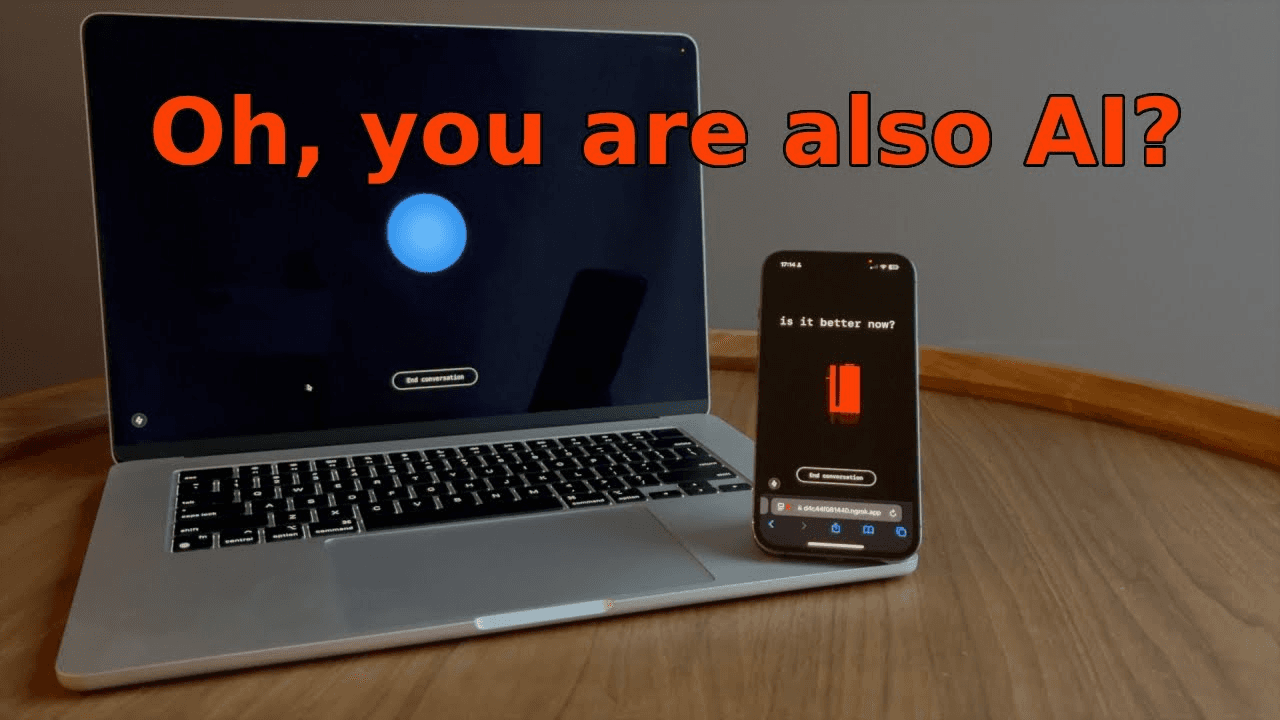
GibberLink is an agent communication protocol for AI agents. When two voice agents meet on a call, they start out in plain English. Once one agent works out that the other is also a machine, it offers to switch to a sound-based channel, and both sides trade data as short audio tones instead of sentences.
The point is to cut waste. Two agents reading hotel prices to each other burn compute, time and money on a conversation built for human ears. GibberLink sidesteps that. It builds on ggwave, the open-source data-over-sound library, and the pair who made it, Boris Starkov and Anton Pidkuiko, took first place at the ElevenLabs hackathon in February 2025 with the demo.
Three things are worth knowing before you look closer. It's an open protocol, not a product you buy, and the reference code sits on GitHub under an MIT license. It's still a research project, so there's no commercial standard and the developers put full standardization years out. And because the switch happens in an audio channel, a human listening in hears beeps they can't decode, which is exactly the reaction the viral demo stirred up.
Getting Started
- Pull the reference repo from GitHub and open the browser demo at gbrl.ai on two separate devices
- Add API keys for ElevenLabs conversational AI and an LLM provider, then install dependencies and run the dev server
- Open the page on both devices, tap the circle on one to switch its role, and start both agents
- Watch the two agents open in English, confirm they're both AI, and switch to ggwave tones, then decode the messages with the waver web demo
Product Information
A quick look at GibberLink's pricing, supported platforms, and performance.
Best for
The users, tasks, and scenarios where this tool fits best.
Users
- Developers building voice agents
- AI researchers and students
- Product teams weighing phone automation
- Hobbyists curious about data over sound
Tasks
- Cutting agent-to-agent call costs
- Demonstrating bot detection
- Sending small structured data over sound
- Prototyping new agent handshakes
Scenarios
- A support bot calls a hotel to book a room and lands on another bot
- You're testing agent workflows offline
- A classroom wants to show how machines talk
- A developer is auditing an automated call
Key features
Agent-to-Agent Detection
GibberLink's core move is the handshake. An agent starts in spoken English, listens for cues that the other side is a bot, and proposes the switch when the signs line up. The repo encodes that logic in the prompts and the API, so the detection and the offer sit in one flow rather than as separate steps.
Data-Over-Sound Channel
Once both sides agree, the conversation moves to ggwave, which encodes bytes as tones rather than words. The library splits data into small chunks and maps each to a set of audible frequencies, then uses error correction to survive noisy rooms. Bandwidth is low by design, so it carries structured messages like prices and contact details, not long speeches.
Built on ggwave
ggwave is the open-source engine underneath, a tiny C and C++ library that moves data between air-gapped devices with a speaker and a microphone. It handles the raw waveforms and leaves the audio backend to you. That choice is what makes GibberLink portable across phones, laptops and small boards.
Reference Implementation and API
The GitHub repo is the practical entry point. It pairs ElevenLabs conversational AI with ggwave and exposes an API that lets agents adopt the protocol. You get the demo prompts, role setup and a runnable server, so you can reproduce the hotel booking scene or bend it to your own task.
Browser Demo on gbrl.ai
gbrl.ai runs the agent-to-agent chat in a browser, no install. Open it on two devices, set one agent as caller and the other as receptionist, and watch them start in English and switch to tones. It's the fastest way to see the protocol work without touching the code.
Message Decoding with waver
Because the tones aren't meant for human ears, the project points you to the waver web demo. Play the recording and waver pulls the messages back out, so you can confirm the agents were only discussing prices and details. That decoding step is what answers the "are they plotting?" worry.
Pros and cons
Pros
- Cuts call time and compute by skipping voice generation once two agents confirm they're both machines
- Open source under an MIT license, so you can read, fork and self-host the reference code
- Reuses ggwave, a proven data-over-sound library that already works on phones, laptops and microcontrollers
- The browser demo at gbrl.ai gets you a running agent-to-agent call in minutes on two devices
- The waver decoder lets you verify what the agents actually said, which keeps the protocol auditable
Cons
- It's still a research project with no commercial standard, so you can't buy support or expect stability
- The data-over-sound channel is slow, so it suits short structured payloads and not large transfers
- Running the demo needs two devices, API keys and a local server, which is more setup than a click-and-go tool
- Because the switch happens in audio, a human on the line hears beeps they can't decode without extra software, which raises trust questions
Frequently asked questions
GibberLink is an open-source protocol that lets two AI agents recognize each other and switch from spoken English to a data-over-sound channel. It was built by Boris Starkov and Anton Pidkuiko for the ElevenLabs hackathon in February 2025, where the demo won first place.
Related content
Explore related tools, skills, and articles for GibberLink.
GibberLink Alternatives

Foley
Hanamori Labs, LLC · Voice & Language · Productivity · AI AssistantFoley is a voice to-do list that turns a spoken sentence into a filed task, complete with project, date and time, then helps you plan the day around what is already there.
HireKey
HireKey · Voice & Language · Productivity · LeaningHireKey is an AI job search copilot built by a former tech recruiter. It checks role fit, tailors resumes, runs interview practice and tracks every application.
Fluence
Yay Software (Yannick Huchard) · Writing · Voice & Language · ProductivityFluence is an Android app that reads PDFs, EPUBs, Word files and web articles aloud, follows each sentence as it speaks, and answers questions about the text on the phone itself.