

GoBuildMy.App
PlayStudio Apps · Coding
GoBuildMy.App is a chat-based AI mobile app builder that turns a plain-language idea into a native iOS and Android app. Describe what you want, test it in a browser, and publish without code.
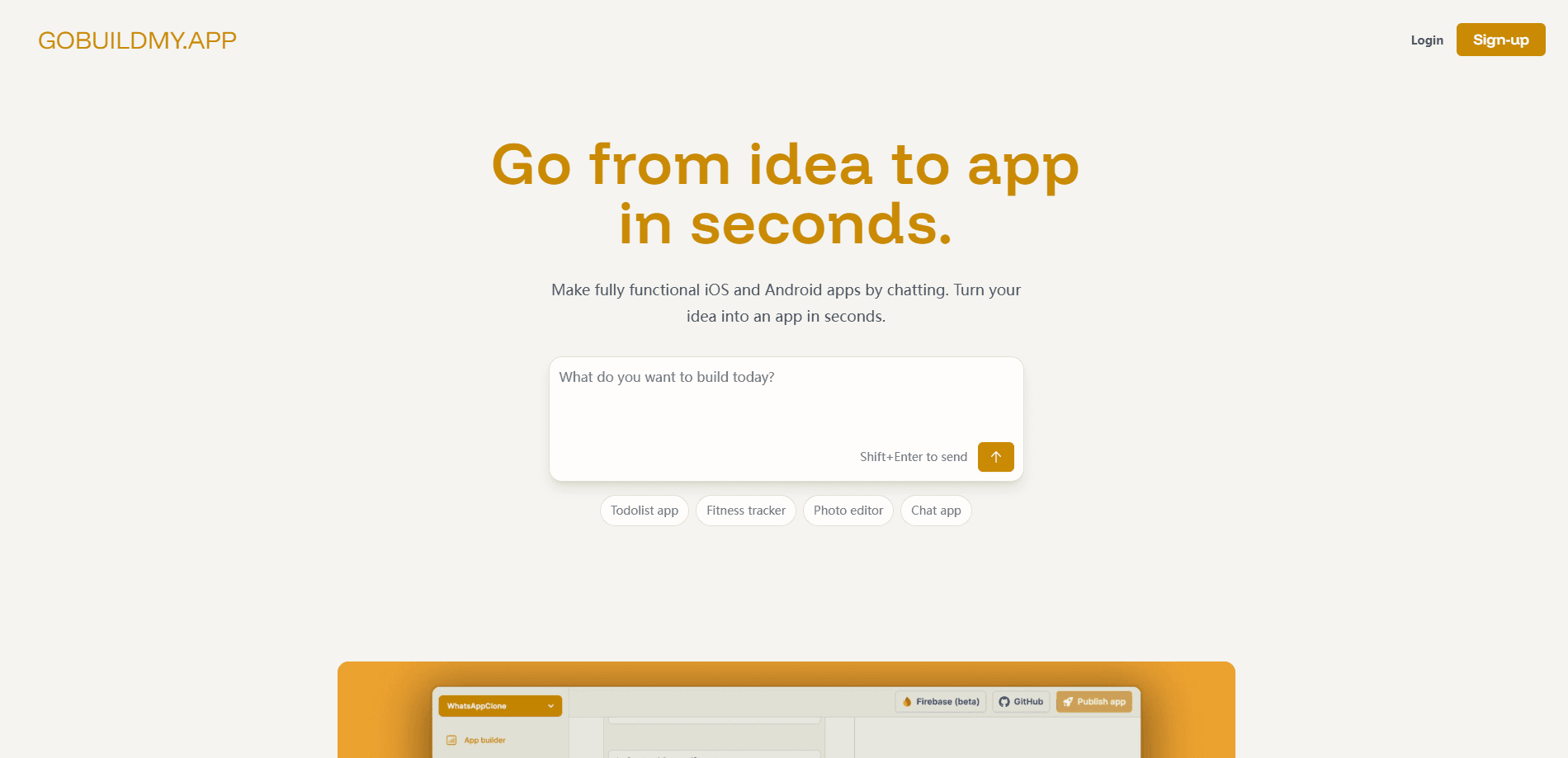
About GoBuildMy.App
What Is GoBuildMy.App
GoBuildMy.App is a web tool from PlayStudio Apps, a Netherlands-based studio. You type what you want to build into a chat box, and it generates a working mobile app for iOS and Android. The pitch is speed: the company says you can go from idea to app in seconds, and you never touch a line of code.
The product targets people who have a clear idea but not the engineering background to ship it. Instead of learning a cross-platform framework, this chat to app builder has you describe features one message at a time, then refine the result through more chat. It sits in the same space as other no-code app development tools, but leans on conversation rather than drag-and-drop editors. The output is a native app you can test, back up, and send to an app store.
The main limit is that everything runs through the chat interface on the web. You need an internet connection and a sign-up to get started, and heavier usage is metered by messages per month and emulator minutes rather than unlimited access. Apps built here also lean on Firebase for anything beyond the basics, so a real back end means adding that service.
Getting Started
- Open the GoBuildMy.App site and create an account through the sign-up link.
- Type your idea into the prompt box, for example a fitness tracker with workout logs and daily goals. The builder opens in the chat workspace.
- Keep the conversation going to add screens, data fields, and styling until the app matches what you have in mind.
- Preview the result in the built-in iOS and Android simulators, then connect GitHub and Firebase if you want code backups or storage.
- Publish to the app store once you are happy with the build.
Product Information
A quick look at GoBuildMy.App's pricing, supported platforms, and performance.
Best for
The users, tasks, and scenarios where this tool fits best.
Users
- First-time founders
- Product managers
- Agencies and small teams
Tasks
- Turning a rough idea into a prototype
- Adding a back end
- Connecting third-party services
- Keeping code portable
Scenarios
- Validating an app idea on a tight budget
- Building an internal tool
- Learning how mobile apps are structured
Key features
Chat to app
This is the app publishing tool's main workspace, and it starts as a chat box. You describe the app in ordinary language, and each message adds or changes features. The builder keeps the running project in one thread, so screen edits and data changes stay in context.
In-browser simulators
You test the app on emulated iOS and Android devices right in the browser. There's nothing to install. This matters because it lets you catch layout and flow problems before the app ever reaches a store, and it's how the platform meters usage through emulator minutes. For quick app simulator testing across device sizes, it beats setting up Xcode or Android Studio on your own machine.
GitHub code export
Connect GitHub to a project and the generated source backs up automatically. The company states the code is yours, which removes the lock-in concern that comes with some no-code tools. You keep a real repo you can clone and edit elsewhere.
Firebase back-ends
For apps that store or sync anything, the Firebase app backend supplies the database, login system, and file hosting. You get a working back end without provisioning servers, but it ties your app to Google's service for that layer.
One-click publishing
When the build is ready, publishing to the app store is a single click. The platform handles the handoff, so you don't manage certificates and store listings from scratch.
Third-party API integration
Send the builder a documentation URL, and it connects that API to your app. This covers payments, maps, or any external service with public docs, saving you from hand-coding the request layer.
Unlimited app projects
There's no cap on how many apps you can build. The trade-off sits in the metered parts instead: messages per month and emulator minutes rise with each paid tier.
Pros and cons
Pros
- You get fully native iOS and Android output, not just a web view wrapped in a shell.
- The free plan needs no payment info and gives daily messages to test the concept.
- GitHub export keeps the generated code portable and backed up.
- In-browser simulators cut setup time to zero, since testing needs no local toolchain.
- Pricing steps from $25 to $200 a month, so solo builders and agencies land on different tiers.
Cons
- Usage is metered by messages per month and emulator minutes, so heavy building on lower tiers can run out before the month ends.
- Real back-end features depend on Firebase, which adds a second service and a Google dependency.
- The free plan's five messages per day is enough to demo but not to finish a project.
- There's no published API for the builder itself, so you can't script app generation from your own pipeline.
Frequently asked questions
You build native iOS and Android apps for ideas you can describe in chat, such as a fitness tracker, a photo editor, or a messaging app with groups. The output is real app code, not a mobile website, so it can go to the app stores.
Related content
Explore related tools, skills, and articles for GoBuildMy.App.
GoBuildMy.App Alternatives

Base Code
Base44 (Wix) · Coding · ProductivityBase Code is a shared cloud development environment from Base44. Teammates describe changes to an existing GitHub codebase in chat, preview them live and send them back as pull requests.

Google EmbeddingGemma 2
Google DeepMind · Writing · Image · CodingGoogle EmbeddingGemma 2 is a 740M-parameter open model that turns text, code, images, audio, and video frames into vectors in one 768-dimension space, running on phones and laptops.

GitGlow
GitGlow · Coding · ProductivityGitGlow is a local-first desktop Git client that lets independent developers review their own code and their AI agents' changes in one place before shipping.