

HEROZ
HEROZ, Inc. · Coding
HEROZ is a Japanese AI company that builds board-game engines like Shogi Wars, then turns the same machine learning into enterprise tools such as HEROZ Kishin.
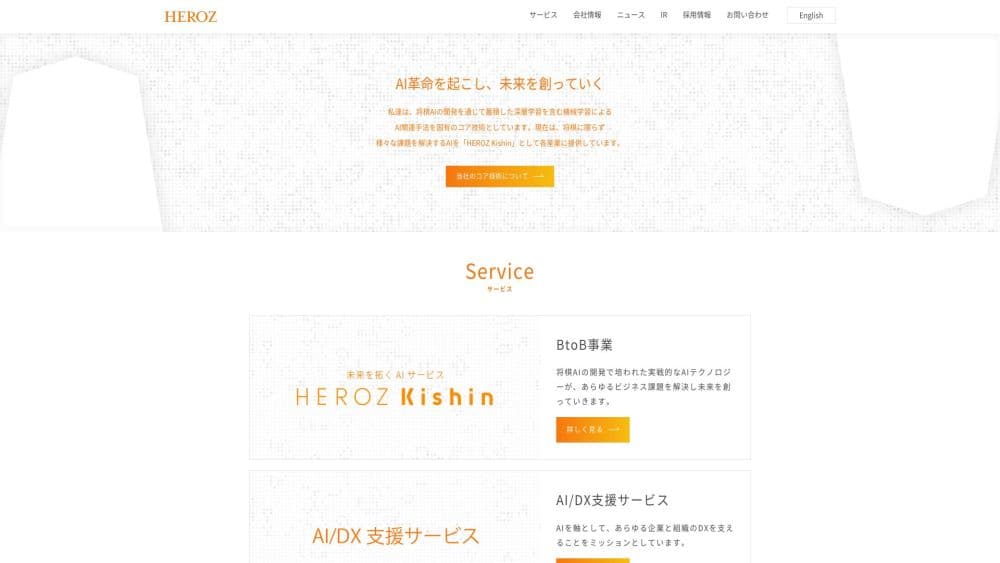
About HEROZ
What Is HEROZ
HEROZ is an AI technology company based in Tokyo, Japan. It started in 2009 by building engines for shogi (Japanese chess), and its software famously defeated an active professional shogi player in a public match in 2013. That win gave the team a practical machine learning skill set it now applies well beyond board games.
The company runs two lines of work. On the consumer side, it publishes mobile apps like Shogi Wars, CHESS HEROZ and BackgammonAce, where players test ideas against an AI opponent. On the business side, it packages the same prediction and decision technology into services for energy management, logistics, market forecasting and other operations problems.
The main limitation is scope. HEROZ is not a general-purpose chatbot or a consumer AI assistant. Most of its tools are aimed at Japanese users and Japanese enterprises, and the enterprise products are sold through sales conversations rather than self-serve signups. If you do not read Japanese or need a plug-and-play cloud API, the fit is weaker.
Getting Started
- Go to the official HEROZ site and look at the service list to see whether you want a consumer app or a business solution.
- For apps, install Shogi Wars or another title from your app store, then create a free account and start a match against the AI.
- For business use, use the contact form to describe your problem, such as demand forecasting or scheduling, and let the team scope a proof of concept.
- Review the pilot results, then decide whether to move the system into live operations.
Product Information
A quick look at HEROZ's pricing, supported platforms, and performance.
Best for
The users, tasks, and scenarios where this tool fits best.
Users
- Shogi and chess players
- Casual board-game fans
- Operations and data teams at Japanese companies
Tasks
- Practicing board-game tactics
- Demand and supply forecasting
- Browser-based shogi review
Scenarios
- Daily shogi study on a commute
- Enterprise planning cycles
- Researching what a board-game AI can do
Key features
Shogi Engine Built From Real Competition
HEROZ traces its reputation to a shogi engine that beat an active professional in public play. The same engine powers the consumer apps, so casual players get access to strength that once required dedicated hardware. For anyone studying shogi, that means honest feedback on where a position turns.
Shogi Wars and Mobile Board Games
Shogi Wars, CHESS HEROZ and BackgammonAce bring the company's AI to iOS and Android. Each title mixes online play with an AI opponent you can consult for hints. The apps are built for short sessions, which makes them easy to pick up during a commute or a lunch break.
HEROZ Kishin for Business Problems
Kishin is the enterprise side of HEROZ. It takes the prediction and decision methods from board games and points them at tasks like energy management, space control and supply chain planning. The pitch is that a model trained on your historical data can out-guess a rule-based system, and the work starts with a scoping project. That scope step matters, since enterprise AI rarely ships without custom setup.
Browser-Based Analysis With Kishin Analytics
Kishin Analytics, launched in 2022, runs shogi analysis in a web browser instead of on a local machine. That removes the need for an expensive GPU setup, which used to keep serious analysis out of reach for many players. It also lets players in rural areas or outside Japan study together without matching hardware.
Machine Learning That Carries Across Domains
The company's core claim is that its evaluation-function approach does not depend on shogi rules. The same method that scores a board position can score a demand curve or a schedule. That flexibility is why HEROZ markets one technology stack across very different industries.
Japanese-Language Support and Local Focus
Documentation, apps and sales run primarily in Japanese, which matches the company's home market. For Japanese players and firms this means fast support and familiar terminology. For everyone else it is a real barrier that shapes who can realistically use the products.
Pros and cons
Pros
- Proven shogi and chess engines give the consumer apps genuine analytical depth.
- Free mobile titles make it easy to try the underlying AI without a sales process.
- The business tools reuse proven prediction methods rather than starting from scratch.
- Browser-based analysis lowers the hardware bar for serious shogi study.
Cons
- Most documentation and support are in Japanese, which limits use outside Japan.
- Enterprise products require a sales conversation, so there is no self-serve pricing to compare.
- There is no public, general-purpose API, so developers cannot simply plug HEROZ into an app.
- The consumer apps focus on board games, not on broader everyday AI tasks.
Frequently asked questions
HEROZ builds AI engines for board games, and the shogi software behind Shogi Wars is its best-known example. It adapts the same machine learning into enterprise AI tools like HEROZ Kishin for forecasting and planning.
Related content
Explore related tools, skills, and articles for HEROZ.
HEROZ Alternatives

Base Code
Base44 (Wix) · Coding · ProductivityBase Code is a shared cloud development environment from Base44. Teammates describe changes to an existing GitHub codebase in chat, preview them live and send them back as pull requests.

Google EmbeddingGemma 2
Google DeepMind · Writing · Image · CodingGoogle EmbeddingGemma 2 is a 740M-parameter open model that turns text, code, images, audio, and video frames into vectors in one 768-dimension space, running on phones and laptops.

GitGlow
GitGlow · Coding · ProductivityGitGlow is a local-first desktop Git client that lets independent developers review their own code and their AI agents' changes in one place before shipping.