

AI Humanizer
Humanizador.net · Writing
AI Humanizer is a free web tool that rewrites AI-generated text into natural, human-sounding writing so it reads better and slips past AI detectors.
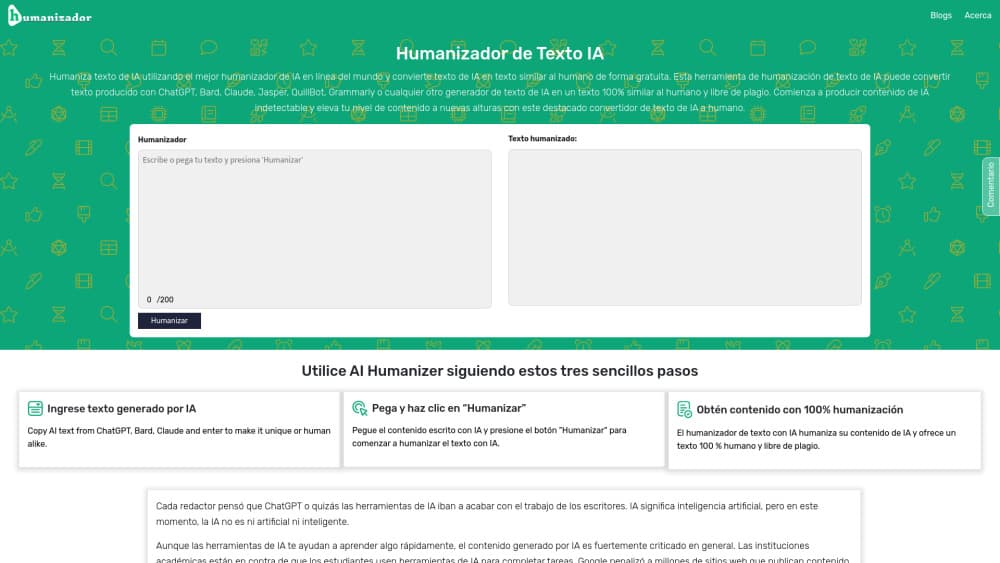
About AI Humanizer
What Is AI Humanizer
AI Humanizer is an online tool from humanizador.net that turns machine-generated writing into text that reads like a person wrote it. You paste output from ChatGPT, Claude, Gemini, or any other generator, pick a mode, and the tool rebuilds the phrasing in seconds. No install, no account required.
The pitch is simple. Raw AI text tends to repeat sentence shapes, lean on filler words, and carry patterns that detectors flag. AI Humanizer rewrites those passages into shorter, more varied sentences and strips out the jargon. It also fixes spelling and grammar along the way, so the result is cleaner than the input. Why does that matter? Because editors and graders spot the same tics detectors do. According to the team behind it, the tool is trained specifically for Spanish, which makes it a better fit for Spanish-language content than general-purpose paraphrasers.
The catch is that humanized output still needs a human check. This tool adjusts style and structure, not facts. If your AI draft contains a wrong date or a made-up statistic, it stays wrong after humanizing. Treat it as a rewriting aid. Not a fact-checker.
Getting Started
- Open humanizador.net in any browser and paste your AI-generated text into the input box at the top of the page.
- Choose the mode you want and, if you like, set the target language for the rewrite.
- Click the humanize button and wait a few seconds while the text is rebuilt.
- Copy the result and read it once yourself to confirm the wording matches your intent before you publish.
Product Information
A quick look at AI Humanizer's pricing, supported platforms, and performance.
Best for
The users, tasks, and scenarios where this tool fits best.
Users
- Students who want their own writing to sound less like a chatbot, as long as their school still allows AI help
- Content writers and bloggers turning rough AI drafts into publishable posts
- Spanish-speaking marketers and PR teams who need copy that reads naturally to local readers
- SEO specialists worried that unedited AI content could drag down a site in search rankings
Tasks
- Rewriting ChatGPT output so sentences vary in length and stop sounding templated
- Cleaning up grammar and spelling while humanizing a draft in one pass
- Loosening stiff corporate phrasing in reports and presentations before sending them
- Reprocessing old AI-written pages that no longer read well
Scenarios
- Turning a long AI draft into a post you can publish the same day
- Preparing a client deliverable where the prose has to sound in-house
- Fixing academic text so it meets originality checks, when the school permits AI assistance
- Quick rewrites on a phone or a shared computer, since everything runs in the browser
Key features
AI Text to Human-Sounding Prose
The core job is turning flat AI output into writing that sounds like a person sat down and wrote it. Say you want to humanize ChatGPT text. Paste your draft, and the tool restructures long passages the way a human writer would. Uniform paragraphs get broken up. Sentence flow changes. The result carries a different rhythm than the raw AI version.
Bypassing AI Detectors
Beyond making text read better, the tool works to lower similarity scores that detectors pick up on. It targets the patterns these tools tend to flag rather than just swapping a few synonyms. Nobody can promise a clean pass on every detector, and tools change. But reducing obvious AI markers is the point. That's how you bypass AI detection without rewriting everything by hand.
Grammar and Sentence Structure Cleanup
The humanizer runs your text through natural language processing and rewrites clumsy constructions. Long, tangled sentences get broken into shorter ones that carry the same meaning. Spelling and grammar errors are corrected as the text is rewritten, so you get a cleaner draft without a separate editing pass.
Writing Style Imitation
You can point the rewrite at a particular writing style, which helps when the output has to match the tone of a brand, a report, or a specific audience. The content stays versatile and readable while the voice shifts to fit what you asked for.
Tuning for Readers and Search Engines
The team says the tool optimizes content for both people and search engines. Written plainly: the output is meant to be readable and to avoid the low-quality markers Google looks for when judging mass-produced AI pages. That matters if you publish content at scale.
Spanish-First Training
Unlike generic paraphrasers that translate then rewrite, this tool is trained for Spanish. Spanish-language output tends to sound more idiomatic as a result. If most of your work is in English, other tools may serve you better.
Pros and cons
Pros
- Free to use with no account or install, so you can try it in under a minute
- Built and tuned for Spanish, which gives it an edge over general paraphrasers for that market
- Rewrites the structure of AI text, not just synonyms, so output reads more naturally
- Fixes grammar and spelling in the same pass, saving a separate editing step
Cons
- It changes style, not facts. Errors in your AI draft survive the rewrite, so a human still has to check the content.
- There's no published pricing page or API, which makes it hard to build into an automated workflow
- Detector results vary by tool and change over time, so no humanizer can guarantee a clean pass
- The interface and help content are mainly in Spanish, which adds friction for English-only users
Frequently asked questions
It humanizes AI text so it sounds like a person wrote it. You paste output from ChatGPT or another generator, and the tool restructures the wording, fixes grammar, and aims to bypass AI detection. It acts like an AI paraphrasing tool, but its focus is making output read naturally rather than just swapping words. The phrase itself, humanize AI text, describes the whole job: take flat machine prose and rebuild it until a reader can't tell a model drafted it.
Related content
Explore related tools, skills, and articles for AI Humanizer.
AI Humanizer Alternatives

Google EmbeddingGemma 2
Google DeepMind · Writing · Image · CodingGoogle EmbeddingGemma 2 is a 740M-parameter open model that turns text, code, images, audio, and video frames into vectors in one 768-dimension space, running on phones and laptops.

MePersona
MePersona, Inc. · Writing · Productivity · MarketingMePersona is an AI unified inbox for creators. It learns your voice, drafts replies to fan messages from 12 platforms, and sends only what you approve.

Fluence
Yay Software (Yannick Huchard) · Writing · Voice & Language · ProductivityFluence is an Android app that reads PDFs, EPUBs, Word files and web articles aloud, follows each sentence as it speaks, and answers questions about the text on the phone itself.