

AI-powered Employee Onboarding
Humi Onboarder · Other
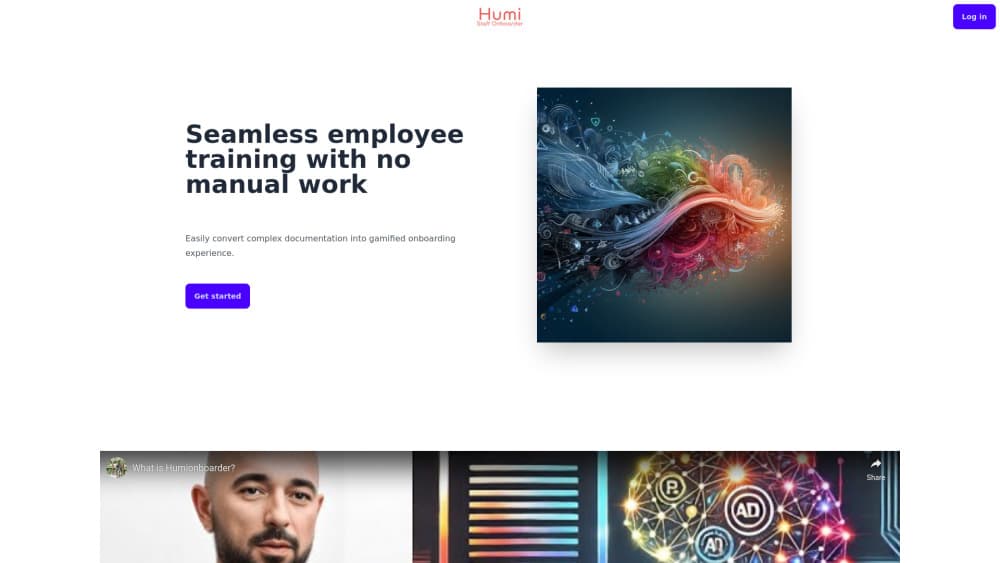
Humi Onboarder is an AI onboarding platform that converts HR documents into short video lessons, quizzes and department specific training paths for new hires.
About AI-powered Employee Onboarding
What Is Humi Onboarder
Humi Onboarder is employee onboarding software built on one plain observation: nobody learns a job from a sixty page PDF. The platform takes documents a company already has, turns them into short lessons with AI training videos and quizzes, then tracks who finished what. Everything runs in a browser, so a new hire opens a link and starts learning without installing anything.
The problem it goes after is repetition, the part most AI employee onboarding tools leave untouched. Managers explain the same leave policy every month, and the same answer sits in five different folders. Humi keeps one course per team, refreshes lessons when the source file changes, and handles routine questions through an assistant that reads company material instead of the open web.
The limits deserve the same attention. Humi Onboarder is young, the public build is v0.3, and pricing is quote based, so a small team can't budget without booking a call. Lesson quality also depends on the documents you feed it. Thin source files produce thin courses.
Getting Started
- Book a demo from the site and get workspace access from the Humi team.
- Create your first course and upload the source files, PDF or TXT on the entry plan.
- Let the AI draft lessons, then review each one before it goes live.
- Split the course by department, so sales, dev and HR see different flows.
- Invite new hires by seat, then open the analytics panel to see who is stuck.
Product Information
A quick look at AI-powered Employee Onboarding's pricing, supported platforms, and performance.
Best for
The users, tasks, and scenarios where this tool fits best.
Users
- HR teams at companies of 20 to 200 people
- Hiring managers who repeat the same walkthrough
- Learning and development specialists
Tasks
- Turning a policy handbook into lessons
- Checking what new hires understood
- Answering routine HR questions
Scenarios
- Hiring five people in one month
- Remote first teams
- Product or pricing changes
Key features
Document to Video Lessons
Upload a PDF or TXT file and Humi drafts short lessons from it, replacing walls of text with clips of a few minutes. You review each draft and edit the wording before it reaches a new hire. This is the core of the product, and it sets the pace for the rest of the onboarding automation.
Quizzes With Answer Feedback
Each lesson can end with multiple choice or open questions. The system marks the answer and explains what went wrong, which does more for retention than a completion checkbox. Managers see which questions trip people up across a whole cohort.
Department Specific Flows
A single company course rarely fits every team, so Humi generates separate flows per department. Sales sees pricing and objection handling, developers see the release process, HR sees compliance. Content stays in one place while each group follows its own route.
AI Assistant With Company Knowledge
New hires ask the assistant instead of hunting through folders. Answers come from your uploaded material, so a question about time off returns your actual request process. It's the part that saves managers the most interruptions during a busy month.
Bulk Updates and Conflict Checks
When a policy changes, you edit the master content and the change lands across every course that uses it. The system flags duplicate entries and conflicting versions of the same rule. That keeps one source of truth instead of six near copies.
Progress and Course Analytics
A live panel shows progress per person and per course, plus the questions that keep coming up. Humi suggests fixes, such as adding a quiz where most learners skip a slide. Teams use those suggestions to tighten new hire onboarding between cohorts rather than after a year.
Pros and cons
Pros
- Cuts the reading load fast, since the same handbook becomes short lessons instead of a document dump.
- Gives managers visibility into progress and weak spots without chasing people for status updates.
- Department flows fit real org charts, where a shared deck rarely works for sales and engineering.
- The assistant answers from company documents, so replies match internal policy.
Cons
- No published price list, so you can't compare cost per seat before a sales call.
- The entry plan caps you at one course and two student seats, which is tight for any team hiring at volume.
- Live sync with Notion, Confluence or CRM tools is listed as coming soon, not available today.
Frequently asked questions
It's an AI onboarding platform that turns company documents into short video lessons, quizzes and per department training flows, then tracks how new hires progress.
Related content
Explore related tools, skills, and articles for AI-powered Employee Onboarding.
AI-powered Employee Onboarding Alternatives

Firecrawl
Firecrawl (Mendable AI) · Coding · OtherFirecrawl is a web data API that turns pages into clean Markdown or structured JSON, so AI agents and apps can search, crawl and read the live web.
BinkBink
BinkBink · OtherBinkBink is a free online game platform and AI game maker that lets anyone turn a short text description into a playable browser game. You can jump into hundreds of community-made games. Or describe your own idea and play it in seconds, then share it with friends. Want to create your own game? You don't need to code. No engine setup, no download, no hassle.

Audiogen
Audiogen Inc. · OtherAudiogen is an AI music generator built by Audiogen Inc., a small research team that spent about 2.5 years training its own generative music model and designing a web interface around it. Instead of a plain text box, this AI music tool turns the timeline into a beginner-friendly Generative Audio Workstation, or GAW, where inpainting, extending, remixing and stem editing work more like painting on a canvas. The product is still in beta, so access runs through a waitlist or an invite. Paid plans aren't published yet.