

Hunyuan-T1
Tencent · Business · Other
Hunyuan-T1 is Tencent's deep-thinking reasoning model, built to work through math, logic and long documents before it answers.
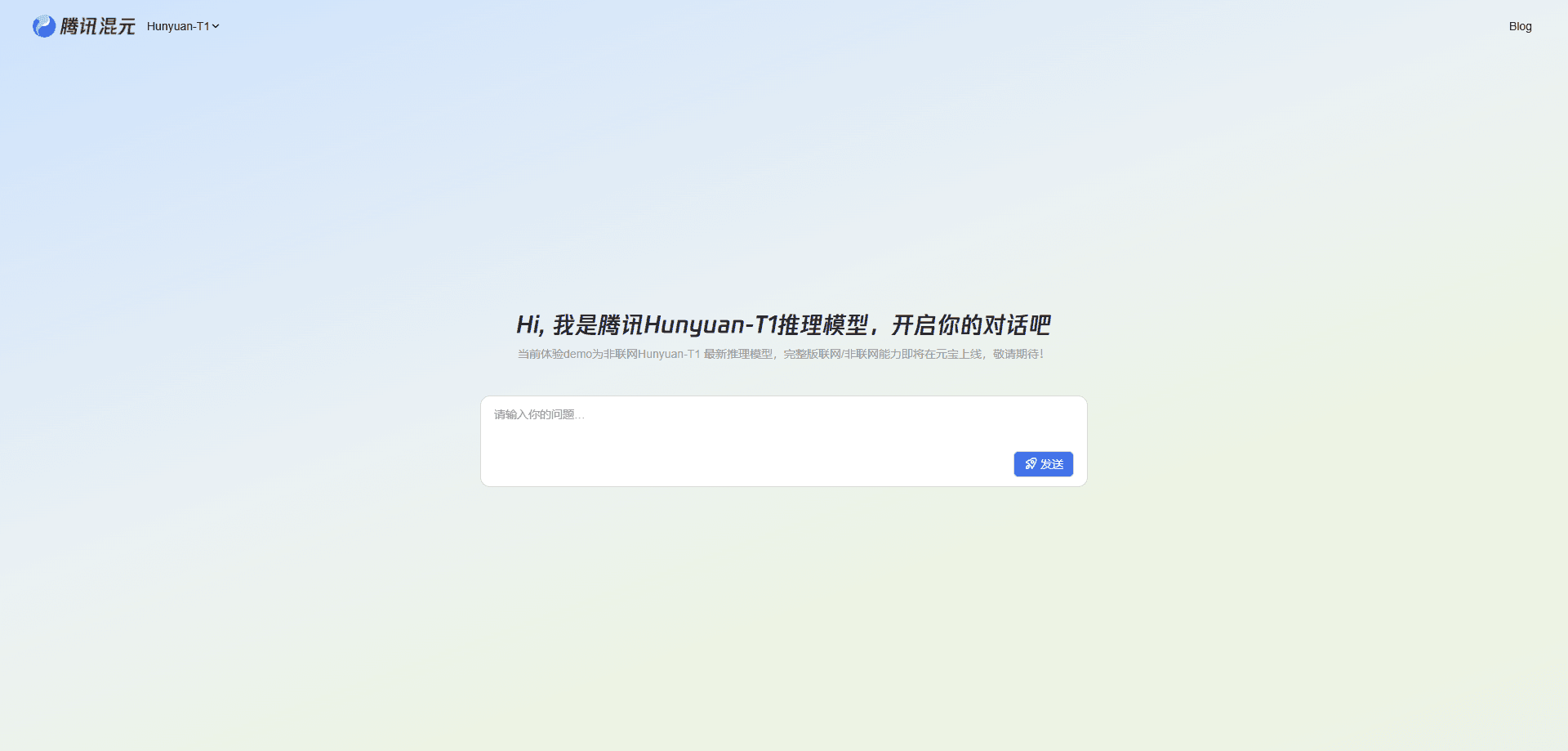
About Hunyuan-T1
What Is Hunyuan-T1
Hunyuan-T1 is Tencent's first dedicated reasoning model and the first deep thinking AI model of its kind from the company. It takes a question, works through the steps in a visible chain of thought, then hands back an answer. Tencent built it on TurboS, a large mixture-of-experts base released in March 2025, and tuned it further so it would reason carefully instead of replying on instinct.
The architecture is the part that gets attention. T1 mixes Mamba layers with regular Transformer layers, and Tencent says this was the first time the hybrid approach was applied to a very large reasoning model. The practical payoff is speed. Tencent claims a first token in about a second and a generation rate of 60 to 80 tokens per second, which is quick for a model that thinks before it speaks.
Where T1 lands is on price. At ¥1 per million input tokens and ¥4 per million output tokens, it undercut most rivals of its size when it launched. That gap is the reason people paid attention, not a leaderboard crown.
Two things matter before you build on it. Tencent retired the hunyuan-t1 API in June 2026 and pushed users toward newer models, so new projects should check what is current. And the model itself is closed. Only some other Hunyuan family members are open-weight, so T1 runs through the API or Tencent's own apps, not on your own hardware.
Getting Started
- Sign up for a Tencent Cloud account, then open the Hunyuan section in the console
- Create an API key and copy it, since later requests depend on it
- Point an OpenAI-compatible client at the Hunyuan endpoint and set the model name, hunyuan-t1-latest when this version was live
- Send a test prompt and read the thinking trace alongside the final answer
- Watch token usage in the console and top up balance when the free quota runs out
Product Information
A quick look at Hunyuan-T1's pricing, supported platforms, and performance.
Best for
The users, tasks, and scenarios where this tool fits best.
Users
- Developers who need cheap reasoning
- Students and self-learners
- Product teams building chatbots
- Analysts working with long reports
Tasks
- Math and logic problems
- Long-document reading
- Code explanation
- Chinese-language writing and knowledge work
- Quick research chats
Scenarios
- A startup prototypes a reasoning feature
- A student studies for an exam
- A newsroom digests a long filing
- A team localizes a product
Key features
Hybrid Mamba-Transformer Architecture
T1 pairs Mamba layers with Transformer layers instead of using one alone. Tencent built the base on this mix and says it cuts the compute and memory that a plain Transformer needs as text gets longer. For you, that translates into steady speed on long inputs rather than a model that slows to a crawl once a document grows.
Fast Thinking-to-Answer Speed
The headline number is throughput. Tencent reports a first token in about a second and 60 to 80 tokens per second during generation, roughly double what it calls the industry average. A reasoning model that stalls is painful to sit in front of, so the speed is a real part of the pitch, not a footnote.
Visible Chain of Thought
T1 shows its reasoning before the final answer. You see the steps it took, which helps when an answer looks wrong, since you can spot the turn where the logic broke. For study and debugging, that trace is often more useful than the answer itself.
Long-Context Document Handling
The Mamba side of the design targets long sequences, and Tencent positions T1 for reading academic papers, plans and lengthy reports. Feed in a long document and ask for a summary or a specific fact, and the model works through it in one pass. This is the job it was tuned for.
OpenAI-Compatible API
Tencent exposes T1 through an endpoint that speaks the OpenAI chat format. If you already call OpenAI, you change the base URL and the model name and keep the rest of your code. That compatibility is why a lot of outside developers tried Hunyuan at all.
Strong Chinese Language and Knowledge
T1 leans on Tencent's Chinese training data, and it shows on Chinese benchmarks. For teams working mainly in Chinese, that edge matters more than a small gap on an English test. Knowledge and reasoning in Chinese are where the model feels most at home.
Pros and cons
Pros
- Low output pricing at ¥4 per million tokens keeps reasoning-heavy jobs affordable
- Hybrid Mamba design targets long text, so documents don't fall apart as they grow
- Visible thinking steps help you check an answer instead of trusting it blindly
- OpenAI-compatible endpoint means little work to swap it into an existing app
- Solid Chinese knowledge and reasoning, useful for teams not working in English
Cons
- Tencent retired the hunyuan-t1 API in June 2026, so new builds should pick a current model
- The model is closed, so you can't self-host it or keep data on your own servers
- Benchmarks come from Tencent, and outside testing has flagged occasional hallucination on hard reasoning
- Some newer model lines require a paid plan or an enterprise agreement
Frequently asked questions
Hunyuan-T1 is a reasoning model from Tencent, released in March 2025. It works through logic and math step by step before answering, rather than replying straight away. It was Tencent's first deep-thinking model and ran on the company's Hunyuan API and inside Tencent's own apps.
Related content
Explore related tools, skills, and articles for Hunyuan-T1.
Hunyuan-T1 Alternatives

Knocket
Knocket (Tencent RTC team) · Productivity · Business · ChatbotKnocket is a free live chat and contact page tool that lets visitors message you from your website, app, or a shareable link, with every reply handled from Telegram or one inbox.

shippedit.me
Krawlup · Marketing · Businessshippedit.me now redirects to Krawlup, a web platform that audits SEO, AEO and page speed every week, then hands the fixes to AI coding agents over MCP.

Ayven
Alknoma · Productivity · BusinessAyven is an AI control centre by Alknoma that turns a plain-language goal into a dated plan, hands the work to your people and AI agents, and asks for your approval only when the call is yours.