

Hypotenuse AI
Hypotenuse AI · Writing · AI Detection
Hypotenuse AI is an AI-first platform for ecommerce teams. It enriches product data, writes on-brand descriptions, and edits catalog images from one workspace.
About Hypotenuse AI
What Is Hypotenuse AI
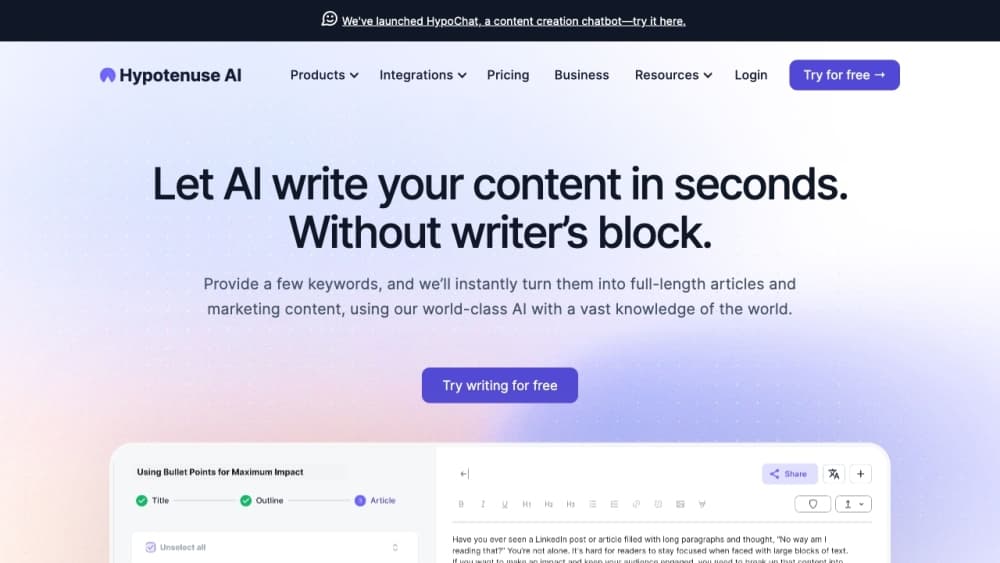
Hypotenuse AI is a product content platform built for ecommerce teams. It started as an AI product description generator and now positions itself as an AI-first PIM, a central system where you store, enrich, and publish the information behind every product you sell.
The pitch is that most catalogs are messy. Attributes go missing, descriptions read like they came from a template, and images need cleanup before a marketplace will accept them. Hypotenuse AI fills those gaps with AI, then pushes the finished content out to your store and your sales channels. Data accuracy work with AI auto-enrichment Fill missing attributes using AI that searches the web, UPC codes, and spec sheets. Or extract attributes directly from product images. It also covers tagging and categorization, plus normalization so formats stay consistent across channels.
The limits are worth knowing before you commit. Pricing is custom and sales-gated, so there's no published per-seat number to compare against. It's aimed at ecommerce operations and enterprise teams rather than a casual blogger. A free trial lets you test the tools, but a permanent free plan isn't offered.
Getting Started
- Book a demo or start a free trial from hypotenuse.ai. The Basic tier supports a single seat for catalogs under 100 products.
- Connect your store or PIM so the platform can pull in product data. Shopify, Salesforce Commerce Cloud, NetSuite, and other integrations are supported.
- Run AI enrichment to fill missing attributes, extract specs from images, and apply tags and categories against your taxonomy.
- Generate product descriptions and page content in your brand voice, then bulk edit images to a consistent studio look.
- Use HypoChat for one-off research and drafts while bulk tools handle the catalog, then publish to your website and marketplaces and track rankings across Google, Amazon, and Walmart.
Product Information
A quick look at Hypotenuse AI's pricing, supported platforms, and performance.
Best for
The users, tasks, and scenarios where this tool fits best.
Users
- Ecommerce operations teams
- Content and SEO managers
- Brand and marketing teams
Tasks
- Enriching product data
- Writing product descriptions at scale
- Editing catalog images
- Localizing content
Scenarios
- Onboarding a large catalog
- Meeting retailer requirements
- Managing many channels
Key features
AI-First PIM
The platform works as a PIM, a system that holds product data, content, and images in one place. It's built to answer a familiar problem: product information spread across spreadsheets, a store backend, and a folder of images. Here you manage all of it in a central source of truth, which keeps categories and attributes consistent as your catalog grows.
Product Data Enrichment
Enrichment is the feature that saves the most manual work. The AI fills missing attributes by searching the web, UPC codes, and spec sheets, and it can pull details like color or size straight from a product image. It then normalizes formats and fixes errors, so a record that arrived half-empty leaves ready for every channel.
Product Tagging and Categorization
Tags and categories decide whether a product surfaces in search and on marketplaces. This feature applies accurate tags and sorts each SKU using your taxonomy, whether that follows Google, Amazon, or a custom system you maintain. For a catalog with thousands of items, it's the difference between a clean structure and a pile of mislabelled listings.
Bulk Product Description Generation
You can generate thousands of unique product descriptions in one pass, each written in your brand voice and formatted to SEO best practices. The tool also covers meta titles, category pages, blog articles, and other content types, so a large launch doesn't turn into weeks of writing.
AI Image Editing and Standardization
Raw catalog images rarely look uniform. This feature aligns backgrounds and shadows for a consistent look, crops and resizes based on product shape, sharpens details, and places products into lifestyle scenes. An image compliance checker then reviews shots against retailer rules before you send them out.
SEO and GEO Optimization
The platform monitors how your product pages rank across Google, Amazon, Walmart, and other retailers, and suggests keywords at the product and category level. The content is also shaped for GEO, so it's more likely to surface when buyers research through AI-driven search rather than a classic results page.
Pros and cons
Pros
- One platform covers data enrichment, content writing, image editing, and publishing, so teams stop stitching together separate tools.
- AI enrichment fills missing attributes from the web, UPC, and product images, which cuts the manual cleanup that slows a launch.
- Descriptions are written in your brand voice and formatted for SEO and AI-driven discovery, not left as generic template copy.
- Bulk workflows let you generate and edit across a full catalog instead of one product at a time.
- HypoChat adds quick AI chat with real-time web research for the gaps the bulk tools don't cover.
- The guideline checker flags content and images that break channel rules, which helps listings get approved faster.
Cons
- Pricing is custom and sales-gated, so you can't see a public per-seat number before talking to the team.
- There's no permanent free plan, which makes it harder to judge the tool before a demo.
- The product is aimed at ecommerce operations and enterprise catalogs, so a hobbyist or solo blogger will find it overbuilt.
- Output still needs a human pass on facts and brand nuance, since AI copy can read well and still miss a detail.
Frequently asked questions
Hypotenuse AI is used to manage and generate ecommerce product content. Teams use it to enrich product data, write on-brand descriptions and SEO content, edit catalog images, and publish everything to a website, marketplaces, and other sales channels.
Related content
Explore related tools, skills, and articles for Hypotenuse AI.
Hypotenuse AI Alternatives

Google EmbeddingGemma 2
Google DeepMind · Writing · Image · CodingGoogle EmbeddingGemma 2 is a 740M-parameter open model that turns text, code, images, audio, and video frames into vectors in one 768-dimension space, running on phones and laptops.

MePersona
MePersona, Inc. · Writing · Productivity · MarketingMePersona is an AI unified inbox for creators. It learns your voice, drafts replies to fan messages from 12 platforms, and sends only what you approve.

Fluence
Yay Software (Yannick Huchard) · Writing · Voice & Language · ProductivityFluence is an Android app that reads PDFs, EPUBs, Word files and web articles aloud, follows each sentence as it speaks, and answers questions about the text on the phone itself.