

ICAI
Innovation Center for Artificial Intelligence (ICAI) · Other
ICAI, the Innovation Center for Artificial Intelligence, is a Dutch AI research network that pairs universities with companies in 50+ labs and trains PhD talent.
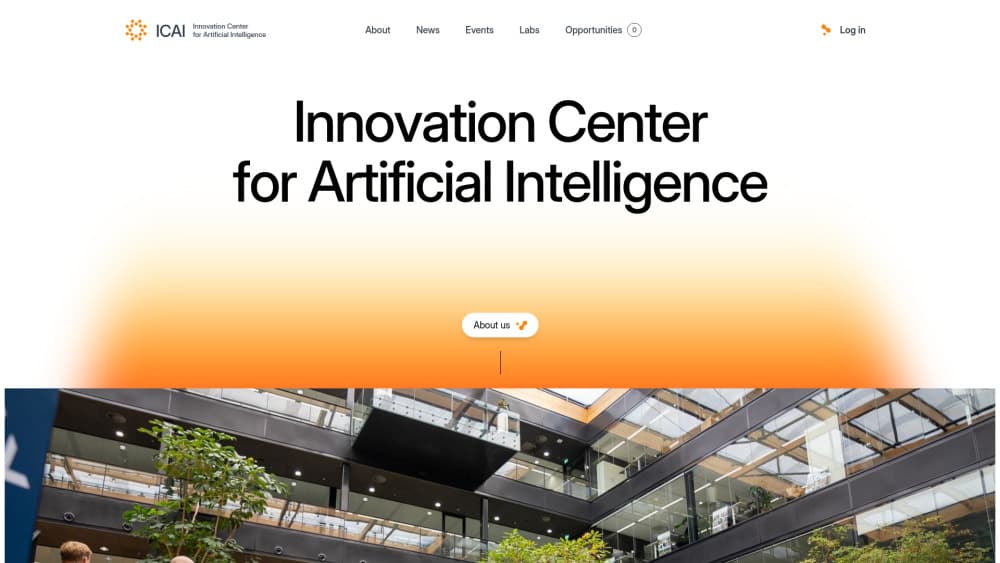
About ICAI
What Is ICAI
ICAI stands for Innovation Center for Artificial Intelligence, a national network based in Amsterdam and founded in 2018 by the University of Amsterdam and Vrije Universiteit Amsterdam. Its stated mission is to keep the Netherlands at the front of AI knowledge and talent. The work happens in labs, and each lab is a joint project between a knowledge institute and one or more industry, government or non-profit partners.
The structure is what makes it unusual. Rather than one central campus, ICAI runs a hubs and spokes model: labs grow from local strengths in different Dutch regions, and the national office connects them. There are more than 50 AI labs today, covering medical imaging, energy grids, forensic science, Parkinson's research and software engineering, among other fields.
ICAI is not a product you download or subscribe to. It's an organization, and most of what it offers is either free to read or tied to a research position. That distinction matters if you land on the site expecting a tool. The funding comes from the AI Technology for People initiative and the Netherlands AI Coalition, while each lab is paid for by its own partners.
Getting Started
- Browse the labs page and find the field you care about, since each lab lists its partner organizations and research focus.
- Read the opportunities and vacancies section if you want a paid AI PhD positions route rather than general news.
- Check the Academy page for professional tracks, then the events calendar for open sessions you can attend without an affiliation.
- Contact the lab lead or the national office at [email protected] when you want to discuss a partnership or a research question.
Product Information
A quick look at ICAI's pricing, supported platforms, and performance.
Best for
The users, tasks, and scenarios where this tool fits best.
Users
- Master's students and graduates hunting for AI PhD positions
- Companies with a concrete AI problem and a research budget
- Healthcare staff and civil servants who want practical AI training
Tasks
- Finding a research partner in the Netherlands
- Reading up on trustworthy AI
- Getting a small company started with data
- Tracking Dutch AI policy and community news
Scenarios
- A PhD candidate comparing four labs before applying
- A hospital department exploring AI for imaging
- A municipality employee who needs a grounding in AI before a procurement decision
Key features
More Than 50 Public Private Labs
Each lab pairs a Dutch university with corporate or public partners, and the researcher works inside both worlds. Topics run from AI for energy grids to forensic science and Parkinson's care. The lab list is the most useful part of the site, because it shows who is already funding work in your field.
Ten Year Talent Program
The ten year program sits behind a large share of the current labs. It is set to recruit 170 PhD students over ten years, with support from the Dutch Research Council and dozens of partner organizations. For a candidate, that translates into a steady flow of funded positions rather than a single annual round.
ICAI Academy
The Academy handles education outside the PhD track. It runs a healthcare track for clinicians, a public service program for civil servants, and it backs the Nationale AI Cursus for the general public. Sessions lean on cases from the partner labs instead of textbook examples, which is the reason professionals sign up.
Support for Smaller Companies
SME Datalabs and SME Clinics give small and mid-sized firms a way into AI research without a full lab contract. The format is short and hands-on: you bring a data question, a student or researcher works on it with you, and you leave with a prototype or a clear answer about feasibility.
Open Publications and Podcast
Research output, the ICAI x NL AIC Podcast and event recordings are open to anyone. This is where the network's view on trustworthy AI shows up in practice, with papers and talks on bias, explainability and oversight. Nothing sits behind a paywall.
National Network Model
ICAI works as a hub with regional spokes, so labs follow local strengths in Amsterdam, Rotterdam, Utrecht, Eindhoven, Nijmegen, Maastricht and elsewhere. The national office handles coordination, templates for setting up a lab and the shared events calendar, which saves a partner from inventing the paperwork each time an AI research collaboration starts.
Pros and cons
Pros
- Independent, publicly funded structure, so the material you read is research output rather than vendor content.
- Lab pages name the partners and the research theme, which makes due diligence on a potential collaboration much faster.
- Free access to publications, podcasts and events for anyone, with no account or subscription.
- Professional courses aimed at healthcare and public sector staff, two groups that most AI vendors ignore.
- Clear route from a master's degree to a funded PhD place, with vacancies posted in one place.
Cons
- Almost all activity sits in the Netherlands, so a company outside the country has little reason to apply and no remote option for lab work.
- There is no software product, API or self-serve trial, which disappoints anyone who arrives looking for a tool.
- Lab partnerships move at academic speed, with contracts and hiring that can take months before work starts.
- Some events and courses run in Dutch only, and the site does not always label the language in advance.
Frequently asked questions
ICAI is the Innovation Center for Artificial Intelligence, a Dutch national network founded in 2018 by the University of Amsterdam and Vrije Universiteit Amsterdam. It connects universities, companies and public bodies through joint research labs and PhD programs.
Related content
Explore related tools, skills, and articles for ICAI.
ICAI Alternatives

Odyssey 3
Odyssey · OtherOdyssey-3 is Odyssey's foundation world model. It simulates physics in real time, turns a prompt into an interactive environment, and adapts to robots, cars and games.

JarvisCore
Prescott Data · Coding · Productivity · OtherJarvisCore is an open source Python runtime where AI agents work as equal peers on an agent mesh, claim tasks from a shared ledger, and reach external services through a zero-trust broker.
Clef
Cloudflare · Business · OtherClef is Cloudflare's open-source decision model for Workers AI. It returns calibrated probabilities for typed questions, not generated text, so agents can classify, route, and act fast.