

Mintly
Mintly · Marketing
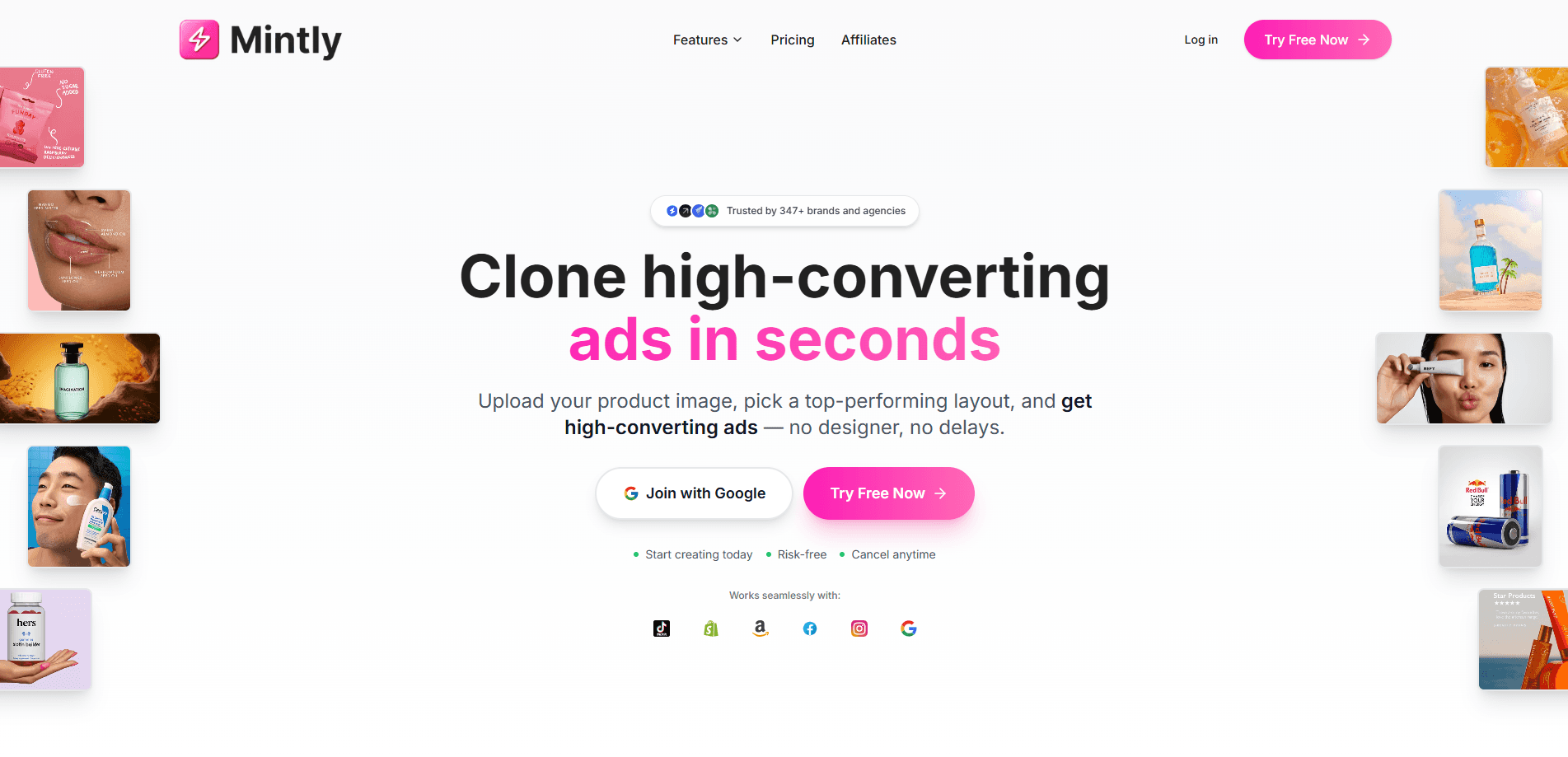
Mintly is an AI ad generator for ecommerce brands. It turns a plain product photo into lifestyle images, UGC-style videos, and static ads without a photographer or a shoot.
About Mintly
What Is Mintly
Mintly is a web-based AI ad generator built for ecommerce teams. As an ecommerce ad maker, it takes a product photo and rebuilds it as a lifestyle scene, a model shot, or a short UGC-style video. The pitch is speed: brands go from a raw image to a batch of ad variations in minutes.
Most AI image tools wreck product details. Logos blur, labels garble, and colors drift. Mintly's main claim is that this AI image generator for ecommerce keeps the product itself accurate while changing everything around it. The company says 1,500+ brands and agencies use it, and that they've generated more than 257,000 ads to date.
The catch is what it isn't built for. This is an ad production tool, not a general image editor. If you need illustrations, art, or one-off graphics, you're not the target user. It also leans on preset templates, which keeps output fast but limits how far you can push a custom idea.
Getting Started
- Sign up at usemintly.com. The first ad is free and doesn't need a credit card.
- Upload a clean product photo, ideally on a plain background.
- Pick a preset, such as a lifestyle scene, a ghost mannequin, or a UGC product review video.
- Set your brand kit so colors, fonts, and logos carry into every ad.
- Generate, review the variations, and download the ones you'll run.
Product Information
A quick look at Mintly's pricing, supported platforms, and performance.
Best for
The users, tasks, and scenarios where this tool fits best.
Users
- Ecommerce founders
- Performance marketers
- Creative agencies
Tasks
- Turning product photos into lifestyle images
- Making UGC-style ad videos
- Cloning a winning ad format
Scenarios
- Launching a new SKU fast
- Scaling creative for paid social
- Replacing an expensive photoshoot
Key features
Static Ad Generator
You pick a proven ad structure from top-performing brands, and this static ad generator rebuilds it with your product, colors, and fonts. The point is to skip the blank canvas and start from a format that already converts. It's the feature most tied to the "clone what works" idea in the product's marketing.
UGC-Style Video Presets
The UGC video generator turns a static photo into a short clip using presets like UGC product reviews, street interviews, and higher-end fashion commercials. Output is sized for TikTok and Meta, so you don't need to hire a creator or film anything yourself. Video generation is available from the Growth plan and up.
AI Image Generator
Beyond ads, the tool generates product photography: ghost mannequins, models holding your product, and lifestyle scenes. Hundreds of presets are tuned to keep the product looking like the real thing. This is where the "no AI weirdness" claim gets tested, since distorted products are the usual failure mode.
AI Photo Editor
You can swap backgrounds, improve lighting, and remove distracting objects while keeping the product itself untouched. It behaves more like a cleanup tool than a full editor, which is fine for ad prep but limited for anything else. The goal is a pixel-accurate product against a new setting.
AdGPT Copy Assistant
AdGPT writes headlines and ad copy that match your brand voice, so the image and the text come from the same place. It's a convenience feature rather than a full copywriting suite. For teams already juggling separate image and copy tools, folding both into one flow saves handoffs.
Ad Spy and Meta Ad Library Cloning
The Growth and Scale plans include Ad Spy and the ability to clone ads from the Meta Ad Library. You can study what competitors run and adapt those structures to your own product. This pairs with the static ad generator to speed up creative testing.
Pros and cons
Pros
- Keeps product details like logos and labels accurate, which is where most AI image tools fail.
- Presets remove the need to write prompts, so non-technical marketers can use it right away.
- Video and image generation sit in one tool, cutting the back-and-forth between separate apps.
- Higher plans cover multiple brand kits and users, which suits agencies juggling several clients.
Cons
- No free tier beyond the first ad, so scaling up means a paid plan from $19/mo.
- The 7-day money-back guarantee only applies if you've used fewer than three credits.
- Preset-driven workflow trades flexibility for speed, so unusual concepts are harder to pull off.
- Credit costs vary by ad type, which makes the per-ad math less predictable than the headline price suggests.
Frequently asked questions
It generates ecommerce ad creative from a product photo. That means lifestyle images, UGC-style videos, and static ads, all produced without a photographer or a shoot.
Related content
Explore related tools, skills, and articles for Mintly.
Mintly Alternatives

ngram 2.0
ngram · Video · Marketingngram 2.0 is an AI video generator for teams. It turns a prompt, a screen recording, or a product URL into a narrated explainer, product demo, or AI avatar video, and every scene stays editable.

shippedit.me
Krawlup · Marketing · Businessshippedit.me now redirects to Krawlup, a web platform that audits SEO, AEO and page speed every week, then hands the fixes to AI coding agents over MCP.

MePersona
MePersona, Inc. · Writing · Productivity · MarketingMePersona is an AI unified inbox for creators. It learns your voice, drafts replies to fan messages from 12 platforms, and sends only what you approve.