

Inventoro
Cin7 (Inventoro was acquired in May 2024) · Other
Inventoro is an AI sales forecasting and inventory replenishment tool for small and mid-sized product sellers. It predicts demand per SKU and turns that forecast into daily reorder lists.
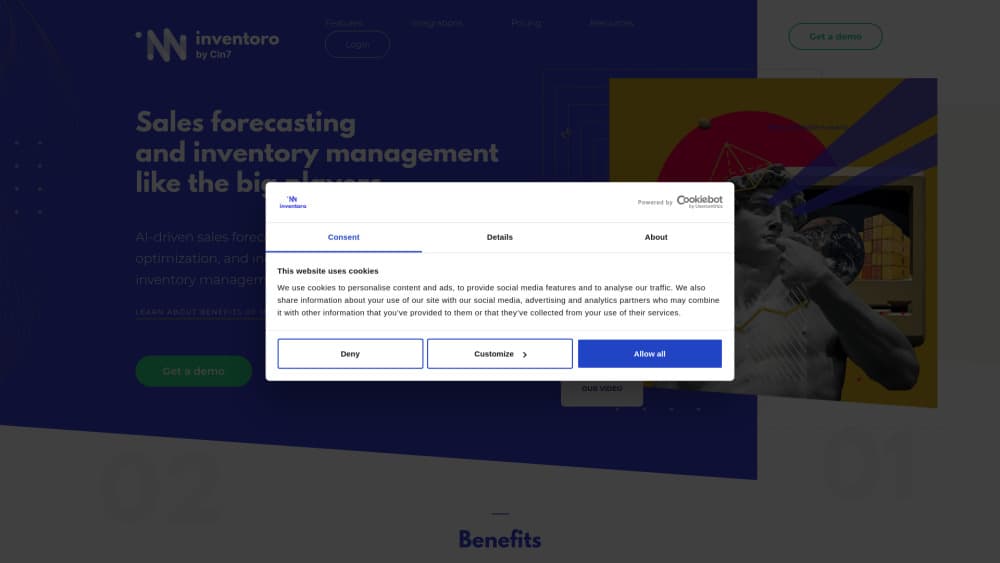
About Inventoro
What Is Inventoro
Inventoro is demand forecasting software for stock planning. It started as a standalone SaaS product in 2020 and now runs inside Cin7. A Prague-based team built it for the kind of seller who tracks stock in spreadsheets and guesses at reorder quantities. The core promise is simple: show you what each product will sell in the coming months, then tell you what to buy this week.
The system leans on your own sales history. It pulls orders from a store, marketplace or accounting tool, builds a forecast for every SKU, and refreshes it every day. Those numbers feed a replenishment list with suggested order quantities, plus a segmentation view that flags fast movers, slow movers and dead stock. According to Cin7, sellers using the forecasting engine reach over 99% product availability and free up to 20% of inventory capital. Those figures come from the vendor, so treat them as marketing claims rather than independent benchmarks.
The important limit is availability. Cin7 acquired Inventoro in May 2024, and inventoro.com now redirects to the Cin7 site. You can't buy Inventoro as a separate subscription anymore. The forecasting engine is sold as an add-on to Cin7 plans under the ForesightAI Forecasting name, which means the product's future is tied to the parent platform.
Getting Started
- Check availability first. Ask Cin7 whether forecasting is offered on the plan you're considering, since the standalone Inventoro signup no longer exists.
- Connect your data. Link a sales channel such as Shopify, Amazon or WooCommerce, then add accounting data from QuickBooks if you want purchase and margin figures in the same place.
- Review the first forecast with real lead times. Set supplier lead times, minimum order quantities and safety stock so the suggestions match how you actually buy.
- Work the replenishment list each day. Accept, adjust or skip the recommended order quantities, then place the purchase orders with your suppliers.
- Track availability and tied-up cash month by month. The reports show what sold faster than forecast and where money is sitting in stock you don't need.
Product Information
A quick look at Inventoro's pricing, supported platforms, and performance.
Best for
The users, tasks, and scenarios where this tool fits best.
Users
- Small and mid-sized e-commerce sellers
- Wholesalers and distributors
- Retail chains with more than one location
Tasks
- Building a demand forecast for the next few months
- Deciding what to reorder this week
- Finding dead stock before it eats your cash
- Planning purchases around promotions
Scenarios
- A Shopify store preparing for Black Friday
- A distributor sitting on too much slow stock after a product refresh
- A growing seller hiring a first purchasing manager
Key features
Daily Sales Forecasts by SKU
Inventoro rebuilds the forecast every day from your order history, so a sudden spike or a quiet week shows up in the plan quickly. Forecasts run months ahead and cover seasonal patterns, which is what most spreadsheet models miss. You can compare projected sales against actuals to see where the model drifts.
Replenishment Lists You Can Order From
The output isn't a chart you have to interpret. Each morning the system produces a list of products, suggested order quantities and the reasoning behind them, sorted by urgency. A buyer can approve the list, adjust a few lines and send purchase orders the same day. That turns inventory replenishment from a monthly project into a daily routine.
Product Segmentation and Dead Stock Analysis
Every item gets sorted by how fast it sells and how much profit it brings, which separates the products worth protecting from the ones tying up cash. The dead stock analysis flags items with no recent sales and shows the capital locked in them. For a catalog with thousands of SKUs, that list is usually the fastest source of freed-up cash.
Inventory Capital and Cash Flow View
The dashboard reports how much money sits in stock, how that number changes over time and what it costs to carry. You can model a purchasing decision before committing, which helps when a supplier offers a bulk discount. Finance and operations end up looking at the same numbers instead of two versions of the truth.
Connectors for Stores, Marketplaces and Accounting
The product syncs sales and stock data from Shopify, Shopify Plus, Amazon, WooCommerce and QuickBooks, and it plugs into Cin7's own inventory platform. Integrations run on scheduled syncs, so the forecast reflects yesterday's orders rather than live checkout events. For inventory planning for Shopify stores, the connector is the part that matters most, since orders and stock levels sync without manual exports. Sellers with custom systems usually need a CSV import or development work.
Unlimited Warehouses, SKUs and Users
Plans don't cap warehouses, SKUs, connections or user seats, which matters once a seller adds a second channel or a second location. Pricing historically scaled with annual turnover instead of catalog size, so a wide catalog with modest revenue wasn't penalized. That structure is now folded into Cin7's add-on pricing.
Pros and cons
Pros
- Forecasts refresh daily, so the reorder plan reacts to last week's sales instead of waiting for a monthly review.
- The replenishment list works as a task queue, which makes the tool usable by a purchasing manager without a data analyst.
- Segmentation and dead stock reporting point straight at the cash tied up in slow products.
- No limits on warehouses, SKUs or users, so growth doesn't trigger a plan change on seat count.
- The forecasting engine is now backed by Cin7, a larger vendor with an established inventory platform and support organization.
Cons
- There is no standalone Inventoro subscription anymore, so new buyers have to adopt Cin7 to get the forecasting engine.
- Pricing comes as a quote rather than a public price list, which makes budgeting harder before a sales call.
- Accuracy depends on clean, long order history, and new products with no sales record get weak predictions until data accumulates.
- Setup requires someone who understands lead times and safety stock, and a team without that knowledge will get poor suggestions from good software.
Frequently asked questions
It forecasts demand for each product and turns that forecast into a daily list of what to reorder. Sellers use it to avoid stockouts on fast movers and to stop overbuying slow ones.
Related content
Explore related tools, skills, and articles for Inventoro.
Inventoro Alternatives

Odyssey 3
Odyssey · OtherOdyssey-3 is Odyssey's foundation world model. It simulates physics in real time, turns a prompt into an interactive environment, and adapts to robots, cars and games.

JarvisCore
Prescott Data · Coding · Productivity · OtherJarvisCore is an open source Python runtime where AI agents work as equal peers on an agent mesh, claim tasks from a shared ledger, and reach external services through a zero-trust broker.
Clef
Cloudflare · Business · OtherClef is Cloudflare's open-source decision model for Workers AI. It returns calibrated probabilities for typed questions, not generated text, so agents can classify, route, and act fast.