

iStory
IntelligentX (Arivu IQ) · Voice & Language · Video
iStory is a no code platform for building interactive stories that blend voice, rich media, and analytics, turning a one way marketing page into a two way conversation.
About iStory
What Is iStory
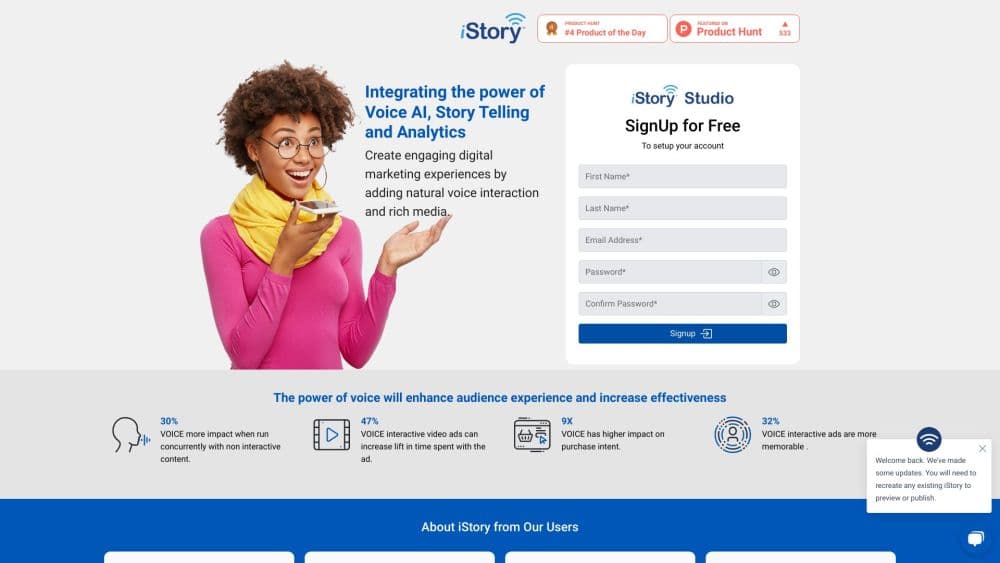
iStory, also marketed as iStoryLive, is a browser based interactive storytelling platform from IntelligentX, a Malaysian AI studio that now operates as Arivu IQ. Marketers assemble a story from text, images, and video blocks, add branching choices, and publish the result as a link that opens in any browser. A reader doesn't scroll past a fixed page. They answer a question, sometimes speak into the microphone, and the story moves with them.
The pitch was voice. The platform chains speech to text, text to speech, and a natural language understanding engine, so a viewer can ask which package suits a family of four and get an answer inside the story instead of hunting through a menu. Nothing to install on the reader side. On the builder side, audience analytics report completion, drop off, and the questions people actually asked out loud.
Status is the part worth knowing before you plan around it. At the time of writing, istorylive.com redirects to the Arivu IQ corporate site, and the studio subdomain ai.istorylive.com does not resolve. The company portfolio lists Koperasi IQ, KoodAI, and client platforms, but no iStory entry. Treat the product as dormant, and read the sections below as a record of what the tool did rather than a signup guide for today.
Getting Started
- Ask the vendor for a studio account. There was no self serve signup and no card form on the site.
- Open a new story and build the first screen: a headline, one image or short video, and an opening question.
- Add a branch for each possible answer, attach voice prompts where you want spoken replies, and mark which options should accept speech.
- Publish the story as a link, then watch the analytics view for completion rate, drop off points, and logged voice questions.
Product Information
A quick look at iStory's pricing, supported platforms, and performance.
Best for
The users, tasks, and scenarios where this tool fits best.
Users
- Digital marketers running campaign pages
- Brand teams with a catalogue to explain
- Agencies pitching interactive work
Tasks
- Guiding a buyer to a product
- Turning a PDF brochure into something readable on a phone
- Collecting spoken feedback at scale
Scenarios
- An event booth where visitors talk to a screen
- Onboarding a new customer through setup steps
- Testing two openings for the same campaign
Key features
No Code Story Builder
Screens, branches, and media sit in one editor that works as an interactive story generator, and publishing is a link rather than an app build. A content marketer can ship a story without waiting on a developer, which is the main reason this category exists. The tradeoff is ceiling: custom logic beyond branches and questions needs the vendor.
Voice Conversations
This is the feature that separated iStory from a plain branching tool. Speech to text captures the question, a natural language understanding layer works out intent, and text to speech answers in a synthetic voice. In practice a reader can ask about price, sizes, or availability and stay inside the story. Microphone quality and background noise still decide whether it works.
Branching Story Logic
Each answer can point to its own next screen, so one published link serves several audiences. Marketers use this for qualification, for language variants, and for splitting a long explanation into short paths. Deep trees get hard to audit, and that's where a map view earns its place.
Rich Media Blocks
Images, video, audio, and formatted text drop into the same screen template. Media is the reason interactive storytelling beats a form: a thirty second clip explains more than three paragraphs of specification. File weight is the cost, and phone users on weak connections feel it.
Audience Analytics
The dashboard tracks how far people get, where they stop, and what they ask. Voice questions are the interesting data, because they show the gap between the words a brand uses and the words a customer uses. Numbers here are directional, not a substitute for a proper attribution setup.
Shareable Link Delivery
A finished story opens from a URL, a QR code, or an embed, with no install step for the reader. That keeps friction low at events and in email, and it means the same asset runs on iOS, Android, and desktop. Offline venues still need a stable connection for the voice layer.
Pros and cons
Pros
- Voice input sits inside the story, so a reader can ask a question instead of guessing which branch to tap.
- No code editor means marketing owns the build and the update, without a sprint.
- One link covers mobile and desktop, and the reader installs nothing.
- Analytics report spoken questions, which is richer feedback than click counts.
- Conversational marketing format fits product finders and event booths especially well.
Cons
- Public availability is the big one: the studio subdomain no longer resolves, so new projects aren't possible right now.
- Pricing was never published. Every plan went through a sales conversation, which slows a small team's decision.
- Voice quality depends on the reader's microphone and room, and noisy venues hurt recognition.
- No mobile app and no documented API, so the story lives in the vendor's platform only.
Frequently asked questions
It builds interactive stories for marketing: a reader answers questions, sometimes by voice, and the story branches to a product recommendation, an explainer, or a next step. Product finders, event kiosks, and brochure replacements are the common uses.
Related content
Explore related tools, skills, and articles for iStory.
iStory Alternatives

Foley
Hanamori Labs, LLC · Voice & Language · Productivity · AI AssistantFoley is a voice to-do list that turns a spoken sentence into a filed task, complete with project, date and time, then helps you plan the day around what is already there.

HireKey
HireKey · Voice & Language · Productivity · LeaningHireKey is an AI job search copilot built by a former tech recruiter. It checks role fit, tailors resumes, runs interview practice and tracks every application.

Fluence
Yay Software (Yannick Huchard) · Writing · Voice & Language · ProductivityFluence is an Android app that reads PDFs, EPUBs, Word files and web articles aloud, follows each sentence as it speaks, and answers questions about the text on the phone itself.