

Koolay AI Platform
Koolay · Other
Koolay is nonprofit management software that runs a website, donations, donor CRM, grant discovery, AI grant writing, events, and e-sign from one login. Plans start at $199/mo.
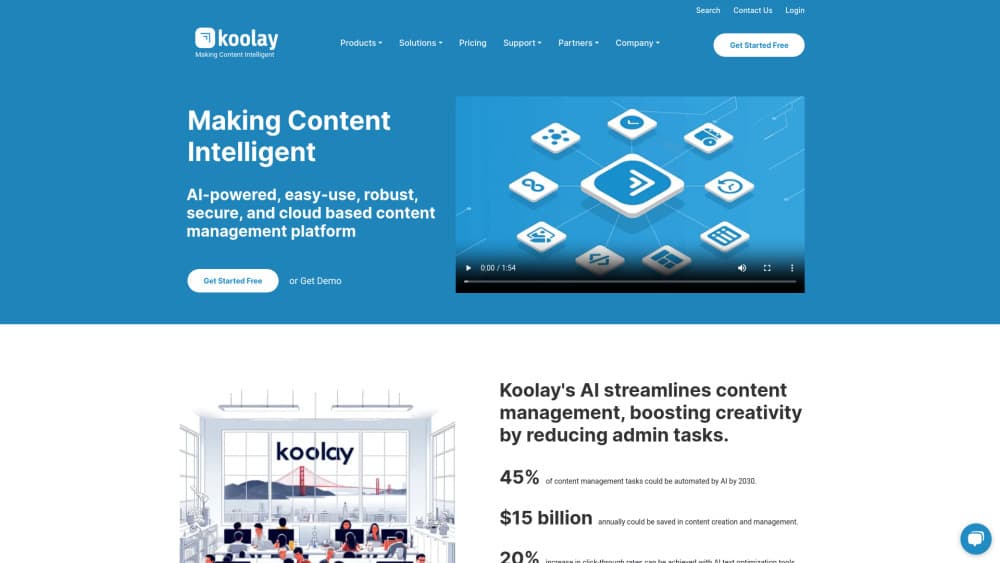
About Koolay AI Platform
What Is Koolay
Koolay is a browser-based donor management platform for small and mid-size US nonprofits, mainly organizations with annual budgets between $1M and $25M. Instead of buying a nonprofit website builder, a donation tool, an events app, a grants subscription, and DocuSign as separate contracts, you get all of them on one data model. A donor who gives at your gala lands on the same record as the grant application you drafted last week.
The company aims at a specific waste: point tools look cheap in year one, then integration upkeep and per-seat pricing eat the savings by year three. Koolay answers with one login, one invoice, and a published price list. The vendor reports SOC 2 Type II, SSO and SAML, role-based access, and an audit log, which matters when your board's IT reviewer gets a vote.
Limits are real. Koolay targets teams that want a turnkey system, so organizations with deep custom objects or an established Salesforce standard will find the incumbents more flexible. The grant database is US-focused, and onboarding assumes you move your donor history rather than run two systems side by side.
Getting Started
- Sign up at koolay.com. Grant Hub Lite is free for organizations under $1M in revenue, and the paid plans include a 14-day trial.
- Enter your EIN so the grant database can match opportunities to your mission and location.
- Pick a theme and publish the public site, donation pages, and forms, or let the onboarding team handle the donor history migration.
- Invite staff, assign roles, and connect email, events, and e-sign so every record stays on one timeline.
Product Information
A quick look at Koolay AI Platform's pricing, supported platforms, and performance.
Best for
The users, tasks, and scenarios where this tool fits best.
Users
- Executive directors at $1M to $25M nonprofits
- Development directors who chase grants and major gifts
- One or two person development shops
Tasks
- Running a fundraising campaign from landing page to tax receipt
- Finding and applying for grants
- Collecting signatures on grant agreements, pledge cards, and board resolutions
Scenarios
- Replacing a stitched stack of CMS, donation tool, events app, email platform, and e-sign contract
- Migrating off Blackbaud Raiser's Edge NXT or a frozen Salesforce NPSP instance
- Board meeting season
Key features
Grant Discovery Matched to Your EIN
The built-in database covers 1.9M nonprofits, 184K funders, Grants.gov listings, corporate RFPs, and 990-PF funder dossiers. You enter your EIN once and the system filters opportunities by mission, geography, and eligibility rather than handing you a federal portal list. Each funder profile shows past giving, which helps you judge whether an application is worth the hours.
AI Grant Writer With Why-GO Scoring
The AI grant writer drafts from your mission statement, budgets, and earlier submissions, so the first draft already sounds like your organization. A Why-GO score flags weak answers before a program officer sees them. Version history keeps every edit and lets you reuse language that worked.
Donor CRM With Recurring Giving and Receipts
Contacts, gifts, segments, lifetime value, and recurring schedules live on one timeline, and tax receipts go out automatically. Plaid bank sync on the Enterprise plan matches deposits to donations, which shortens month-end reconciliation. Restricted and unrestricted funds stay separate for audit purposes.
Website, Donation Pages, and Forms in One CMS
The public site, blog, campaign pages, and donation forms ship from the same system that holds your donor records. Published themes work without a developer, and form submissions write back to the contact record. You avoid the usual gap where site analytics and giving history never meet.
Events With Attendance Written to the Record
Paid RSVP, ticketing, and an internal staff calendar with bookable rooms run beside your public events. Attendance, ticket revenue, and donor details attach to the same constituent, so follow-up asks use real attendance data. Double bookings are blocked at the room level.
Built-In E-Sign for Grant and Board Paperwork
E-signature for nonprofits normally means another vendor contract. Here, signatures for grant agreements, pledges, sponsor contracts, and board documents happen inside Koolay, with the signed file stored against the record. There is no separate e-sign subscription and no downloading a PDF to attach it later. Audit trails cover who signed, when, and from where.
Pros and cons
Pros
- Grants, donors, events, and e-sign share one data model, which removes the export and re-import work that eats staff hours.
- Published pricing at $199 and $299 per month makes budget approval predictable for a small board.
- Grant discovery arrives with the plan instead of as an add-on, and Grant Hub Lite is free below $1M in revenue.
- Migration of donor history is included in onboarding, with cleanup, field mapping, and a parallel run.
- SOC 2 Type II, SSO, role-based access, and an audit log answer most security questionnaires before the first call.
Cons
- The grant database is built around US funders and IRS data, so organizations raising money in Canada or Europe lose a core feature.
- Teams with heavy custom objects or an existing Salesforce build will hit the limits of a fixed data model.
- Entry plans cap users at 5 and 25, so a larger staff either upgrades or shares logins, which defeats the audit trail.
- Bank sync and the multi-organization console sit on Enterprise, which means a custom quote and a sales conversation.
Frequently asked questions
Koolay runs the operational side of a nonprofit: public website, donation pages, donor records, events, grant discovery and applications, plus e-signatures. The point is to keep fundraising data in one place instead of syncing five tools.
Related content
Explore related tools, skills, and articles for Koolay AI Platform.
Koolay AI Platform Alternatives

Odyssey 3
Odyssey · OtherOdyssey-3 is Odyssey's foundation world model. It simulates physics in real time, turns a prompt into an interactive environment, and adapts to robots, cars and games.

JarvisCore
Prescott Data · Coding · Productivity · OtherJarvisCore is an open source Python runtime where AI agents work as equal peers on an agent mesh, claim tasks from a shared ledger, and reach external services through a zero-trust broker.
Clef
Cloudflare · Business · OtherClef is Cloudflare's open-source decision model for Workers AI. It returns calibrated probabilities for typed questions, not generated text, so agents can classify, route, and act fast.