

Lang.ai
Lang.ai (part of Capacity) · Marketing
Lang.ai is an AI analytics platform for customer support teams. It tags, triages and routes every conversation automatically, then lets teams question that data in plain language.
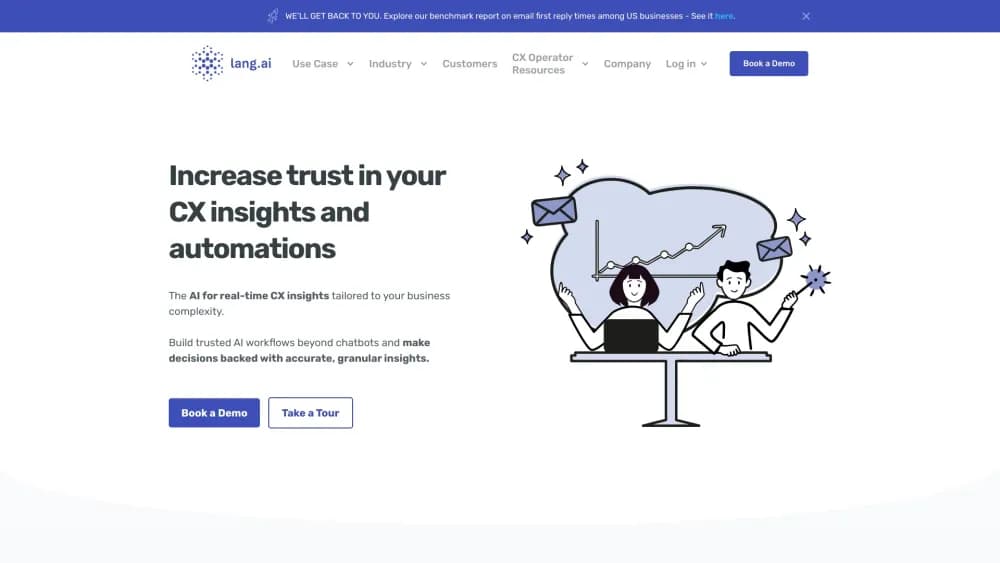
About Lang.ai
What Is Lang.ai
Lang.ai is customer support analytics software that reads support conversations and turns them into structured data. Founded in San Francisco in 2018, the company built its name on automatic tagging: a model looks at a pile of historical tickets, works out what customers are actually talking about, and applies those tags to new conversations as they arrive.
The problem it addresses is familiar to anyone who runs a helpdesk. Tickets pile up with a subject line and a free-text body, and the only way to know what is going wrong is to read them. Lang.ai replaces that reading with classification, so a CX lead can see that refund questions jumped 30 percent this week without opening a single ticket.
Two limits matter before you shortlist it. The product is sold to companies with real ticket volume, not to individuals, and there's no self-serve signup or published price. Lang.ai was also acquired by Capacity in April 2026, and its site now redirects to Capacity, so new buyers deal with Capacity rather than with Lang.ai as a standalone vendor.
Getting Started
- Contact Capacity and describe your ticket volume, helpdesk and the decisions you want to make from the data.
- Connect Zendesk with an admin API token, or plan an API integration if your helpdesk is something else.
- Upload historical conversations as a CSV to create a project, then let the model extract intents and features.
- Review the generated tags, group them into the concepts your team already uses, and rename anything unclear.
- Turn on real-time tagging in sandbox mode first, check the results, then enable it for live tickets.
Product Information
A quick look at Lang.ai's pricing, supported platforms, and performance.
Best for
The users, tasks, and scenarios where this tool fits best.
Users
- Support operations managers
- CX analytics leads
- Zendesk admins
- Enterprise support organizations
Tasks
- Automatic ticket triage
- Support ticket routing
- Voice of customer reporting
- Ad hoc data questions
Scenarios
- A refund policy change floods the queue
- Seasonal peaks
- Post-launch monitoring
Key features
Tags Built From Your Own Ticket History
A project starts with a CSV of past conversations. The model extracts intents and second-level features on its own, then proposes tags you review and rename. There's no labeling sprint and no taxonomy to write from scratch, which is the main reason teams get to a usable classifier in days rather than months.
AI Ticket Tagging in Real Time
Once a project is live, AI ticket tagging runs on incoming conversations. In Zendesk, a trigger sends each new ticket to the project and the returned tags are written back to the ticket. A sandbox switch lets you watch the output before anything touches production tickets, which is the difference between a safe pilot and a mess.
Automatic Ticket Triage and Support Ticket Routing
Tags feed the rules your helpdesk already supports. Priorities shift, tickets land with agents who have the right skills, and internal notes summarize what the customer wants. Automatic ticket triage and support ticket routing both run on the same classification, so you configure the logic once.
Agentic Analytics You Can Question
The newer layer is agentic analytics: an agent reads structured and unstructured CX data and answers questions in plain language. Instead of building a dashboard for every question, a manager asks what changed in cancellation reasons last month and gets a written answer with the underlying numbers.
A REST API for Custom Workflows
Every classification is available over HTTP. You post text to the analyze endpoint with a project ID and get tags and intents back, or save documents with metadata for later reporting. If your stack includes a CRM, a data warehouse or an in-house tool, the API is how conversation intelligence reaches it.
Volume Dashboards by Tag and Metadata
Saved documents keep the metadata you send, so dashboards can break volume down by plan, region or product line. That's where CX analytics stops being a list of labels and starts showing trends: which topics are growing, which are fading, and which one deserves an owner this quarter.
Pros and cons
Pros
- Tagging starts from data you already have, so there's no manual labeling project before the first useful output.
- The Zendesk integration is native and includes a sandbox mode, which makes a pilot low risk.
- Classification covers multiple languages once the model has enough conversation data to work with.
- The REST API exposes tags and intents, so classification can drive workflows outside the helpdesk.
- Agentic analytics answers plain-language questions, which shortens the path from data to a decision.
Cons
- There's no public pricing and no self-serve trial, so evaluation starts with a sales conversation and a quote.
- The April 2026 acquisition by Capacity means the standalone product is winding down, and buyers now inherit Capacity's platform and roadmap.
- Small teams with a few hundred tickets a month won't generate enough data for reliable tags, so the value skews toward high volume operations.
- Anything other than Zendesk needs API work, which usually means engineering time before the first result.
Frequently asked questions
It reads customer support conversations and converts them into tags and intents. Those labels then drive triage, routing and reporting, and the agentic layer lets you ask questions about the resulting data.
Related content
Explore related tools, skills, and articles for Lang.ai.
Lang.ai Alternatives

Emailwritr
Emailwritr · Writing · MarketingEmailwritr is an AI email copywriting tool built for affiliates, course creators, and online businesses that want more revenue from the list they already own. Instead of blank pages or generic chatbot prompts, this AI email writer generates welcome sequences, launch campaigns, cart recovery emails, and promo series from frameworks modeled on well-known direct-response copywriters. You connect your autoresponder, answer a few questions about your offer, and it writes the copy for you.

Prosp
Prosp · Writing · Voice & Language · MarketingProsp is an AI LinkedIn outreach tool built for agencies and sales teams, and it writes the message and the voice note in your own voice for each prospect so they actually reply. You connect your accounts, find leads, and let the AI draft and send personalized messages at scale, all from one inbox. It's built for people running outbound at volume. That's the whole pitch. Every touchpoint still has to feel human.

On Model
On Model · Image · MarketingOn Model is an AI fashion model tool that places your clothing on virtual models so online stores can get on-model product photos without booking a photoshoot. It runs as a Shopify app, letting you swap the model in an existing image, change backgrounds, and generate faces for cropped or headless shots. The goal is simple: match your product photos to your customers and stand out from competitors using the same supplier images.