

Lekko
Lekko · Coding
Lekko is a dynamic configuration platform that lets teams ship feature flags and staged rollouts as code, without rebuilding. Its team joined Rippling in 2025, so the hosted service is closed.
About Lekko
What Is Lekko
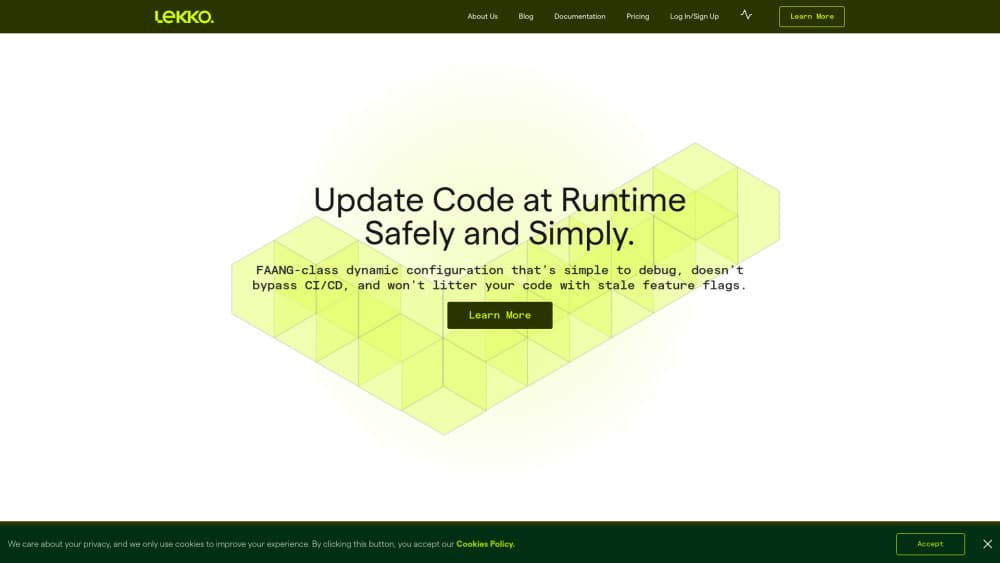
Lekko was a dynamic configuration platform for engineering teams. It treated configuration as code that sits in your repository, so feature flags, plan limits, regional switches and experiment percentages could change in production without a rebuild or a fresh deploy.
Konrad Niemiec founded the company in 2022. He had worked on Flipr, Uber's internal system for changing behavior at runtime, and he built Lekko as a commercial version of that idea for smaller companies. The product launched out of stealth in July 2024 with a $4.5 million seed round led by Addition and LUX Capital.
That run ended early. In January 2025 the Lekko team joined Rippling's platform group, and lekko.com now redirects to Rippling's blog. The hosted product is gone. The SDKs remain public on GitHub, which makes Lekko useful as a reference design rather than a tool you can buy today.
Getting Started
These are the steps as they worked while the service was live.
- Install the CLI, then add the SDK for your stack, such as the Go SDK or the TypeScript SDK.
- Define a namespace in your repo with typed values and the rules that pick between them.
- Call the SDK where the value is needed. Evaluation runs inside your process, not over the network.
- Change values in the web app or in code, then let your existing pipeline ship the new bundle.
- Check the metrics tied to that change, and undo it by reverting the commit.
Product Information
A quick look at Lekko's pricing, supported platforms, and performance.
Best for
The users, tasks, and scenarios where this tool fits best.
Users
- Platform engineers
- Backend teams on Go or TypeScript
- Teams leaving a hosted flag vendor
Tasks
- Staged rollout of a risky change
- Feature gating by plan or region
- Feature flag management cleanup
Scenarios
- Frequent production tuning without redeploys
- Latency sensitive or locked down services
- Researching config as code
Key features
Config as Code
Every tunable value lived in the repository next to the code that read it. That placement made configuration reviewable in a pull request, and it meant a bad change could be reverted like any other commit. The alternative, clicking through a vendor dashboard, leaves no trace in the codebase.
In-Process Evaluation
The SDK pulled a compiled bundle and evaluated rules locally, so a flag check cost microseconds instead of a network round trip. Services kept working when the control plane was unreachable, which removed a common failure mode of hosted feature flags. The tradeoff is that clients carry the evaluation logic and the bundle size grows with the rule set.
AI-Assisted Flag Cleanup
Lekko's tooling read an existing codebase, found flag references and suggested typed replacements. It also surfaced flags that no code path read anymore, the kind that linger for years after a launch. This was the clearest answer to the flag debt problem that hosted vendors tend to profit from.
Web UI for the Rest of the Team
Product managers and support leads could change approved values in the browser without touching a repo. Permissions decided which namespaces a person could edit, and every change landed as a reviewable record. The split worked because engineers defined what was safe to change and everyone else picked within those bounds.
Typed Rules With Static Checks
Values had a declared type, and the CLI validated rules before they shipped, so a string could not quietly replace a number in production. Constraints like ranges and allowed lists were part of the definition. Teams that had been burned by a typo in a JSON flag payload tended to care about this more than any dashboard feature.
Permissions and Audit History
Access control ran per namespace, with roles for readers, editors and admins. Each change recorded who made it, what the previous value was and which commit or session produced it. For regulated teams, that record was often the difference between shipping a config change and waiting a week for approval.
Pros and cons
Pros
- Configuration lives with the code, so reviews, blame and rollbacks all use tools engineers already trust.
- Local evaluation removes the network dependency that makes hosted feature flags an availability risk.
- Typed values and pre-ship validation catch the mistakes that cause most configuration outages.
- The free tier covered the first 25 lekkos, enough for a small team to test the model on real services.
Cons
- The hosted product is no longer sold, and the team moved to Rippling in January 2025, so there's no support path and no new features.
- Adding the SDK means changing application code, which is a harder sell than a proxy that sits in front of existing services.
- Public pricing never existed, so small teams had to talk to sales before they could compare costs with a flag vendor.
Frequently asked questions
Lekko was a dynamic configuration platform, a category it described as going beyond feature flags. Instead of hosting flags in a third party service, it kept tunable values in your repository as typed code and evaluated them inside your application.
Related content
Explore related tools, skills, and articles for Lekko.
Lekko Alternatives

Base Code
Base44 (Wix) · Coding · ProductivityBase Code is a shared cloud development environment from Base44. Teammates describe changes to an existing GitHub codebase in chat, preview them live and send them back as pull requests.

Google EmbeddingGemma 2
Google DeepMind · Writing · Image · CodingGoogle EmbeddingGemma 2 is a 740M-parameter open model that turns text, code, images, audio, and video frames into vectors in one 768-dimension space, running on phones and laptops.

GitGlow
GitGlow · Coding · ProductivityGitGlow is a local-first desktop Git client that lets independent developers review their own code and their AI agents' changes in one place before shipping.