

Lingo.dev
Lingo.dev (formerly Replexica) · Coding
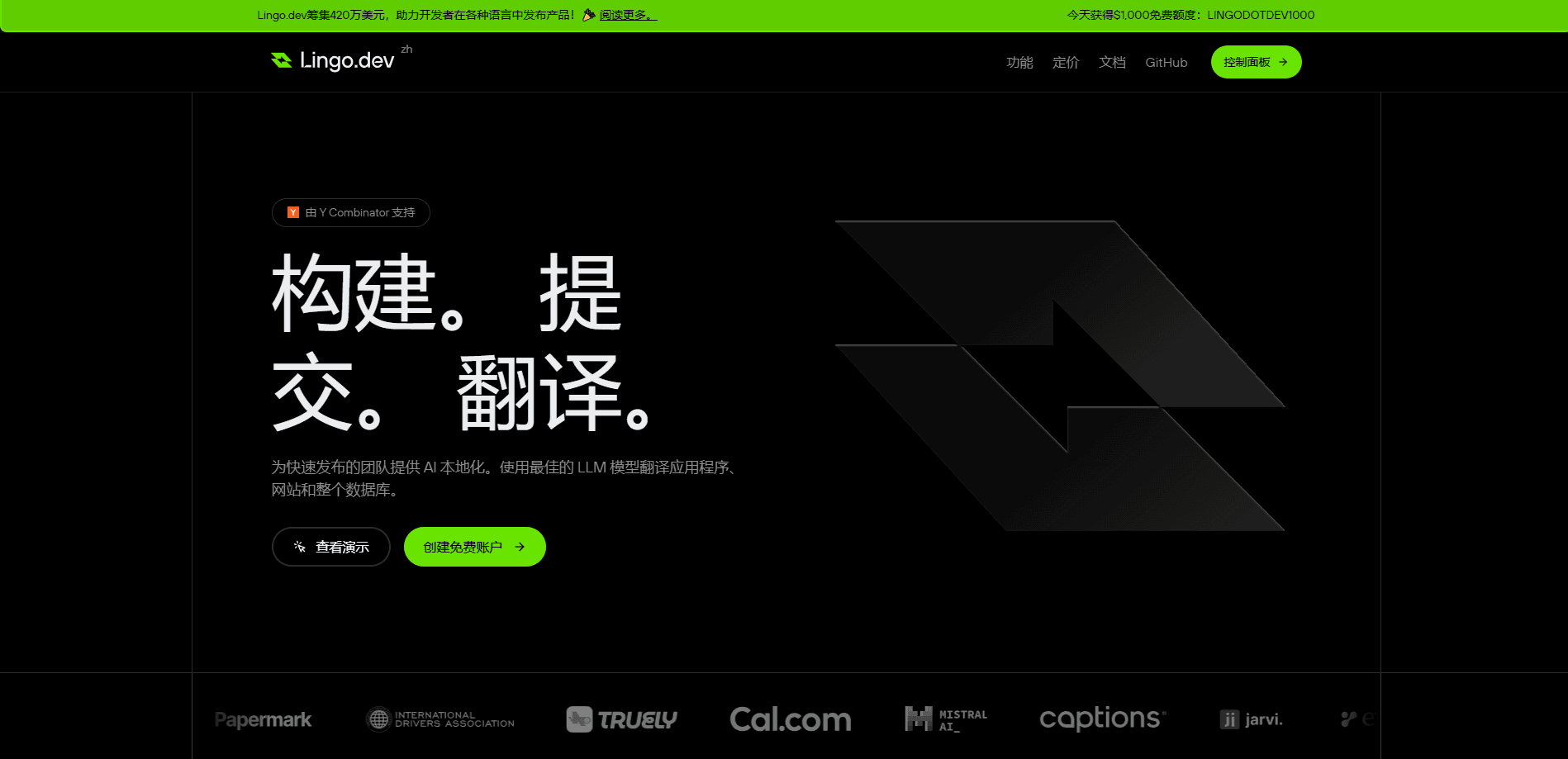
Lingo.dev is an AI localization platform that turns LLMs into stateful translation APIs for apps, docs, and content, adding glossaries, brand voice, and quality scoring for consistent output.
About Lingo.dev
What Is Lingo.dev
Lingo.dev is a localization engineering platform for product teams who want to ship software in many languages without handing the work to a traditional agency. Instead of sending strings off to a black box, you build a stateful translation API called a localization engine, then connect it to the tools you already use.
The problem it solves is consistency. In plain LLM translation, a model will render a sentence well and then translate the same term three different ways across a release. Lingo.dev keeps a glossary, a brand voice, and per-locale rules attached to every request, so the model sees the same context every time. It also scores each translation, so you can catch the languages nobody on your team reads.
The main limits are scope and pricing. Lingo.dev is built for software and content teams, not for one-off document translation, and the production plan starts at $99 per month plus usage. If you only translate a few pages once, it is more machinery than you need.
Getting Started
- Create an account at lingo.dev and start in the sandbox, which costs nothing to try.
- Set up a localization engine, then add a glossary, define your brand voice per language, and pick the model for each language pair.
- Connect the tools you work in, like your GitHub repository, CMS, or help center, or reach the engine from the CLI.
- Run your first translation, review the quality scores, and let translations flow back into your source of truth.
Product Information
A quick look at Lingo.dev's pricing, supported platforms, and performance.
Best for
The users, tasks, and scenarios where this tool fits best.
Users
- Product engineers
- Localization managers
- Startup teams without native speakers
Tasks
- App localization for a web or mobile product across many languages at once
- Localizing documentation and help center articles
- Building continuous localization into CI/CD
Scenarios
- A two-person startup adding its first five languages
- A growing team that keeps shipping new copy every week
Key features
Localization Engines
An engine is a stateful translation API that keeps your glossary, brand voice, and per-locale instructions with every request. You can run as many engines as you like and track usage for each one. The point is that the model gets the same context every time, so a term lands the same way in every release.
Quality Scoring
Lingo.dev scores translations with metrics like GEMBA and BERTScore, alongside glossary compliance and locale-specific checks. Every low score tells you why it dropped, pointing to the model, a rule, or a missing glossary term. That feedback lets you trust languages you cannot read yourself.
Glossary and Brand Voice
You define how each term must be translated and how your product should sound per language, from formal German to informal Italian. The engine applies the glossary by meaning, in the grammatical form the sentence needs, rather than swapping words one by one.
Rephrase and Back-Translation Checks
The platform can rewrite a translation before review and translate it back to the source for a comparison. These checks catch meaning that drifted, which raw translation often hides. They run as automated steps, so you do not need a linguist in the loop for every string.
Open-Source Developer Tools
A free, open-source toolset links your codebase to the engines: a CLI that gets you to a first translated build fast, CI/CD integrations for GitHub, GitLab, and Bitbucket, a build-time React compiler with no runtime overhead, and an MCP server for AI coding assistants. The project has drawn 5,100+ GitHub stars.
Human Proofreading Add-On
You can route translations to native-speaking proofreaders and let them go live only after a sign-off. Assign a teammate who reads the language, or have Lingo.dev supply professional translators from a partner agency when nobody on your team does.
Pros and cons
Pros
- Keeps glossary, brand voice, and locale rules attached to every request, so terminology stays consistent instead of drifting release to release.
- Quality scoring covers languages your team cannot read, with a stated reason behind each low mark.
- Open-source CLI, CI/CD integrations, and an MCP server fit existing developer workflows instead of replacing them.
- Free sandbox and pay-as-you-go pricing let small teams test quality before committing to the $99/mo production base.
Cons
- Production starts at $99 per month plus usage, so it costs more than a lightweight machine translation service for occasional needs.
- The platform targets software and content teams; there is little here for someone translating a single document.
- Quality scores and AI review help, but getting the best results still means setting up a glossary and rules, which takes some initial effort.
Frequently asked questions
Lingo.dev turns LLMs into stateful translation APIs that product teams build themselves. Each engine holds your glossary, brand voice, and locale rules, then translates app strings, docs, and content while scoring the output for quality.
Related content
Explore related tools, skills, and articles for Lingo.dev.
Lingo.dev Alternatives

Base Code
Base44 (Wix) · Coding · ProductivityBase Code is a shared cloud development environment from Base44. Teammates describe changes to an existing GitHub codebase in chat, preview them live and send them back as pull requests.

Google EmbeddingGemma 2
Google DeepMind · Writing · Image · CodingGoogle EmbeddingGemma 2 is a 740M-parameter open model that turns text, code, images, audio, and video frames into vectors in one 768-dimension space, running on phones and laptops.

GitGlow
GitGlow · Coding · ProductivityGitGlow is a local-first desktop Git client that lets independent developers review their own code and their AI agents' changes in one place before shipping.