

Lovable
Lovable · Coding
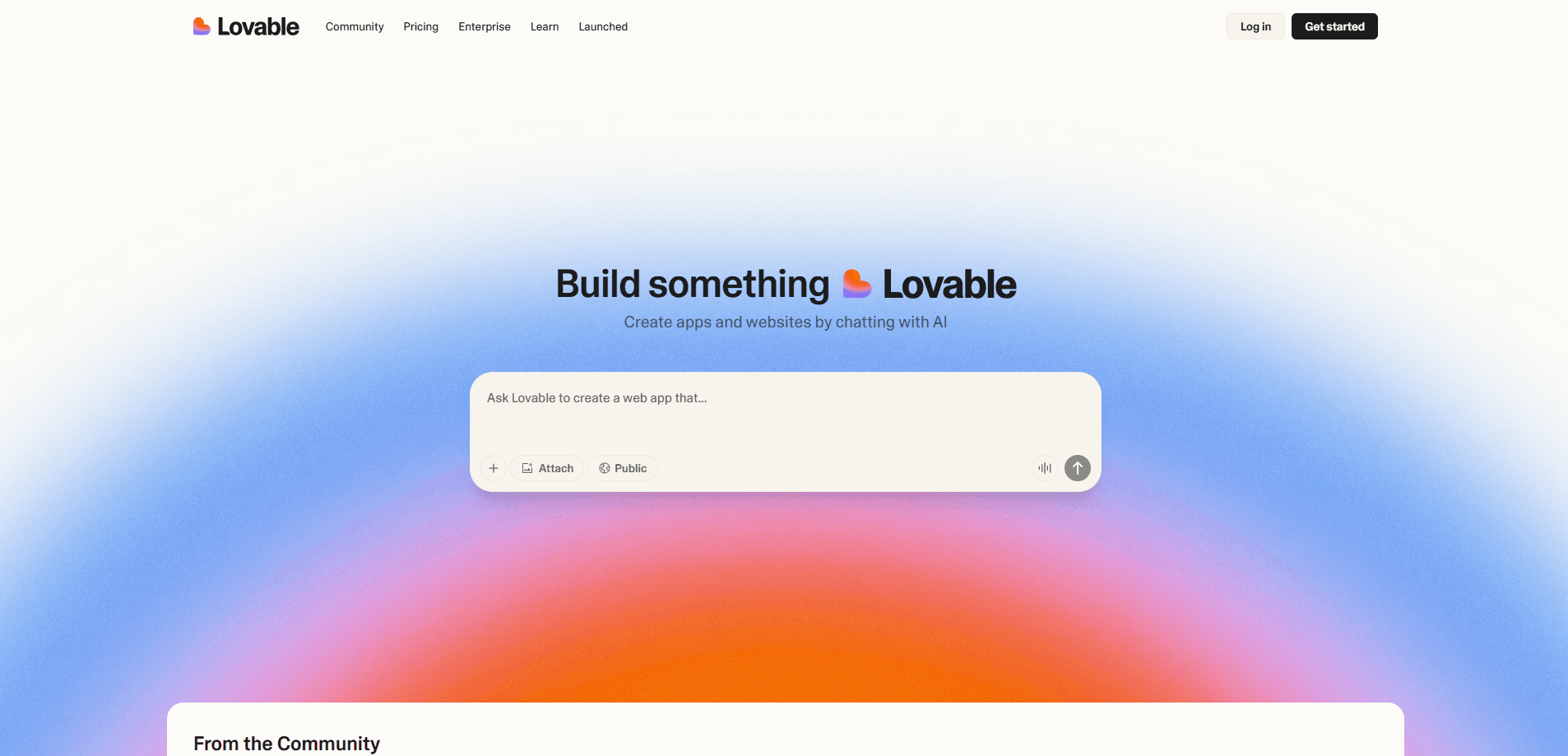
Lovable is an AI app builder that turns a plain-English description into a working full-stack web app. It doubles as an AI website builder for simpler projects. You type what you want in a chat interface, and it generates the frontend, backend, database, and authentication, all backed by code you can edit or sync to Git. It suits founders, product teams, and beginners who want a working prototype fast without wiring up a stack by hand.
About Lovable
What Is Lovable
Lovable is an AI-powered platform for building and shipping web applications with natural language. People often reach for it as a no-code app builder, and it keeps real code underneath. No setup, no boilerplate. Instead of dragging components onto a canvas, you describe the app you have in mind and the tool produces a running project with real code.
The appeal is speed of iteration. A landing page, an internal tool, or a small SaaS product that used to take days of setup can appear in a chat session, and you refine it by asking for changes rather than editing files. Each project lives in a workspace, and the code can sync to GitHub, GitLab, or Bitbucket so a developer on your team can step in with a real repository.
The main limitation is that stories and features are driven by credits, not projects or seats. Once your credits run out, building pauses until they reset or you buy more, so heavy users need to watch usage closely across a month. Lovable also leans on AI output, which means anything production-bound still needs human review before real users touch it.
Getting Started
- Create a free account with email, Google, GitHub, or Apple, and open a new workspace.
- Start a project and describe the app you want in the chat box, in plain language.
- Review the live preview and keep prompting for changes, such as adding login or a checkout flow.
- Connect a database or an integration if the app needs one, then test the result.
- Publish the app or sync the codebase to GitHub, GitLab, or Bitbucket to keep working outside Lovable.
Product Information
A quick look at Lovable's pricing, supported platforms, and performance.
Best for
The users, tasks, and scenarios where this tool fits best.
Users
- Non-technical founders
- Product managers
- Developers
Tasks
- Prototyping a web app
- Building internal tools
- Launching a marketing site
Scenarios
- Validating an idea before investing in engineering
- A weekend side project
- Early-stage product development
Key features
Prompt-to-App Generation
The core of Lovable is just this: describe an app, and it builds it. That's full-stack AI development in practice. The platform turns your natural-language request into an application with a user interface, server logic, a database, and authentication. You don't pick a framework or wire services together; you refine the output by asking for changes in the chat.
Real, Editable Code
Unlike tools that hand you a locked visual output, Lovable generates code you can read and change. A code editor lets you inspect files and make manual tweaks. You can download the codebase or sync it to GitHub, GitLab, or Bitbucket. That matters. A developer can take over the project without rebuilding it from scratch.
Live Preview and Instant Iteration
Every change shows up in a live preview, so you see the app update as you prompt. This tight loop is what makes Lovable feel fast. Describe a fix. Watch it apply. Repeat. For teams, shared workspaces let several people build from one plan and a shared credit pool.
One-Click Publishing
Lovable hosts your app so you can publish it and share a link. No server setup needed. Publishing turns a private prototype into something real users can open, which is the step most prototype tools leave out.
Integrations and Connectors
Projects can connect to external services such as databases, payment providers, and the GitHub API, so an app can do more than display static pages. This is where a Lovable build starts to look like a real product rather than a demo.
Credit-Based Usage Model
Lovable prices by credits, not by project or seat. Free, Pro, and Business plans include daily build credits that reset each day, plus monthly subscription credits on the paid tiers. It's a flexible model, but it means you track usage instead of counting projects.
Pros and cons
Pros
- Goes from a text prompt to a working full-stack app with frontend, backend, and database in one flow.
- The output is real code you can edit, download, or sync to Git, so you're not locked in.
- Live preview makes iteration fast and keeps feedback immediate.
- A free plan with daily credits lets you try the whole workflow before paying.
- One-click publishing turns a prototype into a shareable link.
Cons
- You build on credits, so heavy use can run out mid-project, and top-ups cost extra.
- AI-generated code still needs human review before anything goes to production.
- No public API for developers to call Lovable programmatically, limiting deeper integration.
Frequently asked questions
Lovable builds web applications from natural-language prompts. So what does that look like in practice? You describe the app, and it generates a full-stack project with a frontend, backend, database, and authentication, which you can then refine, publish, or sync to Git.
Related content
Explore related tools, skills, and articles for Lovable.
Lovable Alternatives
Forefront
Forefront · CodingForefront is a web platform for building with open-source AI. It lets you fine-tune leading open-source language models on your own data, evaluate how they perform, and run them through an API or export them to host yourself. Developers who want the convenience of a closed-source platform but insist on owning their models and data are the target audience here.

Startkit
StartKit.AI · CodingStartkit is a boilerplate for building AI SaaS and AI wrapper products. Think of it as an AI startup boilerplate with the boring parts already wired up: authentication, Stripe and Lemon Squeezy payments, usage limits, transactional email, and an AI API starter that talks to OpenAI, Anthropic, Groq, or Llama. You clone the repo, set your price, and start on the part of your product that people actually pay for. It's Next.js under React and Tailwind, so most of the boilerplate code already feels familiar.
Testim
Tricentis · CodingTestim is an AI-powered test automation platform for building and running end-to-end tests across web, mobile, and Salesforce applications. It leans on machine learning to keep tests stable when an interface changes, so teams spend less time fixing broken selectors. Not bad for an automated testing tool you can start using today. You create tests by recording actions in a browser, then optionally add JavaScript when you need more control. It's a solid pick for busy QA teams.