

MetaCRM
MetaCRM Inc. · Marketing · Business
MetaCRM is a Web3 CRM that ties wallet activity, campaign attribution and support tickets into one dashboard, so blockchain teams can see which users convert and what keeps them around.
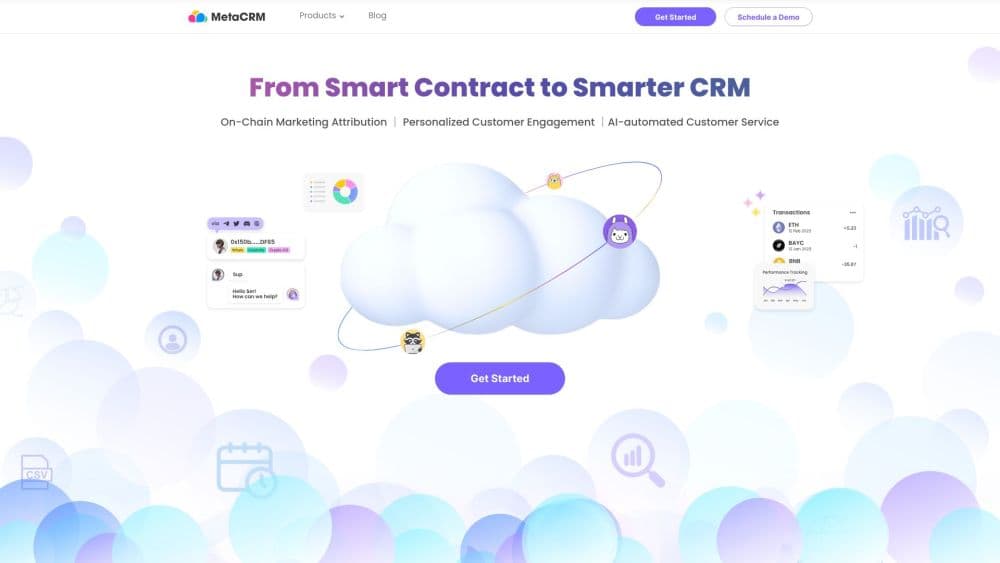
About MetaCRM
What Is MetaCRM
MetaCRM is a customer relationship platform built for crypto projects rather than for ordinary businesses. A wallet address replaces the email as the primary identity, and every ticket, campaign click and contract interaction gets attached to that address. Growth teams use it to work out which channel brought a user in, support teams use it to answer questions with the user's holdings already on screen, and community management runs on the same records, so Discord and Telegram conversations stop being a black box.
The product ships as separate modules that share the same data: Footprints for traffic and attribution, CDP for profiles and segments, Community for tickets, Notification for outbound alerts, Marketing for campaigns, and MetaForm for surveys. Projects buy the modules they need instead of a single fixed suite, which matters when a team only has a support problem or only has a growth problem.
The limits are worth knowing up front. MetaCRM assumes your users have wallets, so a conventional SaaS with email signups gets little from the wallet centric design. Pricing isn't published, which means a demo call before you can budget. And the deeper analytics only cover chains the platform has integrated, so a project on an unsupported network won't see its contract activity in the dashboard.
Getting Started
- Book a demo or sign up at app.metacrm.inc, then create a workspace for your project.
- Pick the modules you want to switch on, starting with Footprints if attribution is the priority or Community if support is.
- Install the tracking tag on your site and drop the MetaCRM widget where users should be able to open a ticket. Both are snippet installs, not a rebuild.
- Connect Discord, Telegram, Slack or GitHub from the integrations page so conversations and alerts land in the same place.
- Set an objective for each campaign, create attribution links for your channels, and check the dashboard after the first week to see which source actually converts.
Product Information
A quick look at MetaCRM's pricing, supported platforms, and performance.
Best for
The users, tasks, and scenarios where this tool fits best.
Users
- Web3 growth marketers
- Community managers
- Support leads at DeFi and infrastructure projects
- Founders of small crypto teams
Tasks
- Measuring a KOL campaign
- Answering a stuck transaction ticket
- Sending a targeted alert
- Running a survey with real participants
Scenarios
- Post-campaign review
- Support spikes during a token launch
- Retention work on dormant wallets
Key features
On-Chain Attribution
Footprints follows a visitor from the first click to the wallet connection and the contract call that follows. Attribution links can be created per channel, per KOL or per campaign, and each one reports the conversions it produced. A referral setup adds community driven distribution, objective settings define what counts as a conversion, and the reports give a growth lead a working view of Web3 marketing analytics without a separate BI tool.
Wallet Based Customer Profiles
The customer data platform builds a profile per wallet and merges what it knows from web2 sources such as form fills with on-chain behavior such as swaps, deposits and governance votes. Customer analytics break activity down by segment, and segmentation lets you save a group, for example holders above a balance threshold, then reuse it in campaigns or notifications.
Support Desk With Wallet Context
Tickets arrive from the website widget, the support page, Discord and Telegram, then sit in a shared queue with the requester's wallet history attached. Agents can use macros for repeat answers, route conversations to the right moderator, and pull reports on volume and response time. Ticket portals give users a place to check status without opening a new chat, and wallet based support means the history is already there when the next question arrives.
AI Replies Grounded in Your Docs
AI support answers from a knowledge base you upload, not from general model memory, so answers stay tied to your product documentation. AI tools control tone, length and language, and the training area lets agents flag weak answers so they can be improved later. The assistant can be switched off per workspace if a team prefers human only replies.
Multi-Channel Notifications
Notification campaigns trigger from user behavior or from a segment, then deliver through the channels you have connected. Subscription widgets let users opt in, and the performance report shows opens and actions per message. For a DeFi project, that means a health score warning can reach the wallets at risk without a manual export.
Campaign Tracking and MetaForm
Marketing campaigns carry custom on-chain objectives, so a message is judged by deposits or mints rather than clicks. X campaign tracking consolidates several influencers into one report. MetaForm adds mobile-first surveys that collect wallet addresses, verify participants on-chain and support social verification, which suits holder polls and airdrop eligibility checks.
Pros and cons
Pros
- Attribution stops at the wallet, so a growth team can name the channel that produced a depositor instead of guessing from traffic numbers.
- Support agents get wallet context automatically, which cuts the address swapping that slows down most crypto help desks.
- Modules share one data layer, so a ticket, a segment and a campaign all refer to the same user record.
- Discord, Telegram, Slack and GitHub integrations mean the tools your community already uses stay in the loop.
- AI replies stay anchored to your own knowledge base, which reduces invented answers about contract behavior.
Cons
- No public price list, so budgeting requires a sales conversation before you can compare it with alternatives.
- The wallet-first model is dead weight for a normal SaaS business with email accounts and no on-chain activity.
- Contract level analytics only reach integrated chains, so a project on a smaller network may see incomplete data.
- There's no documented public API beyond the tracking tag and widget, so custom pipelines depend on vendor support.
Frequently asked questions
MetaCRM is used to run growth and support for crypto projects in one place. It tracks where wallet users come from, stores their on-chain and off-chain activity in a profile, and handles the tickets those users open.
Related content
Explore related tools, skills, and articles for MetaCRM.
MetaCRM Alternatives

ngram 2.0
ngram · Video · Marketingngram 2.0 is an AI video generator for teams. It turns a prompt, a screen recording, or a product URL into a narrated explainer, product demo, or AI avatar video, and every scene stays editable.

shippedit.me
Krawlup · Marketing · Businessshippedit.me now redirects to Krawlup, a web platform that audits SEO, AEO and page speed every week, then hands the fixes to AI coding agents over MCP.

MePersona
MePersona, Inc. · Writing · Productivity · MarketingMePersona is an AI unified inbox for creators. It learns your voice, drafts replies to fan messages from 12 platforms, and sends only what you approve.