
Model Kombat by HackerRank
HackerRank · Coding
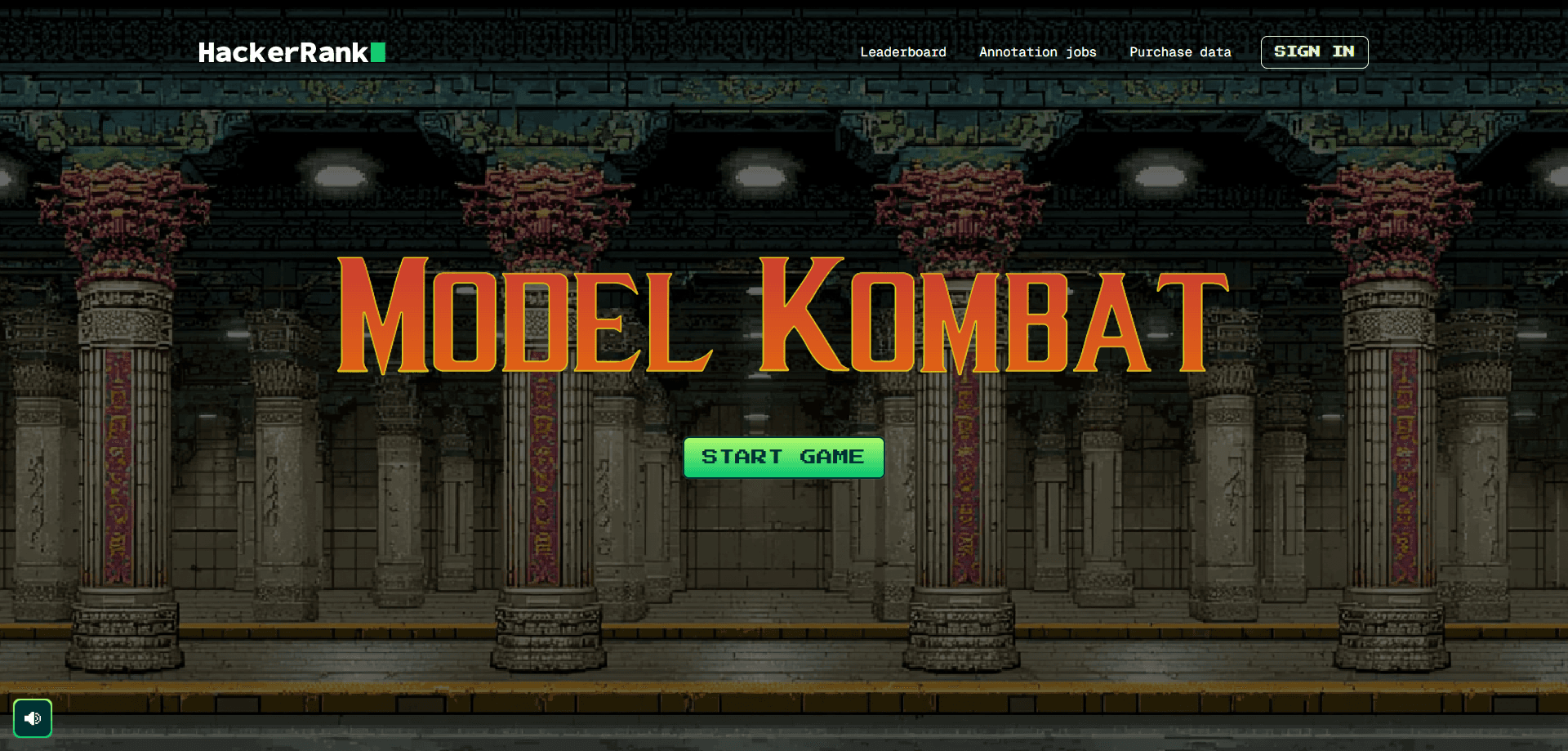
Model Kombat by HackerRank is a free AI coding arena where you watch anonymized coding models fight it out on real programming problems. You pick a challenge, two models answer it, and you decide which response is better without knowing who built either one. It's built for developers who want a straight answer to a simple question: which coding model actually helps me write working code? The platform comes from HackerRank, a company that's been running coding assessments and skill tests for over a decade, so the setup leans on real programming tasks rather than recycled puzzle sets.
About Model Kombat by HackerRank
What Is Model Kombat by HackerRank
Model Kombat is an arena platform that pits anonymized coding models against each other on real programming problems. Instead of reading a vendor's coding model benchmark chart, you see two answers to the same prompt and vote for the one that works better. The models stay hidden while you evaluate, which strips out the brand bias that creeps into most "which AI is best" debates. Think of it as a blind model test you can run in a browser.
The product sits in a crowded field. LMArena, WebDev Arena, and similar platforms already run blind comparisons for chat and web coding. Model Kombat narrows the lens to programming, and its ties to HackerRank give it an assessment-flavored edge: the tasks feel closer to interview questions and real build work than toy prompts. In short, it's coding-first.
The main limitation is scope. It's a comparison tool, not a workspace. You don't write production code here, and you can't plug the arena into your own pipeline. It's also a young product, so the model roster and leaderboard change often. Treat any ranking as a snapshot, not a settled verdict. No API means no automation. That's a real gap for teams that want repeatable LLM coding comparison instead of manual rounds.
Getting Started
- Go to the Model Kombat site and open the arena.
- Choose a coding challenge, or submit your own prompt for the two models to solve.
- Read both answers side by side. The model names stay hidden during the round.
- Vote for the response you think is better, then reveal which models you just judged. The reveal is the fun part.
- Check the leaderboard to see how today's pick shifts the overall ranking.
Product Information
A quick look at Model Kombat by HackerRank's pricing, supported platforms, and performance.
Best for
The users, tasks, and scenarios where this tool fits best.
Users
- Developers choosing a coding assistant
- Engineering teams running model evaluations
- Coding interview candidates
Tasks
- Comparing two coding models on the same problem
- Checking whether a cheaper model keeps up with a premium one
- Spotting which model writes cleaner explanations
Scenarios
- Picking a coding model for a side project without committing to a paid plan.
- Making sense of hype around a newly released model
- Killing time productively between tasks by helping rank models with your votes.
Key features
Blind Side-by-Side Battles
Two anonymized models answer the same programming prompt, and you compare the responses without knowing the brands behind them. The blind setup is the point: it removes the logo loyalty that skews most public comparisons. You vote first, then the identities are revealed, so the ranking reflects what you actually thought of the code. It's simple. It's fast. And it's honest.
Real Programming Problems
The arena leans on genuine coding tasks rather than abstract trivia. Prompts cover common development work, and Model Kombat also lets you bring your own question, so you can test the exact problem sitting in your editor. That flexibility is what separates it from static test suites that go stale as model training data absorbs the old questions and turns yesterday's hard prompt into today's easy recall.
Community-Driven Leaderboard
Every vote feeds a running ranking of the coding models on the platform. Because the scores come from real users rather than vendor-published numbers, they track what people actually prefer, not what looks best in a marketing deck. The trade-off is familiar: crowd votes reflect taste as much as raw capability, so read the leaderboard as a signal, not gospel. Numbers can lie.
HackerRank's Assessment Background
Model Kombat comes from HackerRank, a company with deep roots in coding tests and technical hiring. That background shapes how the arena frames its challenges, with a tilt toward practical problem solving over academic puzzles. It's a meaningful difference if you care about how a model performs on work that resembles a real engineering task, where the goal is shipping something that runs rather than winning a leaderboard point.
No-Cost Access
The arena runs in the browser and doesn't ask you to pay or install anything. That keeps the barrier to entry low: no credit card, no local model setup, no GPU. For anyone curious about the gap between two coding models, a few clicks are enough to form an opinion. Free is the whole pitch here.
Live Model Coverage
New coding models show up in the arena as they're released, which keeps comparisons current. The swap-in approach means you're judging recent contenders rather than a frozen 2023 lineup. It also means results shift over time, so a leaderboard you checked last month may read differently today, especially in the weeks right after a major model launch pushes every score around.
Pros and cons
Pros
- Free to use, with no account, install, or API key required to start voting.
- Blind format cuts brand bias out of coding model comparisons.
- Backed by HackerRank, which brings credibility and an assessment-style task set.
- Lets you submit your own prompt, so you can test the problem you're actually facing.
- Votes build a community leaderboard that reflects real user preference.
Cons
- Crowd-vote rankings blend genuine capability with answer style, so a flashy response can win over a correct one.
- No API or developer integration means you can't wire the arena into your own tools or pipeline.
- Limited transparency on scoring mechanics and vote volume, which makes it hard to know how stable a ranking really is.
Frequently asked questions
It's a free web arena where two anonymized coding models answer the same programming problem and you vote on the better response. Model Kombat by HackerRank turns "which coding model is best" into a hands-on comparison instead of a marketing claim.
Related content
Explore related tools, skills, and articles for Model Kombat by HackerRank.
Model Kombat by HackerRank Alternatives
Forefront
Forefront · CodingForefront is a web platform for building with open-source AI. It lets you fine-tune leading open-source language models on your own data, evaluate how they perform, and run them through an API or export them to host yourself. Developers who want the convenience of a closed-source platform but insist on owning their models and data are the target audience here.

Startkit
StartKit.AI · CodingStartkit is a boilerplate for building AI SaaS and AI wrapper products. Think of it as an AI startup boilerplate with the boring parts already wired up: authentication, Stripe and Lemon Squeezy payments, usage limits, transactional email, and an AI API starter that talks to OpenAI, Anthropic, Groq, or Llama. You clone the repo, set your price, and start on the part of your product that people actually pay for. It's Next.js under React and Tailwind, so most of the boilerplate code already feels familiar.
Testim
Tricentis · CodingTestim is an AI-powered test automation platform for building and running end-to-end tests across web, mobile, and Salesforce applications. It leans on machine learning to keep tests stable when an interface changes, so teams spend less time fixing broken selectors. Not bad for an automated testing tool you can start using today. You create tests by recording actions in a browser, then optionally add JavaScript when you need more control. It's a solid pick for busy QA teams.