

Myriade
Myriade · Coding
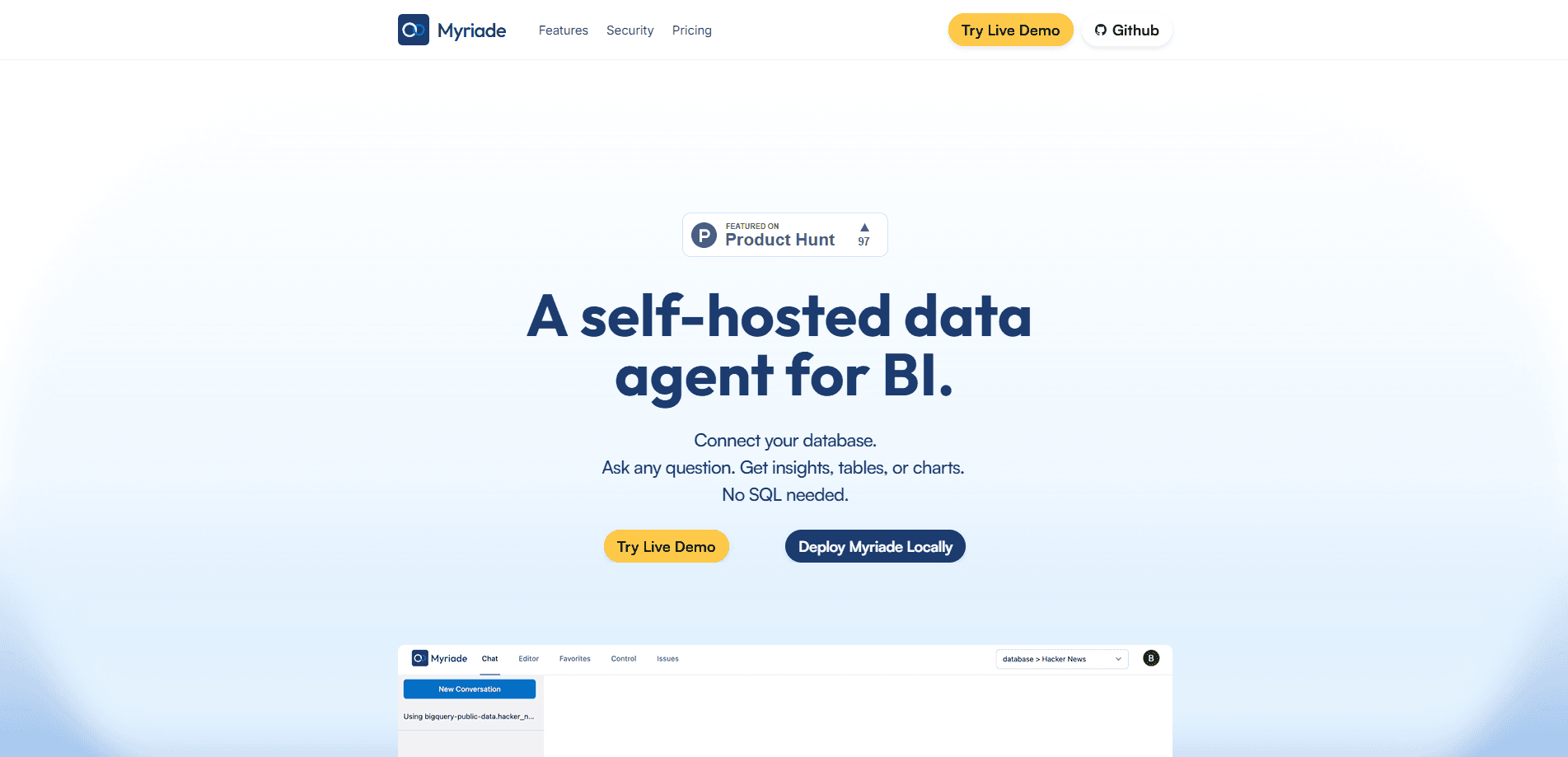
Myriade is an AI data analysis copilot that turns plain language questions into SQL queries, letting teams explore their databases through chat without writing code.
About Myriade
What Is Myriade
Myriade is an AI copilot built for people who need answers from a database but don't want to write SQL by hand. You type a question the way you'd ask a colleague, and this AI database assistant translates it into a query, runs it, and hands back the result.
The product targets the gap between data teams and everyone else. Analysts stay busy fielding "can you pull this number" requests, while marketers, founders, and operators wait days for simple reports. Myriade lets those users get their own answers in seconds.
Myriade is a hosted web app, so you don't install anything or manage a server. You connect a data source and start asking. The tradeoff is that you're trusting a third-party service with query access to your database, which means permissions and read-only connections matter.
Getting Started
- Sign up for a Myriade account on the official site.
- Connect your database or data warehouse with proper credentials.
- Ask a question in plain English, like "which customers churned last month."
- Review the generated SQL before it runs, adjust if needed.
- Read the results, then refine with follow-up questions.
Product Information
A quick look at Myriade's pricing, supported platforms, and performance.
Best for
The users, tasks, and scenarios where this tool fits best.
Users
- Non-technical operators
- Data analysts
- Product managers
Tasks
- Turning a plain-language question into a working SQL query against a production or analytics database.
- Building quick reports on churn, revenue, or engagement without waiting on the data team.
- Exploring an unfamiliar schema by asking what a table or column means.
Scenarios
- A weekly growth standup where someone needs the latest signup or activation numbers on the spot.
- Early-stage founders who run lean and can't justify a full-time analyst yet.
- Customer support teams pulling order or account history while a user is waiting on the line.
Key features
Natural Language to SQL
Myriade's core function is translating a typed question into a database query. You describe what you want in everyday words, and the tool works as a SQL query generator that figures out which tables and columns to touch. It's the feature that decides whether the product saves you time or adds a review step.
Query Review Before Execution
Before anything runs, Myriade shows you the generated SQL. You can inspect it, catch a wrong join, and tweak it. This matters when a bad query on a live database could return misleading numbers or a heavy load.
Conversational Follow-Ups
You don't start over for each question. Ask about churn, then ask "and how does that split by plan" and Myriade carries the context forward. This conversational data analysis keeps exploration fluid instead of forcing you back to a blank box.
Multi-Source Connection
Myriade connects to common databases and warehouses rather than locking you into one vendor. Teams running Postgres for the app and a separate warehouse for analytics can point the tool at what they need.
Access Control and Read-Only Safety
Admins set who can query what, and read-only connections keep the copilot from altering data. For a tool that touches real databases, this is the difference between a helpful assistant and a liability.
Explanation of Results
Beyond returning rows, Myriade summarizes what the numbers show. That helps users who got the answer but aren't sure what to make of it, especially when they're new to the dataset.
Pros and cons
Pros
- Cuts the delay between a question and an answer from days to seconds for non-technical users.
- Shows generated SQL, so you can verify the logic instead of trusting a black box.
- Conversational context makes iterative exploration faster than editing queries by hand.
- Handles multiple database types, which suits teams with more than one data store.
Cons
- Accuracy depends on a well-documented schema, so messy databases can produce unreliable queries.
- You're granting a hosted service query access to your data, which some teams won't allow for compliance reasons.
- Complex multi-step analysis still may need an analyst to review or rewrite the SQL.
Frequently asked questions
Myriade turns plain-language questions into SQL so you can query a database by typing instead of coding. It's aimed at people who need data answers but don't write queries themselves.
Related content
Explore related tools, skills, and articles for Myriade.
Myriade Alternatives

Base Code
Base44 (Wix) · Coding · ProductivityBase Code is a shared cloud development environment from Base44. Teammates describe changes to an existing GitHub codebase in chat, preview them live and send them back as pull requests.

Google EmbeddingGemma 2
Google DeepMind · Writing · Image · CodingGoogle EmbeddingGemma 2 is a 740M-parameter open model that turns text, code, images, audio, and video frames into vectors in one 768-dimension space, running on phones and laptops.

GitGlow
GitGlow · Coding · ProductivityGitGlow is a local-first desktop Git client that lets independent developers review their own code and their AI agents' changes in one place before shipping.