

o11
o11 · Coding · Productivity
o11 is an AI data warehouse built for financial firms. It connects the systems a firm already runs on, such as CRM, email, files, and data rooms, then resolves them into one governed model that approved AI tools like Claude, ChatGPT, and Copilot can use. The pitch is simple. Firms get firm-specific context for AI without hiring an internal data engineering team to keep the plumbing alive.
About o11
What Is o11
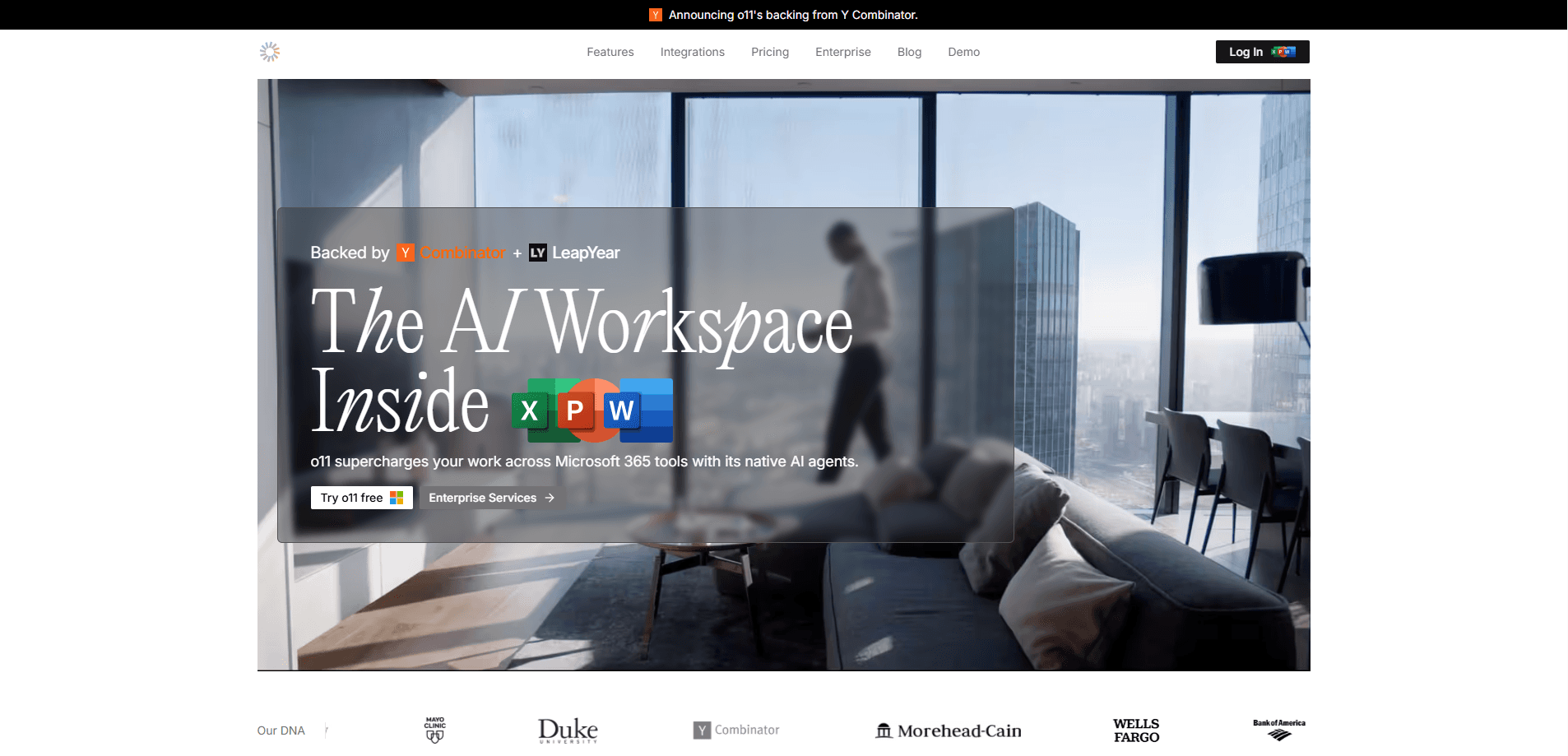
o11 is an AI data warehouse that markets itself as a "memory layer" for finance. Instead of storing clean tables for dashboards, it pulls together structured records, documents, metadata, business definitions, and permissions so both people and AI agents can find the right information and understand what it means. The company positions this around private equity and investment banking first, but says the same problem exists anywhere systems are fragmented and questions cross departmental boundaries.
The core wedge is maintenance. Traditional warehouses and lakehouses need someone to build pipelines and keep them running. o11 says it handles ingestion, organization, and ongoing upkeep behind the scenes, so a firm can use its own context inside AI tools without standing up a data team for the job. That's the part worth testing carefully. "Self-maintaining" is a strong claim, and any buyer should ask exactly what still needs human modeling versus what the platform handles on its own.
The biggest limitation is scope. Pricing isn't published, onboarding runs through a booked demo, and the product leans heavily toward financial services workflows. If you're not in that world, you'll be reading a lot of pitch material before you see whether o11 fits your stack.
Getting Started
- Book a demo on the o11 site and walk through your current data estate with the team.
- Connect the approved systems your firm already runs on, such as CRM, email, calendars, files, data rooms, and ERP.
- Work with o11 to define a custom ontology (the shared vocabulary of companies, contacts, deals, and documents that maps to how your firm actually works).
- Let entity resolution tie records, relationships, transactions, and documents into one model.
- Point approved AI tools like Claude, ChatGPT, or Copilot at the model so they answer with permissioned, source-linked context.
Product Information
A quick look at o11's pricing, supported platforms, and performance.
Best for
The users, tasks, and scenarios where this tool fits best.
Users
- Private equity teams
- Investment banking deal teams
- AI-ready finance and ops groups
Tasks
- Answering firm-specific questions with sources
- Grounding document and data work
- Keeping permissions intact
Scenarios
- Diligence on a live deal
- Cross-department research
- Onboarding approved AI tooling
Key features
Self-Maintaining Data Foundation
o11 says it handles ingestion, organization, and ongoing maintenance behind the warehouse, so a firm doesn't need an internal data engineering team to keep it running. That's the main difference from traditional warehouses and lakehouses, which need pipelines built and maintained by hand. So how much human modeling remains? That's the key question to verify during a demo.
One Firm-Specific Model
The platform builds a custom ontology and resolves entities, relationships, transactions, work product, and decisions into it. Common entities include companies, contacts, deals, and documents. The point is reuse. The same model answers different questions instead of forcing a rebuild every time someone asks something new.
Permission-Aware Context for AI
Approved tools like Claude, ChatGPT, and Copilot retrieve firm data through o11 with source permissions, citations, and audit history attached. That's the feature that separates it from simply pasting documents into a chatbot. Access control travels with the data. Finance and legal teams need that before they'll let AI touch sensitive records.
Broad Source Connectivity
o11 connects to CRM, email, calendars, files, data rooms, market data, ERP, notes, and internal systems, then syncs them on an ongoing basis. Entity resolution links records that refer to the same company, person, or deal across those systems. Big difference when one question needs answers from several tools.
Google Workspace and Office Integration
o11 has announced support for Google Workspace, so it can apply firm context while teams create, edit, and execute inside the tools they already use. The company's earlier work focused on decks and spreadsheets before it moved toward the AI data warehouse model.
Governance and Provenance
Answers come back with citations and audit context, so a reviewer can trace where a result came from, including the relevant source records. o11 states SOC 2 compliance, which is table stakes for enterprise finance buyers. Provenance also means AI output isn't treated as a substitute for evidence.
Pros and cons
Pros
- Firm-specific context means approved AI tools answer with your data, not generic training knowledge.
- Permissions and citations stay attached, which fits the audit and compliance needs of finance teams.
- Broad connectivity covers the messy estate most firms actually run, from CRM and email to data rooms.
- No internal data engineering team required, per the vendor's positioning, which lowers the staffing bar.
Cons
- Pricing isn't published, so budgeting means a sales conversation rather than a posted rate card.
- The product leans toward private equity and investment banking, so other industries are a longer evaluation.
- "Self-maintaining" is a vendor claim, and buyers need to confirm how much custom modeling still falls on them.
- API availability isn't documented publicly, which blocks teams that want to build their own integrations.
Frequently asked questions
o11 is an AI data warehouse that organizes a firm's data and documents into one governed model, then feeds approved AI tools like Claude, ChatGPT, and Copilot the context they need to answer questions. It's aimed at finance teams that want financial services AI grounded in their own records.
Related content
Explore related tools, skills, and articles for o11.
o11 Alternatives
Forefront
Forefront · CodingForefront is a web platform for building with open-source AI. It lets you fine-tune leading open-source language models on your own data, evaluate how they perform, and run them through an API or export them to host yourself. Developers who want the convenience of a closed-source platform but insist on owning their models and data are the target audience here.

Startkit
StartKit.AI · CodingStartkit is a boilerplate for building AI SaaS and AI wrapper products. Think of it as an AI startup boilerplate with the boring parts already wired up: authentication, Stripe and Lemon Squeezy payments, usage limits, transactional email, and an AI API starter that talks to OpenAI, Anthropic, Groq, or Llama. You clone the repo, set your price, and start on the part of your product that people actually pay for. It's Next.js under React and Tailwind, so most of the boilerplate code already feels familiar.
Testim
Tricentis · CodingTestim is an AI-powered test automation platform for building and running end-to-end tests across web, mobile, and Salesforce applications. It leans on machine learning to keep tests stable when an interface changes, so teams spend less time fixing broken selectors. Not bad for an automated testing tool you can start using today. You create tests by recording actions in a browser, then optionally add JavaScript when you need more control. It's a solid pick for busy QA teams.