

Ollang DX
Ollang · Writing · Voice & Language
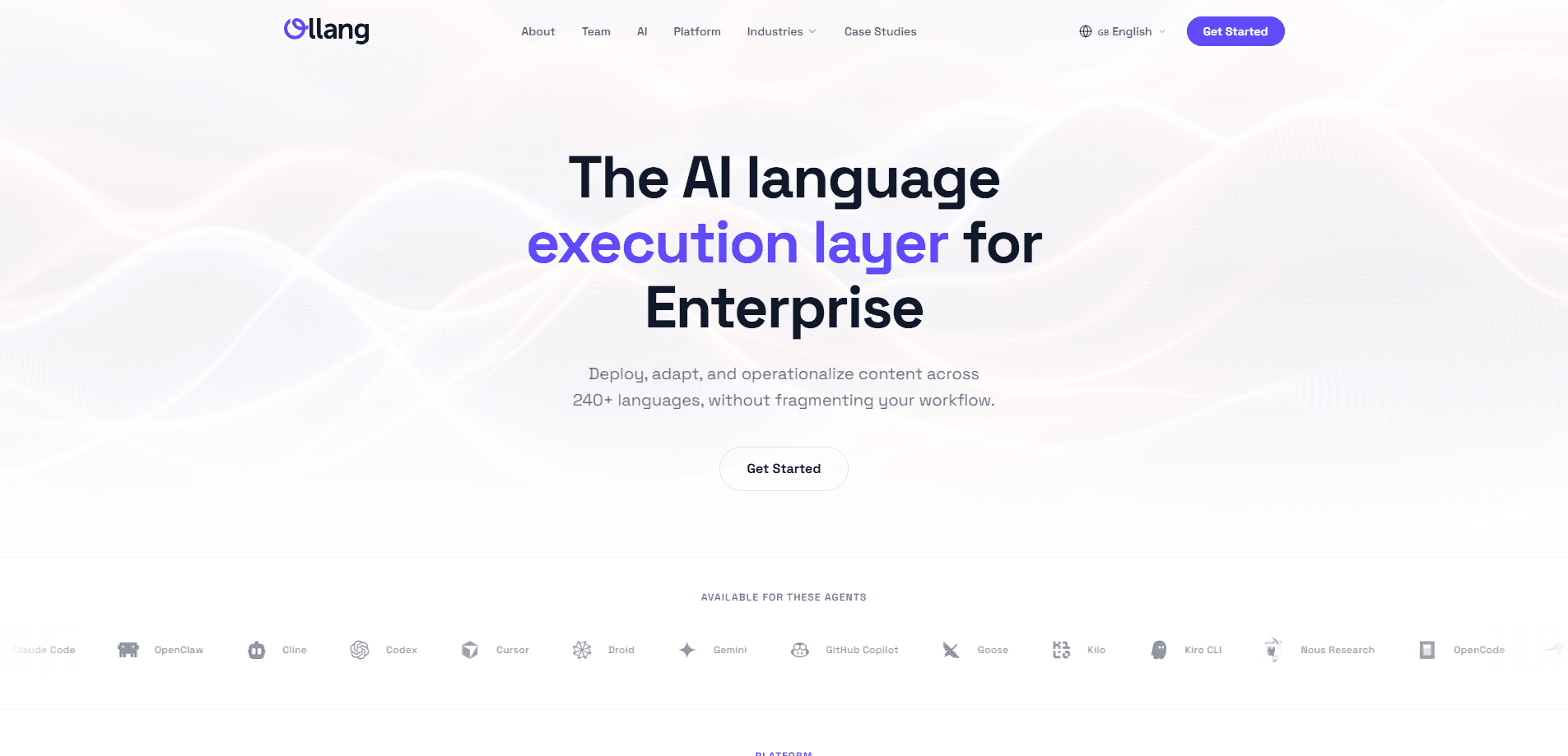
Ollang DX is an enterprise localization platform that automates translation, AI dubbing, subtitling, and closed captioning across 240+ languages. It pairs machine output with native-speaking review, so teams get AI speed without giving up quality. The platform sits inside your existing tools and routes every piece of content through review, approval, and delivery in one place. It's built for companies shipping content at scale, not casual users.
About Ollang DX
What Is Ollang DX
Ollang DX is the enterprise product from Ollang, and it treats localization as an operating layer rather than a one-off translation job. It's made for translation automation at scale. You connect your content sources, and the platform handles the multilingual pipeline: transcription, translation, dubbing, subtitles, review, and delivery back into your systems. The pitch is straightforward. Raw machine translation is cheap now. But a translated string isn't a finished product.
The platform's core difference is the human step baked into the workflow. High-value or sensitive content can be routed to native-speaking reviewers, then to managers for sign-off before anything goes live. It runs on 240+ languages and integrates with sources like Google Drive, Dropbox, Jira, and Vimeo. That combination is aimed at enterprises that need audit trails and accountable approval, and it reflects a market where machine translation alone no longer counts as a finished localization process.
Two limits matter up front. Ollang DX is cloud-only, so there's no downloadable or offline version. And pricing isn't published. This is a sales-led product, so you book a demo and get a quote rather than signing up for a self-serve tier. If you want a free personal tool, this isn't it.
Getting Started
- Book a demo through ollang.com to get access and a pricing quote.
- Connect your content sources, such as Google Drive, Dropbox, Jira, or your CMS, so files flow in automatically.
- Pick your target languages and let the AI localization engine produce first-pass translations, dubs, or subtitles.
- Route high-value or sensitive content to native-speaking reviewers for quality checks and cultural nuance.
- Set manager sign-off rules, then let approved content push back into your apps, docs, and support systems.
Product Information
A quick look at Ollang DX's pricing, supported platforms, and performance.
Best for
The users, tasks, and scenarios where this tool fits best.
Users
- Enterprise localization teams
- Content and marketing managers
- Media and gaming studios
Tasks
- Translating a product or website into 20+ languages
- Dubbing and subtitling video
- Document and support content localization
Scenarios
- A product launch in many markets at once
- Regulated industries needing audit trails
- Content that mixes machine speed with human judgment
Key features
AI Dubbing and Lipsync
Ollang DX can dub video and audio into other languages, with lipsync options so the on-screen mouth movement matches the new track. For media teams, this cuts the old studio-and-voice-actor loop down to a single review pass, which is the kind of time saving that shows up directly on a release calendar. It's the feature that makes the platform more than a text translator.
Multilingual Subtitling and Captions
Subtitles and closed captions are generated from the same source, so you don't run two workflows for text and video. The system handles speech-to-text, then produces timed captions in your target languages. That saves a lot of grunt work. For accessibility and streaming use, it's usually the fastest win.
Native-Speaking Review
The platform routes content to reviewers who actually speak the target language and understand the audience, which is a step most machine-only tools simply skip. This is where cultural nuance and brand voice get caught, often before a customer ever sees an awkward phrase that would damage trust in a new market. You decide what needs review and what can pass automatically.
Workflow Control and Approvals
Review, approval, and delivery live in one place. So why does that matter? A localization workflow without approval gates is just fast content nobody signed off on. Managers can require sign-off before content publishes, and every step is tracked. For teams that answer to legal or brand review, this is the difference between a tool and a process.
240+ Language Coverage
Ollang DX supports over 240 languages, which covers mainstream markets and low-resource languages that smaller tools often skip. That's a lot. If your roadmap includes regions beyond the usual European and East Asian set, that breadth matters.
Integrations With Your Existing Stack
The platform connects to sources like Google Drive, Dropbox, Vimeo, WeTransfer, Jira, and TikTok One, then pushes finished content back automatically, so nothing needs a manual export and reimport. Content flows in, routes through review, and ships without your team changing how they work. That kills the busywork. It also means localization stops being a separate project and becomes part of the normal content pipeline.
API and Model Access
Ollang advertises API connectivity and access to 100+ models and APIs, so engineering teams can wire localization directly into their own pipelines without routing everything through the web dashboard. If you need to trigger translation or dubbing from your own systems, the API is the path, and it lets you build localization into automated release flows rather than treating it as a manual step. Exact endpoints and limits aren't public, so confirm them during a demo.
SOC 2 Certified Security
The platform is SOC 2 certified and markets enterprise-grade governance, which matters more than the marketing line suggests. For companies handling sensitive or regulated content, that certification is often a hard requirement before procurement will sign off. It signals that security controls have been audited, not just claimed.
Pros and cons
Pros
- Combines AI speed with native-speaking review, so you're not choosing between fast and accurate.
- Supports 240+ languages, including low-resource options many competitors skip.
- Workflow, approvals, and delivery sit in one place, which helps teams that need audit trails.
- Integrates with common sources like Google Drive, Dropbox, and Jira, so it fits existing workflows.
- SOC 2 certification and API access suit enterprise procurement and custom pipelines.
Cons
- No public pricing, so you can't self-serve or budget without a sales conversation.
- No free plan, which rules out trying it before committing to a demo.
- Cloud-only with no offline option, which can be a blocker for air-gapped environments.
- API details aren't published, so developers can't evaluate integration effort without contacting sales.
Frequently asked questions
It automates multilingual localization for enterprises, covering translation, AI dubbing, subtitling, and captions, then routes content through native review and approval before delivery, so teams don't have to stitch together separate tools for text, audio, and video. Think of it as a pipeline for content in many languages, not a single-file translator.
Related content
Explore related tools, skills, and articles for Ollang DX.
Ollang DX Alternatives

Google EmbeddingGemma 2
Google DeepMind · Writing · Image · CodingGoogle EmbeddingGemma 2 is a 740M-parameter open model that turns text, code, images, audio, and video frames into vectors in one 768-dimension space, running on phones and laptops.

MePersona
MePersona, Inc. · Writing · Productivity · MarketingMePersona is an AI unified inbox for creators. It learns your voice, drafts replies to fan messages from 12 platforms, and sends only what you approve.
Fluence
Yay Software (Yannick Huchard) · Writing · Voice & Language · ProductivityFluence is an Android app that reads PDFs, EPUBs, Word files and web articles aloud, follows each sentence as it speaks, and answers questions about the text on the phone itself.