

Pebbles Ai
Pebbles Ai · Business
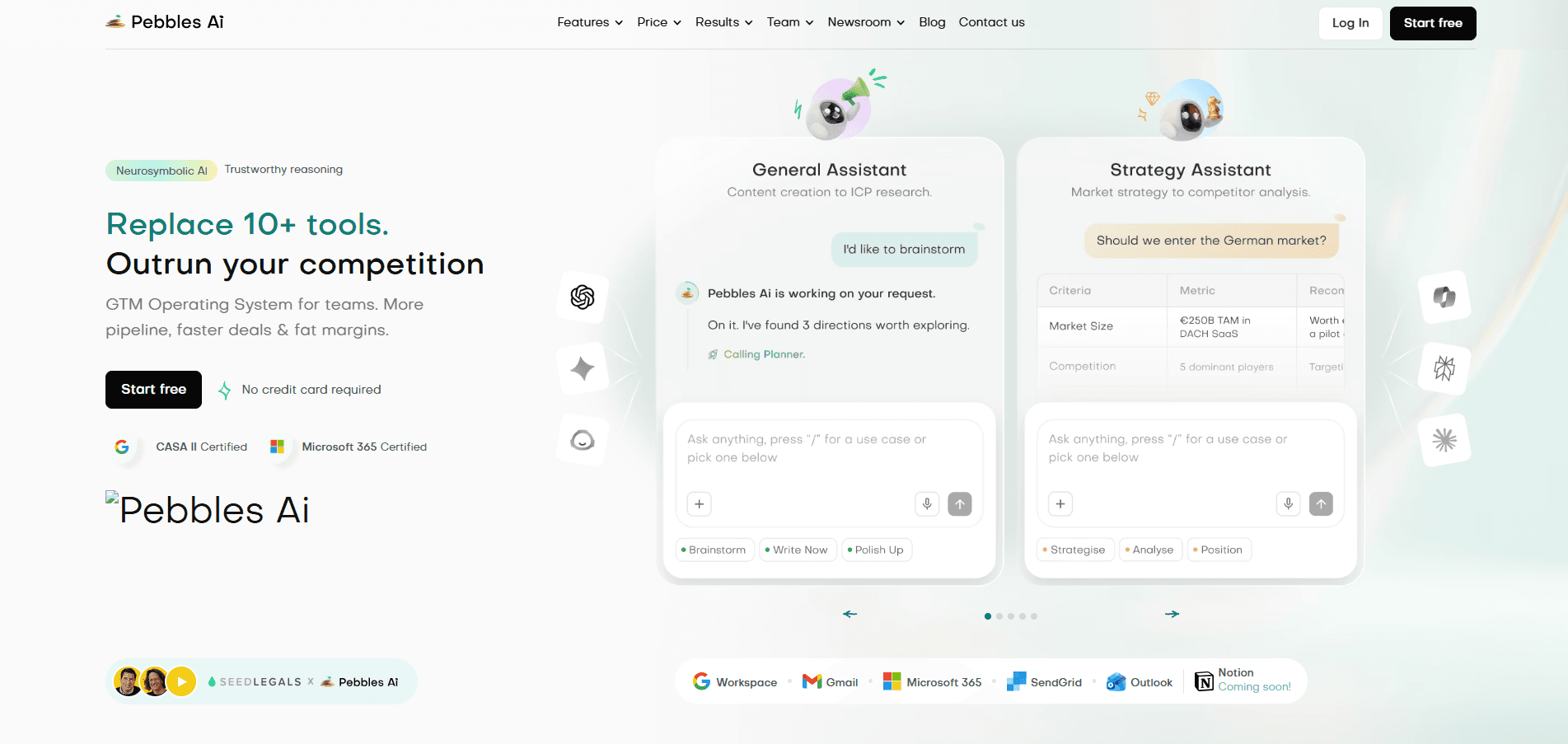
Pebbles Ai is a go-to-market operating system that blends neurosymbolic reasoning with agentic automation for B2B teams. Instead of stacking a dozen point tools, teams get one workspace that handles strategy, lead generation, outreach, inbox triage, shared assets, and productivity analytics. The core pitch is measurable return. Pebbles says users see 60% cumulative revenue gains through compounding growth, 51% lower cost on marketing and sales overhead, and 48% faster deal velocity across the whole pipeline. The platform calls this combination "Assistant thinks. LeadGen hunts. SmartBox closes." It's built for business leaders, marketers, and dealmakers who want outcomes rather than another dashboard to babysit. This review covers what Pebbles Ai does, how it works, what it costs, and where it realistically fits.
About Pebbles Ai
What Is Pebbles Ai
Pebbles Ai is a company-trained, agentic platform for running go-to-market work end to end. It describes itself as the "gold standard for GTM," and its differentiator is a neurosymbolic approach: it pairs the pattern-matching strengths of neural models with symbolic, rules-based reasoning.
The company frames the value this way. By building on neurosymbolic AI, Pebbles aims to combine the strategic depth of a top-tier analyst, the persuasive marketing instincts of a seasoned head of marketing, and the battle-tested judgment of an experienced sales veteran.
The platform organizes work around four cooperating parts. An Assistant handles thinking and planning. LeadGen sources and hunts prospects. SmartBox closes and manages the deal side. The remaining layer amplifies existing work, extending its reach across the pipeline.
Because the system trains on company data, the output is meant to reflect your positioning, your market, and your tone rather than generic templates. Does it work? That depends on the quality of what you feed it. Security and single-workspace organization sit at the center of the design.
Getting Started
- Visit trypebbles.ai and request access or join the early supporter list for Pebbles 2.0.
- Share your company context, positioning, and target market so the platform can train on your data.
- Connect your lead sources and outreach channels inside the shared workspace.
- Use the Assistant to plan a campaign, then let LeadGen source and qualify prospects.
- Review results in the shared analytics view, and let SmartBox handle follow-up and deal movement.
Product Information
A quick look at Pebbles Ai's pricing, supported platforms, and performance.
Best for
The users, tasks, and scenarios where this tool fits best.
Users
- B2B business leaders who want strategy execution, not just dashboards
- Marketing teams that need lead generation and outreach in one place
- Sales and deal teams looking to speed up qualification and closing
- Lean startup teams replacing a stack of separate GTM tools
Tasks
- Sourcing and qualifying B2B leads with an agentic workflow
- Running multi-channel outreach campaigns from a single workspace
- Triaging and automating inbox replies
- Tracking productivity and pipeline analytics over time
- Producing market and competitor strategy briefs
Scenarios
- An early-stage B2B startup that has no dedicated SDR team yet
- A scaling sales team cutting per-deal research time
- A marketing lead consolidating scattered tools into one GTM system
- Founders preparing launch messaging and target lists before a product release
Key features
Neurosymbolic Reasoning Engine
Most AI sales tools lean on pattern matching alone, which is why their output can sound confident but drift off-brief. Pebbles Ai layers symbolic, rules-based reasoning on top of neural models. In practice, that means the platform can hold onto structured business logic, such as your ideal customer profile or your disqualification rules, while still handling messy, unstructured inputs like a prospect's website copy. For a team, the practical result is fewer hallucinated claims and more output that respects your actual constraints. If you tell it you don't sell to a certain region or company size, that rule tends to stick across campaigns instead of resurfacing as a mistake a few days later.
Agentic Lead Generation
The LeadGen layer is where Pebbles does its hunting. Rather than returning a static list of companies, it works as an agent: it can research accounts, pull signals, and shortlist prospects against your criteria. You describe who you want, and the system goes looking. The appeal for a small team is pure headcount savings. One person can set the targeting logic once, then let the agent keep sourcing as market conditions change. That's a meaningful change from the usual manual grind of building lists by hand and refreshing them every week. As always, the quality of the shortlist depends on how well you define the profile up front.
Automated Outreach and Inbox Handling
Pebbles brings outreach and inbox management into the same workspace. Campaigns get drafted and sent through the platform, and incoming replies are triaged rather than piling up in a shared inbox. For teams that live in email, this removes a lot of copy-paste work between tools. The value here is consistency. Sequenced outreach that ties back to the same prospect data avoids the common problem of a lead getting two conflicting messages from two different systems. It also keeps a clean thread of context when a prospect replies, which makes handoff to a closer far less lossy. Small detail. Big effect.
2.0 Lead and Organisation Access Bundles
For its Pebbles 2.0 launch, the company bundles early-access perks rather than a plain free trial. Early supporters can get the new 2.0 features, receive 1,000 fresh leads, and get free Organisation access for two weeks. The spots are limited and tied to a Product Hunt account that's at least a month old plus engagement on launch day. This matters if you're evaluating the platform right now. The free Organisation window is a real chance to test the trained-on-your-company behavior before committing budget, which is exactly the kind of hands-on proof a GTM tool needs to earn a slot in your stack.
Shared Workspace and Assets
Because Pebbles positions itself as one operating system, teams work from a shared set of assets instead of duplicating decks, messaging docs, and lists across tools. The Assistant, LeadGen, and SmartBox components read from the same pool. That single source of truth cuts down on drift between the message marketing writes and the one sales actually sends. When a positioning statement changes, it changes in one place, and the agents that generate outreach inherit the update automatically.
Productivity and ROI Analytics
Pebbles ships with analytics aimed at outcomes, not vanity metrics. The company highlights three headline numbers: 60% cumulative revenue growth, 51% total cost savings on marketing and sales overhead, and 48% faster deal velocity. The dashboard ties activity back to those pipeline measures. Leaders get a view of whether the machine is actually compounding or just busy. That framing is the point. You're meant to judge the platform on deal movement and cost per outcome, not on how many emails it queued.
Company-Trained Security
The platform trains on company data and keeps that context inside a secure workspace. For B2B teams, the concern with any agentic tool is where proprietary positioning and customer data end up. Pebbles addresses this by scoping the training to your organization and separating it from other tenants. This is the kind of detail that matters in procurement conversations. A GTM system that touches your pipeline is only viable if the data handling survives a security review, and the company leans into that requirement in its positioning.
Pros and cons
Pros
- Combines strategy, lead generation, outreach, and analytics in one workspace
- Neurosymbolic design aims to keep business rules consistent across campaigns
- Agentic LeadGen reduces manual list-building work for small teams
- Company-trained output fits your positioning rather than generic templates
- Clear ROI framing around revenue, cost savings, and deal velocity
Cons
- Precise public pricing tiers are still thin, so budgeting takes some guesswork
- Best value depends on feeding it solid company data and targeting rules
- The 2.0 perks are tied to limited spots and Product Hunt conditions
- 2.0 is a fresh launch, so long-term reliability is still being proven
- API and integration depth aren't fully documented yet
Frequently asked questions
The main difference is its neurosymbolic approach. It mixes neural models with symbolic, rules-based reasoning, so structured business logic like your ideal customer profile stays consistent while the system still handles unstructured inputs. Most competitors rely on pattern matching alone.
Related content
Explore related tools, skills, and articles for Pebbles Ai.
Pebbles Ai Alternatives

Knocket
Knocket (Tencent RTC team) · Productivity · Business · ChatbotKnocket is a free live chat and contact page tool that lets visitors message you from your website, app, or a shareable link, with every reply handled from Telegram or one inbox.

shippedit.me
Krawlup · Marketing · Businessshippedit.me now redirects to Krawlup, a web platform that audits SEO, AEO and page speed every week, then hands the fixes to AI coding agents over MCP.

Ayven
Alknoma · Productivity · BusinessAyven is an AI control centre by Alknoma that turns a plain-language goal into a dated plan, hands the work to your people and AI agents, and asks for your approval only when the call is yours.