

PipeLime
Reblox Solutions LLC · Marketing · Business
PipeLime is an AI sales agent that researches leads, writes personalized outreach, handles replies, and books qualified meetings over email and LinkedIn.
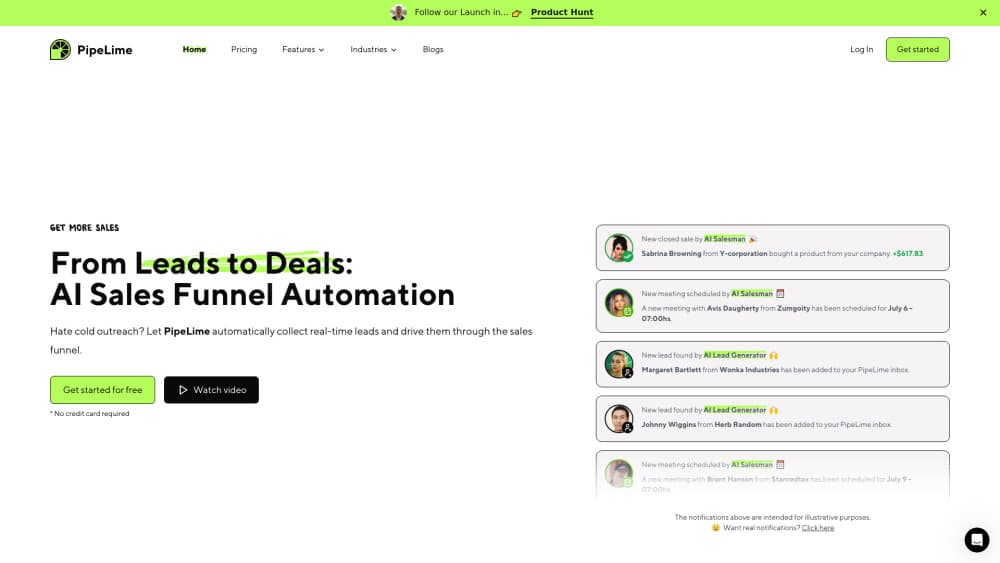
About PipeLime
What Is PipeLime
PipeLime is an outbound sales platform built around one AI agent instead of a sequence builder. You hand it a market, an ideal customer profile, and a calendar. It finds companies that fit, works out which person to contact, checks that the email address is real, and then writes and sends the first message. When someone replies, the same agent reads the answer, handles the objection, and puts a meeting on your calendar.
Most outbound stacks split that job across a prospecting tool, an enrichment tool, a sequencer, and a shared inbox. PipeLime keeps the work in one account and remembers context between steps, so a follow-up can pick up something the prospect mentioned two emails earlier. That's the practical difference between this and template-driven sales automation.
The product is aimed at B2B teams, and it says so plainly. Everything runs through email and LinkedIn, so consumer products and local walk-in businesses won't get much from it. PipeLime pricing is quote based, which means you talk to sales before you see a number. And because the agent writes a lot of copy in your name, someone on your side should review the first campaigns before you widen the audience.
Getting Started
- Start the 14-day pilot at pipelime.ai. No credit card is required, and the team runs a short call to set up the workspace.
- Describe your ideal customer profile: industry, company size, role, and the problem you solve. This becomes the brief the agent works from.
- Connect a sending inbox and your LinkedIn account, then decide how many leads per week you want in the queue.
- Review the first batch of researched leads and email drafts. Approve them, edit the tone, or let the agent send autonomously once the output sounds like you.
- Connect your calendar and CRM so booked meetings and lead status land where the rest of the team already works.
Product Information
A quick look at PipeLime's pricing, supported platforms, and performance.
Best for
The users, tasks, and scenarios where this tool fits best.
Users
- B2B founders and solo sellers
- Sales managers running a small SDR team
- Agencies and sales consultants
Tasks
- Building a prospect list from a market description
- Writing first-touch emails at volume
- Chasing follow-ups without a rigid cadence
- Re-engaging anonymous website visitors
Scenarios
- Testing outbound before you hire
- Covering several time zones
- Running outbound for clients under your own brand
Key features
AI Lead Generation and Company Research
The agent builds the list itself. Give it an industry, a headcount range, and a geography, and it returns companies plus a short summary of what each one does, who it sells to, and why it might care about your offer. Contacts come with verified email addresses, and the research sits next to the draft so you can check the reasoning. This is the part that usually eats a rep's morning, and it's where AI lead generation saves the most time.
Decision-Maker Targeting
Finding a company is easy. Finding the person who signs off is not. PipeLime reads the employee list, looks at titles and seniority, and picks the contact most likely to own the problem. When the first choice doesn't respond, it can move to a second contact at the same account instead of dropping the company. That single behavior changes reply rates more than most copy tweaks.
Hyper-Personalized Email Outreach
Each message is written for one recipient. The agent pulls a detail from the company site, a recent post, or a hiring page, and uses it as the opening hook. You can set tone, length, and the call to action, and the output stays inside those bounds. Because the copy is generated per lead, the first line rarely reads like a mail merge.
Adaptive Follow-Ups and Contextual Replies
There's no fixed five-step sequence. The agent reads each reply, classifies intent, answers questions about pricing or setup, and decides whether a follow-up makes sense. If someone says "not this quarter", it schedules a later touch instead of pushing for a call. Objections get handled with the material you provided during onboarding. Humans get pulled in when a prospect asks for something the agent can't answer.
Deliverability and Sending Infrastructure
Outbound lives or dies on inbox placement. PipeLime includes email warmup, sender rotation across multiple accounts, custom tracking domains, and bounce protection, plus reputation monitoring that flags a sender before it burns. These are the unglamorous settings that decide whether your personalized email ever gets read.
LinkedIn Outreach Alongside Email
Email and LinkedIn run from the same agent with one shared history, so a prospect who ignores three emails can get a LinkedIn message that references the same context. That coordination is the reason the platform asks you to connect both channels during setup. Running them as separate campaigns tends to produce duplicate or contradictory messages.
Booking, Analytics, and CRM Sync
When a prospect agrees to talk, the agent offers open slots and writes the meeting into your calendar with the company and role attached. The dashboard shows the path from lead found to meeting booked, broken down by sender and campaign, and CRM integration pushes replies and meetings into the system your team already uses. You can see which message angles produce calls rather than opens.
Pros and cons
Pros
- One agent covers research, copy, follow-up, and booking, which removes three or four separate subscriptions from a typical outbound stack.
- Personalization is written per lead, and the research behind each message is visible, so reviewers can spot weak hooks before they send.
- Deliverability tooling, including email warmup and sender rotation, is included rather than sold as an add-on.
- The 14-day pilot needs no credit card, which is a low-risk way to test reply quality on your own market.
- White-label partners can resell under their own brand and keep the full markup, which suits agencies with existing clients.
Cons
- Pricing isn't published. You have to book a call before you know what the Pro Plan costs, which slows down comparison shopping.
- The free plan doesn't exist. After the pilot ends, continued use means a paid contract.
- It's B2B only. Email and LinkedIn outreach won't help a local shop or a consumer app.
- Autonomous sending carries risk. If nobody reviews the first campaigns, off-tone copy can reach real prospects under your domain.
Frequently asked questions
It runs outbound sales for you. The agent finds companies that match your ideal customer profile, identifies the right contact, verifies the email, writes a personalized message, handles replies, and books meetings on your calendar. Your team shows up to the call.
Related content
Explore related tools, skills, and articles for PipeLime.
PipeLime Alternatives

ngram 2.0
ngram · Video · Marketingngram 2.0 is an AI video generator for teams. It turns a prompt, a screen recording, or a product URL into a narrated explainer, product demo, or AI avatar video, and every scene stays editable.

shippedit.me
Krawlup · Marketing · Businessshippedit.me now redirects to Krawlup, a web platform that audits SEO, AEO and page speed every week, then hands the fixes to AI coding agents over MCP.

MePersona
MePersona, Inc. · Writing · Productivity · MarketingMePersona is an AI unified inbox for creators. It learns your voice, drafts replies to fan messages from 12 platforms, and sends only what you approve.