

Ploy.ai
Ploy · Coding
Ploy.ai is an AI-native marketing platform that treats your website as the center of growth work. It builds on-brand pages, monitors SEO and traffic, identifies visitors, and keeps tuning the site for conversion optimization and AI-search visibility. As an AI growth platform, it suits marketing teams and founders who want the operational side of growth handled in the background instead of stitched together from a dozen tools.
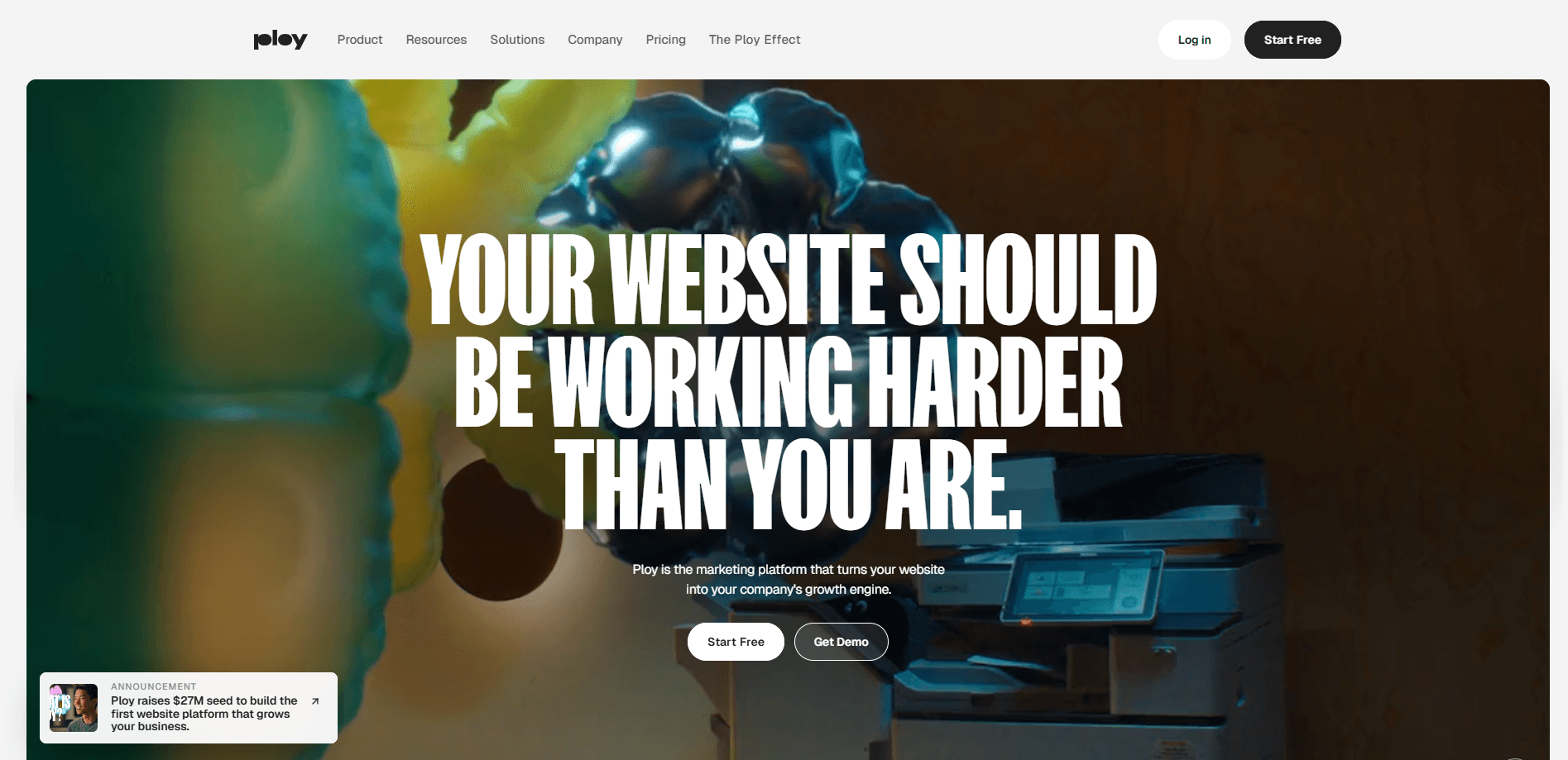
About Ploy.ai
What Is Ploy.ai
Ploy.ai is an AI marketing platform for website growth, built by a team led by a former Webflow CTO and backed by $27M from First Round Capital and Y Combinator. It isn't only a website builder or only an SEO tool. It runs the whole loop: design pages, write copy, run campaigns, watch competitors, and sync data back to a CRM.
The core promise is putting the parts of growth that drain a team on autopilot. Instead of assembling a stack of dashboards and tools, you get one system that operates your site and marketing channels continuously. A "slurp" pulls your existing brand structure and design tokens, then credits turn that into production-grade Astro pages that keep your identity intact.
The biggest limitation is that it's a heavy platform, not a small utility. Credits are the fuel, and professional builds consume more of them, so cost scales with how much work you hand over. Some features, like SSO/SAML, are still marked as coming soon.
Used as an AI SEO tool, it also watches rank movement and competitor pages. That monitoring runs without you babysitting a dashboard.
Getting Started
- Sign up for a free account at ploy.ai. No credit card is required, and the free tier includes 800 credits a day.
- Connect your existing site or run a slurp so Ploy reads your brand structure, identity, and design tokens.
- Let the agents design and build pages, or describe the page you want and review the draft output.
- Turn on monitoring for SEO, traffic, and competitors, and connect your CRM or ad accounts.
- Publish on a custom domain, then let continuous edits tighten the page for conversion.
Product Information
A quick look at Ploy.ai's pricing, supported platforms, and performance.
Best for
The users, tasks, and scenarios where this tool fits best.
Users
- Marketing teams
- Solo founders
- Growth leads at B2B companies
Tasks
- Building on-brand pages
- Tracking SEO, traffic, and competitors
- Identifying anonymous visitors
- Improving conversion on existing pages
Scenarios
- A feedback wall needs to go live the same day
- A comparison page is needed before a launch window
- A high-intent account lands on the site
- Ongoing A/B style tuning of a key page
Key features
AI website builder for marketing pages
Ploy builds landing pages, comparison pages, and SEO content that look and sound like your brand. It reads your brand as a system rather than a single template, so every new page ships on-brand. The output is real Astro code, not a template fill, which is why heavier builds draw more credits.
Visitor identification and intent scoring
The platform resolves anonymous U.S. traffic to companies and likely contacts, then scores buying intent. Qualified accounts sync to the tools your team already uses, including HubSpot and Attio on the Pro plan. This turns silent traffic into a list sales can act on.
SEO and competitor monitoring
Ploy watches your site and your competitors in the background. Instead of you checking a rank tracker by hand, the platform flags changes in SEO, traffic, and competitor activity. That keeps monitoring running while you work on something else.
Continuous conversion tuning
Pages don't freeze at launch. Ploy keeps editing live pages to improve conversion, so conversion optimization happens on a rolling basis rather than in a redesign sprint. Live pages just get better over time. This is the part that replaces a pile of separate analytics and experimentation tools.
Brand slurp and design system
A slurp is a deterministic, no-AI pass that extracts your brand's structure, identity, and design tokens from an existing site. Credits then turn that into a professional-grade Astro build and populate your design system. According to Ploy, doing that with a development team would cost thousands of dollars.
CRM and ad integrations
Google Workspace, GitHub sync, ad integrations, and CRM connections come built in across tiers. On Pro you get HubSpot and Attio; Enterprise adds Salesforce. The point is to sync growth data back to where your team already works.
Pros and cons
Pros
- One platform covers page building, SEO, visitor identification, and CRM sync, which cuts the number of subscriptions your team has to manage, budget, and learn every time a new growth channel appears.
- The free tier includes 800 credits a day and custom domains with no credit card, so you can test real work before paying.
- Brand slurp keeps new pages visually consistent without a designer reviewing every build.
- Continuous editing means live pages keep improving instead of going stale after launch.
Cons
- Credit costs scale with how much work you hand over, so heavy professional builds can run up the bill fast.
- Visitor identification only covers eligible U.S. traffic, which limits it for teams selling outside the U.S.
- SSO/SAML is still listed as coming soon, so larger organizations needing single sign-on have to wait.
- It's a full platform rather than a small tool, so there's real setup work before you see results.
Frequently asked questions
It's an AI marketing platform that builds on-brand pages, monitors SEO, traffic, and competitors, identifies visitors, and keeps tuning your site for conversion. Think of it as running the operational side of growth from one place instead of a stack of tools. So what makes it different from a normal site builder? The marketing loop is built in, not bolted on.
Related content
Explore related tools, skills, and articles for Ploy.ai.
Ploy.ai Alternatives
Forefront
Forefront · CodingForefront is a web platform for building with open-source AI. It lets you fine-tune leading open-source language models on your own data, evaluate how they perform, and run them through an API or export them to host yourself. Developers who want the convenience of a closed-source platform but insist on owning their models and data are the target audience here.

Startkit
StartKit.AI · CodingStartkit is a boilerplate for building AI SaaS and AI wrapper products. Think of it as an AI startup boilerplate with the boring parts already wired up: authentication, Stripe and Lemon Squeezy payments, usage limits, transactional email, and an AI API starter that talks to OpenAI, Anthropic, Groq, or Llama. You clone the repo, set your price, and start on the part of your product that people actually pay for. It's Next.js under React and Tailwind, so most of the boilerplate code already feels familiar.
Testim
Tricentis · CodingTestim is an AI-powered test automation platform for building and running end-to-end tests across web, mobile, and Salesforce applications. It leans on machine learning to keep tests stable when an interface changes, so teams spend less time fixing broken selectors. Not bad for an automated testing tool you can start using today. You create tests by recording actions in a browser, then optionally add JavaScript when you need more control. It's a solid pick for busy QA teams.