

Polar
Polar Analytics · Marketing · Business
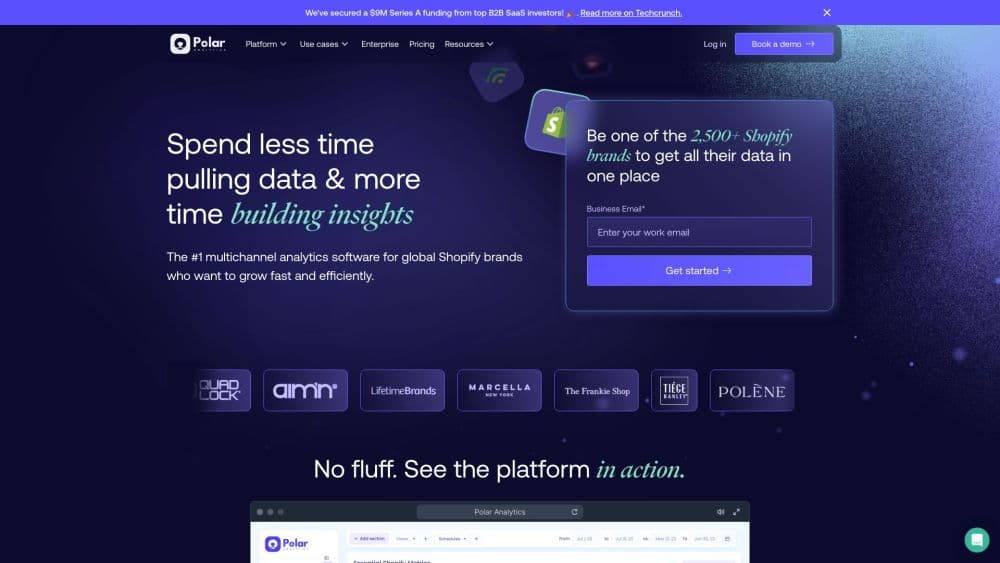
Polar Analytics is an AI data platform for ecommerce brands. It moves Shopify, Amazon, and ad data into a warehouse you own and answers profit, CAC, and LTV questions.
About Polar
What Is Polar Analytics
Polar Analytics is a data platform built for growing ecommerce brands. It connects Shopify, Amazon, Meta, Google, TikTok, Klaviyo, Google Analytics, and Recharge, copies the data into a dedicated Snowflake warehouse, and defines profit, ROAS, blended CAC, and LTV once so every dashboard and every AI answer uses the same numbers.
The problem it targets is familiar to anyone running a Shopify store past a few channels. Shopify tells you what sold. It doesn't tell you whether the sale made money once ad spend, shipping, and returns were subtracted, and it can't say which channel brought customers who come back. Brands usually patch this with spreadsheets, a GA4 setup, and a connector tool, and the numbers drift apart within a quarter. Polar replaces that pile with one governed set of metrics.
Pricing is quoted, not listed. Polar prices by annual gross merchandise value and offers a Core plan that bundles the common products at a discount plus a Custom plan for larger stacks. Every plan includes unlimited users, unlimited historical data, and a dedicated success manager. There's no free tier, so the entry point is a demo or a trial arranged with the sales team, and most brands under a few hundred thousand dollars of monthly revenue will find the cost hard to justify.
Getting Started
- Install the app from the Shopify App Store or sign up on the Polar site, then authorize Shopify with one click. Polar backfills your order history automatically.
- Connect the ad, email, and marketplace sources you run, such as Meta Ads, Google Ads, TikTok, Amazon Seller Central, and Klaviyo, through OAuth.
- Upload cost data such as cost of goods, shipping, and payment fees, either as a file or through a connector, so gross profit and contribution margin are calculated with your real costs.
- Open the dashboard library and adjust the KPIs, segments, and comparisons you care about, or ask a question in plain language and check the definition behind the number.
- Set alerts and scheduled reports, and route them to Slack, email, or a shared sheet so the team sees the same figures each week.
Product Information
A quick look at Polar's pricing, supported platforms, and performance.
Best for
The users, tasks, and scenarios where this tool fits best.
Users
- Ecommerce founders
- Marketing leads at multi-store brands
- Agencies managing several Shopify clients
Tasks
- Measuring true profit
- Tracking blended CAC and ROAS across channels
- Finding stockouts before they cost sales
- Running incremental lift tests
Scenarios
- A brand expands into a second market
- Black Friday is two weeks out
- A founder wants an answer in Claude or ChatGPT
Key features
Warehouse You Own
Every customer gets a dedicated Snowflake database, and the data belongs to the brand, not to a shared reporting tool. That matters when a team wants SQL access, a custom model, or a second tool reading the same tables. Polar owns the pipeline and the definitions, while the storage stays under your account.
Pre-Built Ecommerce Metrics
Polar ships more than 400 metrics with written definitions for net sales, gross profit, contribution margin, blended CAC, MER, and LTV. Definitions are centralized in a semantic layer, so a dashboard, a scheduled report, and an AI answer can't disagree. Teams that have argued about which CAC formula is correct will notice the difference immediately. Cohort analysis and LTV analysis run on the same base, so a retention chart and a paid report can't tell two different stories.
Polar MCP for AI Assistants
The Polar MCP connects Claude, ChatGPT, or any MCP host to the semantic layer. You describe what you need in plain language and the assistant reads governed metrics rather than raw exports. Polar says it's the first ecommerce analytics connector reviewed and approved by Anthropic, which is a useful signal about how the data access is handled.
AI Agents and the AI Operator
An agent sits on top of the data and monitors the store, the ads, and the margins in Slack or Teams. It answers questions with the definition behind each number, and after approval it can act, for example shifting an ad budget or pausing a campaign for a sold-out product. Recommendations pass through a person before anything changes.
Connectors and First-Party Pixel
The connectors directory lists more than 300 ecommerce tools across advertising, retention, marketplaces, payments, and operations, with core sources such as Shopify, Meta, Google, Amazon, and TikTok connecting through OAuth. A Klaviyo integration takes a single authorization, and the Klaviyo Audiences product reclaims shoppers whose abandonment events the email tool never captured. The Polar Pixel is server-side and first-party, so it runs beside a tag manager setup and captures attribution data that ad blockers would otherwise drop. When a tool isn't in the directory, an AI Data Engineer reads its API documentation and writes the connector.
Reporting, Alerts, and Attribution
The Business Intelligence product includes a dashboard library, custom reporting, multi-touch attribution, goal tracking, and scheduled alerts. Add-ons cover intraday refresh, demographic enrichment, SQL access, and a Google Sheets mirror. That mix fits a team that wants daily numbers without hiring a data engineer, and it leaves room to move into SQL when the questions get harder.
Pros and cons
Pros
- Definitions are centralized, so profit, CAC, and LTV stay consistent across dashboards, reports, and AI answers.
- A dedicated Snowflake warehouse means the data stays portable and open to SQL, not locked inside a proprietary reporting format.
- Unlimited users and unlimited historical data on every plan, so adding a finance or merchandising colleague costs nothing extra.
- The agency track adds white-label reporting and per-brand pricing, and onboarding a new client brand reportedly takes minutes rather than weeks.
Cons
- Pricing is quoted by annual GMV, and there's no free plan, so small stores can't test it without a sales call.
- Setup asks for cost of goods, shipping, and fee data. Without those numbers marked up or uploaded, profit and contribution margin stay incomplete, and the whole selling point weakens.
- The AI Operator and MCP work best for teams already living in Claude, ChatGPT, or Slack. A team that won't adopt those tools pays for capability it never uses.
- Most connector work needs at least some data literacy. A brand with no analyst will lean on the success manager more than the product alone.
Frequently asked questions
It pulls ecommerce data from Shopify, Amazon, ad platforms, and email tools into one warehouse, then calculates profit, ROAS, blended CAC, and LTV from shared definitions. The output is dashboards, scheduled reports, alerts, and AI answers built on those numbers.
Related content
Explore related tools, skills, and articles for Polar.
Polar Alternatives

ngram 2.0
ngram · Video · Marketingngram 2.0 is an AI video generator for teams. It turns a prompt, a screen recording, or a product URL into a narrated explainer, product demo, or AI avatar video, and every scene stays editable.

shippedit.me
Krawlup · Marketing · Businessshippedit.me now redirects to Krawlup, a web platform that audits SEO, AEO and page speed every week, then hands the fixes to AI coding agents over MCP.

MePersona
MePersona, Inc. · Writing · Productivity · MarketingMePersona is an AI unified inbox for creators. It learns your voice, drafts replies to fan messages from 12 platforms, and sends only what you approve.