

Postproxy
Postproxy · Marketing · Other
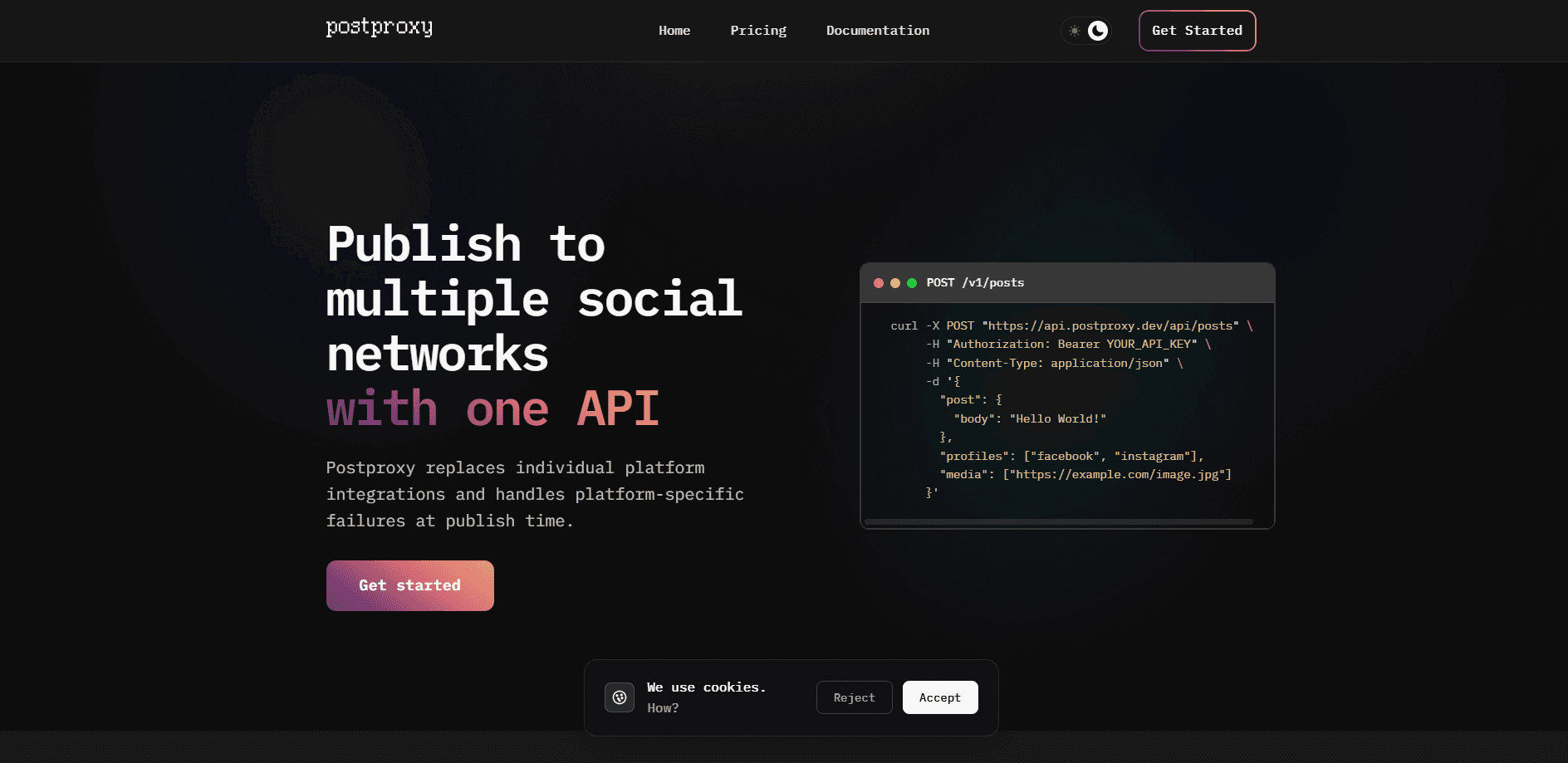
Postproxy is a unified social media API that handles publishing, comments, direct messages, and insights across many platforms through one integration. Instead of wiring up Instagram, TikTok, LinkedIn, X, YouTube, Facebook, Threads, and Bluesky separately, you send one payload and let Postproxy map it to each platform's rules. Why bother? Because maintaining eight integrations is a job on its own. It's built for agencies, SaaS products, and AI agents that publish on behalf of other people.
About Postproxy
What Is Postproxy
Postproxy is an API service, not a dashboard you click through. The selling point is simple. One integration layer for the whole social workflow. You authenticate once, connect profiles, then publish, reply to comments, answer DMs, and pull insights from a single contract. The service absorbs the messy parts of working with many platforms, like per-platform formatting rules and partial failures, so your code doesn't have to branch for every network.
The people who get the most out of it are developers building social features into their own products. A SaaS tool that lets customers schedule posts, or an agency running dozens of client accounts, would otherwise maintain a handful of separate integrations and never stop paying that maintenance tax. Postproxy collapses that into one set of endpoints, with official SDKs for Node, Python, and Ruby to cut the setup time.
The main limitation is reach into the social platforms themselves. When a network caps how often you can post, that ceiling still applies. X, for example, is limited to 20 posts per 24 hours per account on standard plans. Postproxy can't lift a platform's own limits, and higher X throughput needs pay-as-you-go or bring-your-own-key options.
Getting Started
- Sign up at the Postproxy app with just an email; no credit card is needed to start.
- Generate an API key from your account and confirm the free tier covers 10 posts.
- Connect the social profiles you want to manage, following the hosted authorization flow for each platform.
- Send your first request to the publish endpoint with a body, target profiles, and any media URLs.
- Read the per-platform response to confirm each network accepted the post, then build your scheduling and reply logic on top.
Product Information
A quick look at Postproxy's pricing, supported platforms, and performance.
Best for
The users, tasks, and scenarios where this tool fits best.
Users
- SaaS developers
- Agencies
- Marketing teams
- AI agent builders
Tasks
- Multi-platform publishing
- Marketing automation
- Handling comments and DMs
- Managing reviews and insights
Scenarios
- Launching a product across several channels at once
- Running client social accounts at scale
- Building a scheduling feature into an app
Key features
One API for the Whole Workflow
Postproxy replaces separate per-platform integrations with a single interface for publishing, comments, conversations, and insights. You learn one contract instead of eight. That's the core reason teams pick it over building directly against each network.
Single Payload, Multiple Platforms
You send one payload and Postproxy maps it to each platform's rules, then returns a per-platform outcome. If Instagram accepts a post but X rejects it, you see both results clearly. No guessing which network failed. This is where the abstraction earns its keep.
Official SDKs for Fast Integration
The service ships official SDKs for Node, Python, Ruby, and other common languages, alongside plain REST endpoints. The team's pitch is integrating in about 30 minutes rather than weeks. That holds up if you're using a supported language.
Full Engagement Through the API
Beyond publishing, you can reply to comments, respond to DMs, and manage reviews across all connected platforms. That means a support or community workflow can run from the same API key as your posting logic. Fewer systems to keep in sync.
Webhooks, Retries, and Logs
The API includes webhooks for post status, retries, and logs, with per-platform results in one response. For automation you get the visibility you need when something goes wrong. Not glamorous. But it's the difference between a toy and something you'd run in production.
Profile-Group Billing for Teams
SaaS products and agencies pay per connected profile group, where a group usually maps to one brand, client, or publishing setup and can hold up to 11 connected platforms. Agents and automations pay per connected profile instead. Two billing models cover two very different use cases. Pick the one that matches how you ship.
Pros and cons
Pros
- Removes the need to maintain a separate integration for every social platform, saving weeks of engineering that would otherwise go into plumbing rather than product work.
- Per-platform result reporting makes partial failures visible instead of silent.
- Official SDKs for Node, Python, and Ruby lower the setup cost for common stacks.
- Free tier covers 10 posts, so you can test the workflow before paying.
- Engagement features like comments and DMs mean one API handles more than just posting.
Cons
- Platform rate limits still apply; X caps you at 20 posts per 24 hours per account, and higher throughput costs extra.
- It's an API-first product, so non-developers can't use it without writing code.
- Pricing scales with connected profiles or groups, which gets expensive for very large operations.
Frequently asked questions
Postproxy handles social media publishing, comments, direct messages, reviews, and insights across connected platforms from one API. It's aimed at developers and teams who publish on behalf of users or clients.
Related content
Explore related tools, skills, and articles for Postproxy.
Postproxy Alternatives

Emailwritr
Emailwritr · Writing · MarketingEmailwritr is an AI email copywriting tool built for affiliates, course creators, and online businesses that want more revenue from the list they already own. Instead of blank pages or generic chatbot prompts, this AI email writer generates welcome sequences, launch campaigns, cart recovery emails, and promo series from frameworks modeled on well-known direct-response copywriters. You connect your autoresponder, answer a few questions about your offer, and it writes the copy for you.

Prosp
Prosp · Writing · Voice & Language · MarketingProsp is an AI LinkedIn outreach tool built for agencies and sales teams, and it writes the message and the voice note in your own voice for each prospect so they actually reply. You connect your accounts, find leads, and let the AI draft and send personalized messages at scale, all from one inbox. It's built for people running outbound at volume. That's the whole pitch. Every touchpoint still has to feel human.

On Model
On Model · Image · MarketingOn Model is an AI fashion model tool that places your clothing on virtual models so online stores can get on-model product photos without booking a photoshoot. It runs as a Shopify app, letting you swap the model in an existing image, change backgrounds, and generate faces for cropped or headless shots. The goal is simple: match your product photos to your customers and stand out from competitors using the same supplier images.