

PostPulse
PostPulse · Writing · Marketing
PostPulse is an AI content service for SaaS startups. It writes SEO-focused posts and publishes them on established domains to build backlinks and search visibility.
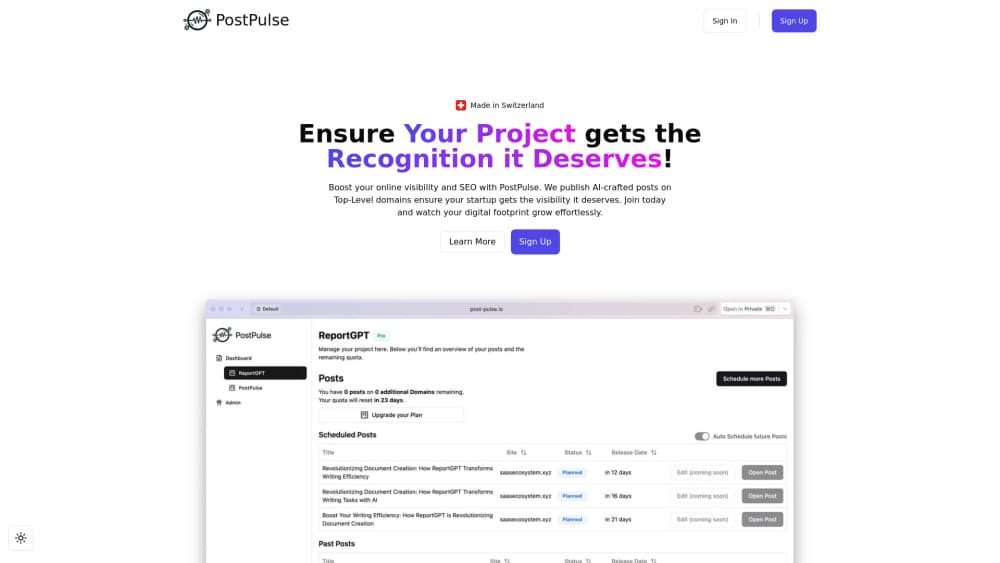
About PostPulse
What Is PostPulse
PostPulse was a done-for-you content service for SaaS founders. It paired AI content generation with managed publishing: you described your product and audience, the service wrote the article, then placed it on one of its premium domains.
The pitch made sense for small teams. Most early-stage SaaS companies have no writer, no editorial calendar, and no patience for pitching guest posts. PostPulse skipped all three. Instead of adding pages to your own blog, it put the work on domains that already had age and authority, which gave you a referring link and a page that could rank on its own.
The caveat matters more than the features now. The service looks discontinued. In October 2026, post-pulse.io stopped responding and postpulseai.com resolved to a domain marketplace listing. New signups aren't possible, so treat this page as a record of what PostPulse offered rather than a buying guide.
Getting Started
- Create an account on the PostPulse site with your work email.
- Pick a plan. The Free tier gave you one branded post per month, and Starter raised the quota for $9 per month.
- Send the brief: product name, target customer, main keywords, and the tone you wanted.
- Review the draft, request edits, or let the paid auto-scheduling option publish it.
- Save the live URL and check that the link to your site works.
Product Information
A quick look at PostPulse's pricing, supported platforms, and performance.
Best for
The users, tasks, and scenarios where this tool fits best.
Users
- SaaS founders without a content team
- Solo marketers at pre-seed startups
- SEO consultants with small accounts
Tasks
- Monthly blog content for a product site
- Building branded backlinks
- Testing content angles before hiring writers
Scenarios
- A pre-seed team that needs steady publishing without a writer
- Founder-led sales that needs supporting content
- An agency covering overflow work
Key features
Brand and Product Briefing
Before a post went out, you supplied the product name, audience, keywords, and tone. The AI turned that brief into a full article instead of a generic listicle. Output quality depended heavily on how specific your input was.
AI Drafting With SEO Structure
Each post arrived with a title, headings, and keyword placement suited to search. That covered the basics of content automation for teams with no editor. It didn't include original research, customer interviews, or proprietary data.
Publishing on Premium Domains
PostPulse placed finished posts on a network of established domains rather than your own blog. The value came from the referring link and the domain's existing authority. You got a live URL, but you never controlled hosting or site design.
Monthly Post Quotas
The Free plan included one branded post per month. Starter cost $9 per month for two posts, and Pro and Growth raised the count further. Quotas made costs predictable, but they also capped how fast you could build a library.
Auto-Scheduling on Paid Plans
Paid tiers could schedule posts without manual publishing. That helped founders who wanted a steady drip of content. The feature followed the network's calendar, so you had less say over exact publish dates.
Editing and Brand Controls
Higher plans let you edit drafts, remove PostPulse branding, and get priority support. Those controls mattered when the copy went out under your product's name. Analytics were listed as upcoming rather than available.
Pros and cons
Pros
- Hands-off production: one brief covered research, drafting, and publishing.
- Off-site placements produced referring links from domains with existing authority.
- Entry cost was low, with a free post and a $9 Starter tier.
- Clear monthly quotas made the service easy to budget for.
Cons
- The service appears shut down, so new customers can't sign up.
- Posts live on domains you don't own, which limits control and portability.
- No public API or integration documentation was available.
- Reporting was thin, with analytics still listed as upcoming.
Frequently asked questions
PostPulse generated AI-written blog posts for SaaS companies and published them on premium domains. The goal was to improve search visibility and build backlinks without hiring a writer.
Related content
Explore related tools, skills, and articles for PostPulse.
PostPulse Alternatives

Google EmbeddingGemma 2
Google DeepMind · Writing · Image · CodingGoogle EmbeddingGemma 2 is a 740M-parameter open model that turns text, code, images, audio, and video frames into vectors in one 768-dimension space, running on phones and laptops.

MePersona
MePersona, Inc. · Writing · Productivity · MarketingMePersona is an AI unified inbox for creators. It learns your voice, drafts replies to fan messages from 12 platforms, and sends only what you approve.

Fluence
Yay Software (Yannick Huchard) · Writing · Voice & Language · ProductivityFluence is an Android app that reads PDFs, EPUBs, Word files and web articles aloud, follows each sentence as it speaks, and answers questions about the text on the phone itself.