

Probility
Probility · Marketing · AI Assistant
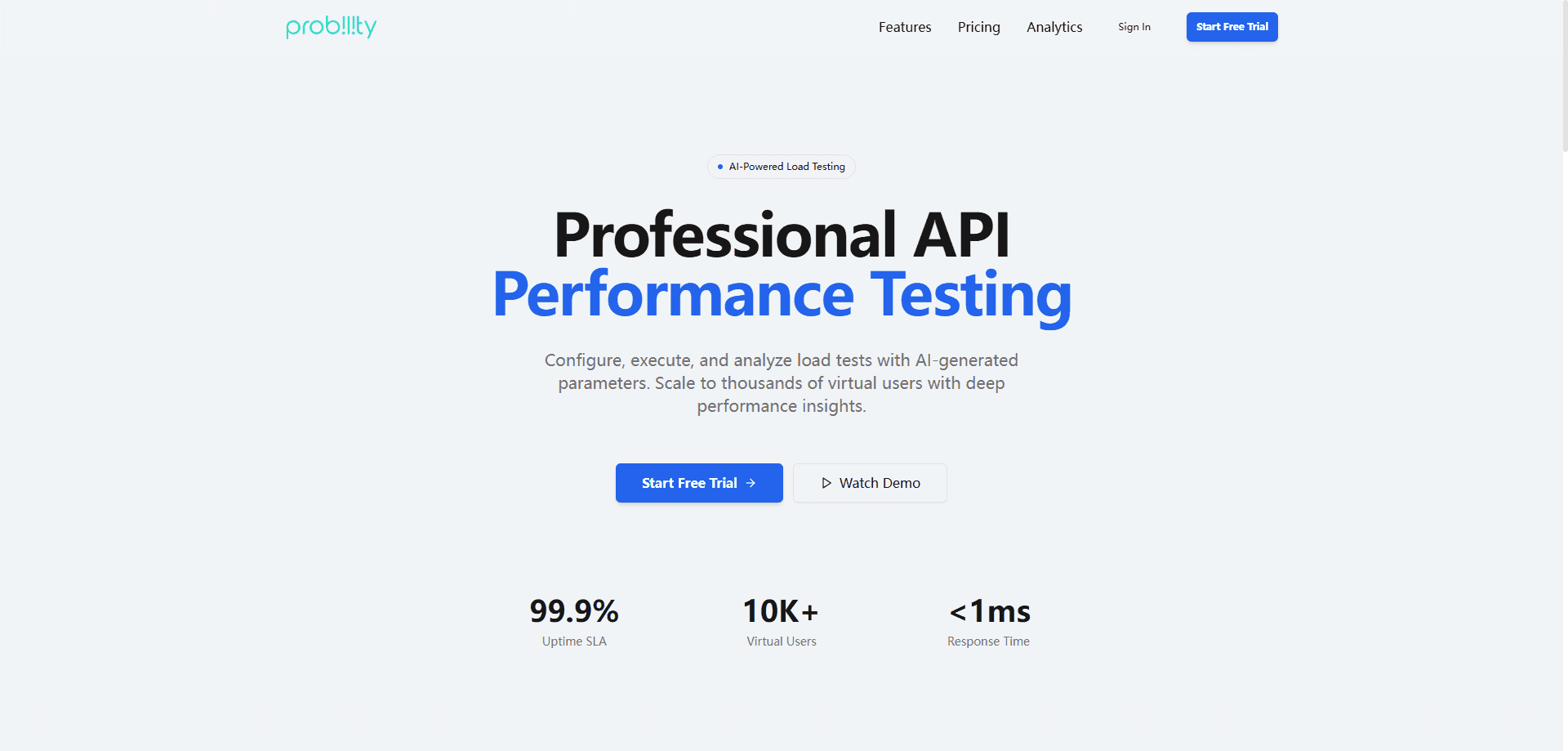
Probility is an AI-powered load testing platform for API performance testing. You configure a test from HTTP methods, headers, and request bodies, or just import it from an OpenAPI spec. The platform generates the load parameters for you. Then it runs the test against thousands of virtual users.\n\nResults land in dashboards that break down response times, throughput, and percentiles. You see where an endpoint slows down before real traffic finds out.
About Probility
What Is Probility
Probility is a web-based platform for running load tests against APIs. You describe the endpoint you want to hit, set how many virtual users should hit it, and the platform fires the requests and watches what happens. The pitch is simple. Most teams test APIs by hand, or skip it until something falls over in production. Probility wants to make the check routine. So does it actually hold up on a real endpoint? That depends on what you're testing.\n\nThe AI angle is where it differs from older tools. Instead of picking concurrency, ramp-up, and duration by feel, you type out what you're testing for. The platform suggests a configuration. That helps if you don't run load tests often and don't want to guess at numbers.\n\nThe main limitation is scope. Probility focuses on HTTP API load testing. It won't cover full browser UI testing or infrastructure monitoring. Subscription limits also cap concurrency and monthly runs, so a heavy testing schedule on the free tier runs out fast.
Getting Started
- Open platform.probility.io and create an account with your email, or start the free trial.
- Create a new test and define the API call: method, URL, headers, and request body. You can also import an endpoint from an OpenAPI or Swagger spec.
- Let the AI suggest test parameters, or set virtual users, duration, and ramp-up yourself.
- Run the load test and watch the live progress, request counts, and response times as it executes.
- Review the analytics dashboard for throughput, success rates, and percentile breakdowns, then export or share the report.
Product Information
A quick look at Probility's pricing, supported platforms, and performance.
Best for
The users, tasks, and scenarios where this tool fits best.
Users
- Backend and API developers
- QA and SRE teams
- Small startups without a dedicated performance engineer
Tasks
- Load testing a REST endpoint
- Importing an OpenAPI spec to build tests
- Comparing API performance across builds
- Finding the breaking point
Scenarios
- Pre-release checks on a new API version, catching slow endpoints before they reach production.
- Load-testing a payment or login endpoint that has to stay responsive under a traffic surge.
- Preparing for a launch or traffic spike and verifying the backend can handle the expected concurrency.
- Diagnosing a slowdown report where the frontend looks fine but an upstream API is the bottleneck.
Key features
AI Parameter Generation
Instead of hand-tuning concurrency and duration, you describe what you want to test and Probility suggests a configuration. It's the feature that separates the platform from script-heavy load tools, and it's aimed at teams who don't run these tests often enough to have a feel for the numbers. You can still override every value if you'd rather set them yourself.
API Test Configuration with Spec Import
You build a test from the same pieces you'd use in a Postman call: HTTP method, URL, headers, and request body. The platform also imports directly from OpenAPI or Swagger specifications, which means that if your API already has a spec, you can skip most of the manual setup and pull live endpoint definitions instead. That cuts down on the copy-paste errors that creep in when you build a dozen requests by hand.
Load Test Execution
Tests run with configurable virtual users, duration, and ramp-up periods, so you can mimic a slow traffic build or a sudden spike that hits an endpoint all at once. The platform advertises scaling to 10K+ virtual users, with concurrency capped by your plan tier. Ramp-up matters here because hitting an endpoint with everyone at once tells you something different than easing users in.
Real-time Monitoring
While a test runs, you get live progress updates, running request counts, and immediate performance feedback. No waiting for the run to finish to spot trouble. If error rates jump in the first few seconds, stop the test and fix the config instead of burning the whole run.
Performance Analytics
The results view covers response times, success rates, throughput, and percentile breakdowns, giving you a full set of API analytics after every run. Percentiles are the part worth watching, because an average response time hides the slow tail that users actually feel when they hit a struggling endpoint. When you need to hand the numbers to someone who wasn't watching the run, exportable reports carry the key API analytics with them.
Secure Account Access
Access runs through email authentication with subscription-based controls. Not a headline feature. It matters if you're testing internal endpoints or staging environments that shouldn't be reachable by anyone with the URL. Your test configs and results stay tied to your account.
Pros and cons
Pros
- AI-generated test parameters lower the barrier for teams that don't run load tests regularly.
- OpenAPI and Swagger import saves manual setup when your API already has a spec.
- Real-time monitoring shows problems mid-run instead of only after it finishes.
- Percentile breakdowns surface the slow tail that averages hide.
- A free tier with 10 virtual users and 5 runs a month is enough to evaluate the platform.
Cons
- Free tier caps you at 1 concurrent test and 5 runs per month, which runs out quickly for active testing.
- It's focused on HTTP API load testing, so it won't cover browser UI flows or full infrastructure monitoring.
- Pricing is listed in South African rand, which adds a conversion step for teams budgeting in other currencies.
Frequently asked questions
Probility runs load and performance tests against APIs. You configure an endpoint, set how many virtual users should hit it, and run the test. Then you read the analytics to see how response times and error rates hold up under load.
Related content
Explore related tools, skills, and articles for Probility.
Probility Alternatives

Emailwritr
Emailwritr · Writing · MarketingEmailwritr is an AI email copywriting tool built for affiliates, course creators, and online businesses that want more revenue from the list they already own. Instead of blank pages or generic chatbot prompts, this AI email writer generates welcome sequences, launch campaigns, cart recovery emails, and promo series from frameworks modeled on well-known direct-response copywriters. You connect your autoresponder, answer a few questions about your offer, and it writes the copy for you.

Prosp
Prosp · Writing · Voice & Language · MarketingProsp is an AI LinkedIn outreach tool built for agencies and sales teams, and it writes the message and the voice note in your own voice for each prospect so they actually reply. You connect your accounts, find leads, and let the AI draft and send personalized messages at scale, all from one inbox. It's built for people running outbound at volume. That's the whole pitch. Every touchpoint still has to feel human.

On Model
On Model · Image · MarketingOn Model is an AI fashion model tool that places your clothing on virtual models so online stores can get on-model product photos without booking a photoshoot. It runs as a Shopify app, letting you swap the model in an existing image, change backgrounds, and generate faces for cropped or headless shots. The goal is simple: match your product photos to your customers and stand out from competitors using the same supplier images.