

QA.tech
QA.tech · Coding
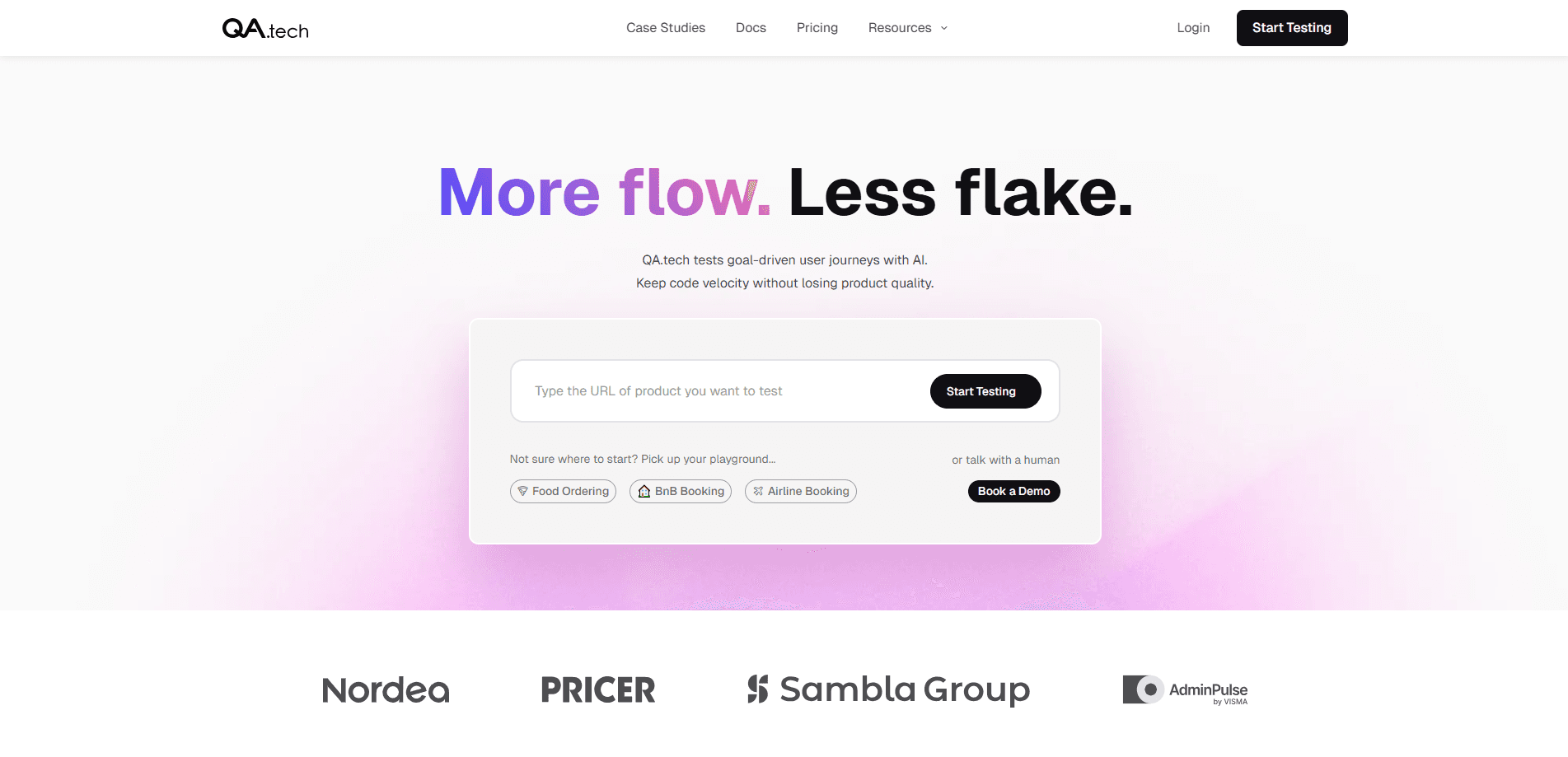
QA.tech is an AI QA testing platform that runs end-to-end, regression, exploratory, and pull-request tests through autonomous agents. Instead of writing scripts or maintaining selectors, teams describe test goals in plain language, and the agents act like real customers clicking through the product. It targets engineering and product teams on web, mobile web, iOS, and Android who want to catch bugs earlier without hiring more QA staff.
About QA.tech
What Is QA.tech
QA.tech is an AI test automation service built by a small team in Stockholm, Sweden. The company has raised $5 million and positions the platform around one promise: free developers from the "testing tax." Traditional QA work is slow, repetitive, and fragile. Tests break every time the UI shifts, so someone has to update them again and again. QA.tech tackles that directly with autonomous QA agents that adapt to interface changes instead of failing on them.
The platform covers web apps, mobile web, native iOS, and native Android. It also handles API regression testing, voice interface testing, and notification checks for email and SMS. Test creation is unlimited on every plan, which matters if your team ships often and a fixed test quota would just get in the way.
The biggest practical limit is pricing. QA.tech doesn't publish rates. Every plan, from Starter to Enterprise, ends with "Talk to us," so you can't estimate cost until you book a demo. The Starter tier also excludes mobile, API, voice, and dynamic PR testing, which pushes most real teams toward Growth or higher. If you need a self-serve credit card signup and an instant price tag, this isn't that kind of product.
Getting Started
- Book a demo through the QA.tech site and walk the team through your testing setup.
- Connect your application by pointing the platform at your staging or production environment.
- Write a test goal in plain language, describing what a user should be able to do.
- Let the agent run the goal, review the recording and pass/fail result, then refine the wording if needed.
- Wire the runs into your CI pipeline so tests fire on each pull request and merge.
Product Information
A quick look at QA.tech's pricing, supported platforms, and performance.
Best for
The users, tasks, and scenarios where this tool fits best.
Users
- QA engineers at product teams
- Developers shipping fast
- Small startups without a QA team
Tasks
- Regression testing after UI changes
- End-to-end flows across multiple apps
- Mobile app testing on iOS and Android
Scenarios
- Validating a pull request before merge
- Scheduled checks against production
- Localization and internationalization review
Key features
Autonomous agents that write their own steps
You describe a goal, not a sequence of clicks. The agent figures out how to reach it, the same way a person would navigate an unfamiliar app. This is the core difference from older automation tools, where someone has to script every button press and selector.
Dynamic tests that survive UI changes
Most test suites rot because the interface moves. QA.tech's agents re-read the page each run, so a renamed button or a reordered menu doesn't automatically fail the test. Teams spend less time fixing tests and more time fixing the product.
Pull request and CI testing
Runs can fire automatically on each pull request, with a fuller pass on merge. The point is to catch regressions right where they're cheapest to fix, before the code reaches a release branch.
Web, mobile, and native app coverage
The platform tests web apps, mobile web, iOS, and Android. Native mobile and API testing sit on Growth and above, so check your tier if those surfaces matter to you.
Multi-surface testing beyond the UI
QA.tech also covers API regression, voice interfaces via speech-to-text, and notification flows for email and SMS. These are the areas automated UI testing usually ignores, and they're where a lot of real user-facing bugs hide.
MCP, API, and CLI access
Growth and Enterprise plans include programmatic access through MCP, a public API, and a command-line interface. That makes it possible to drive QA.tech from your own tooling rather than only through the web dashboard.
Coverage and performance reporting
Coverage reports and test execution performance reports are part of Growth and up. They show which parts of the product the agents actually exercised and how long runs take over time.
Pros and cons
Pros
- Plain-language test goals remove the scripting and selector maintenance that makes classic automation brittle.
- Native iOS, Android, and mobile web coverage in one platform, not a separate tool.
- Unlimited test creation on every tier, so growth in test count doesn't hit a ceiling.
- Programmatic access via MCP, API, and CLI on Growth and Enterprise fits teams that prefer their own pipelines.
- SOC 2 compliance is included across plans, which matters for regulated or enterprise buyers.
Cons
- No published pricing. You can't budget without booking a demo, which slows evaluation.
- The Starter plan cuts mobile, API, voice, and PR testing, so small teams often need a paid upgrade to test what they care about.
- No self-serve free tier, making it hard to trial the product before a sales conversation.
- Test data retention caps at 30 days on Starter and 90 on Growth, which can be tight for long regression histories.
Frequently asked questions
It's an AI QA testing platform that runs automated tests on web and mobile apps using autonomous agents. You describe a test goal in plain language, and the agent executes it the way a real user would, then reports pass or fail.
Related content
Explore related tools, skills, and articles for QA.tech.
QA.tech Alternatives
Forefront
Forefront · CodingForefront is a web platform for building with open-source AI. It lets you fine-tune leading open-source language models on your own data, evaluate how they perform, and run them through an API or export them to host yourself. Developers who want the convenience of a closed-source platform but insist on owning their models and data are the target audience here.

Startkit
StartKit.AI · CodingStartkit is a boilerplate for building AI SaaS and AI wrapper products. Think of it as an AI startup boilerplate with the boring parts already wired up: authentication, Stripe and Lemon Squeezy payments, usage limits, transactional email, and an AI API starter that talks to OpenAI, Anthropic, Groq, or Llama. You clone the repo, set your price, and start on the part of your product that people actually pay for. It's Next.js under React and Tailwind, so most of the boilerplate code already feels familiar.
Testim
Tricentis · CodingTestim is an AI-powered test automation platform for building and running end-to-end tests across web, mobile, and Salesforce applications. It leans on machine learning to keep tests stable when an interface changes, so teams spend less time fixing broken selectors. Not bad for an automated testing tool you can start using today. You create tests by recording actions in a browser, then optionally add JavaScript when you need more control. It's a solid pick for busy QA teams.