
Quick Recruit
Quick Recruit · Business
Quick Recruit is an AI recruitment platform that combines an applicant tracking system, a built-in CRM, AI resume screening, skills tests, and on-demand interviewers in one workspace.
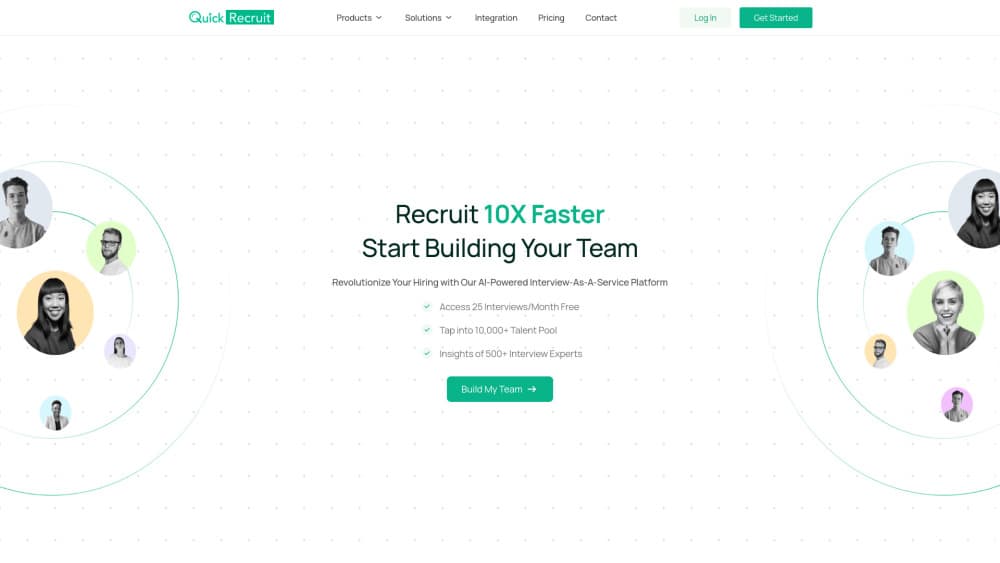
About Quick Recruit
What Is Quick Recruit
Quick Recruit is AI hiring software for teams that run a lot of openings at once and don't want five separate subscriptions to do it. The product bundles three modules under one login: Q-Recruit for the pipeline, Q-Screen for testing, and Q-Expert for live interviews.
The problem it targets is fragmentation. A typical recruiter juggles an applicant tracking system, a spreadsheet of client leads, a separate assessment tool, and a calendar full of interviews booked by email. Every handoff loses a day, and candidates who wait four days for a reply usually take another offer.
Quick Recruit's answer is to keep all of it on one record. A candidate who applies through the ATS can be pushed straight into an assessment, then into a scheduled interview with a specialist who doesn't work for your company. The tradeoff is depth. Teams with unusual workflows will find less room to customize than in a dedicated enterprise ATS, and the pricing for the interview network isn't published, so you have to ask for a quote.
Getting Started
- Create an account from the site. The trial starts without a credit card.
- Post a job and set the stages your pipeline needs, then connect the job boards you already use.
- Import candidates or let applications flow in, and run AI resume screening to rank the pool.
- Attach a Q-Screen assessment to the role if you want a skills filter before interviews.
- Book interviews through the scheduler, either with your own panel or with a Q-Expert interviewer.
Product Information
A quick look at Quick Recruit's pricing, supported platforms, and performance.
Best for
The users, tasks, and scenarios where this tool fits best.
Users
- Recruiters at staffing agencies
- Hiring managers at growing companies
- HR teams of one or two people
Tasks
- Screening a large applicant pool
- Filling a specialist role fast
- Tracking client relationships alongside hiring
Scenarios
- A staffing agency running contractor placements across several client accounts, where each account needs its own pipeline and its own notes.
- A scale-up opening fifteen roles in a quarter with two recruiters on staff.
- A campus or bulk hiring drive where hundreds of candidates take the same test on the same day and need proctoring.
Key features
AI Resume Screening That Ranks the Pool
Instead of a keyword score you have to interpret, the screening module orders candidates by fit for the specific role and pushes the closest matches to the top of the pipeline. Recruiters start from the shortlist rather than the full inbox. The ranking still needs a human read on edge cases, especially for career changers whose resumes don't match the job title.
ATS and CRM in One Record
Most applicant tracking systems stop at the candidate. Quick Recruit keeps jobs, candidates, clients, and sales leads on the same platform, which is what makes it work for agencies that bill clients as well as place candidates. You can see that a candidate came from an account that also owes you two invoices, without opening a second tab.
Q-Screen Skills Assessments
Q-Screen deploys AI candidate assessments built around the role. You customize the test, send it out, and the module ranks everyone who took it. Proctoring with video and audio monitoring is available for exams where integrity matters, and bulk invites let you screen a large pool in one pass. Scores land on the candidate record, so the interview panel sees them before the call.
Q-Expert Interviewers on Demand
Q-Expert gives you access to interviewers across technical and non-technical domains, booked within a day in most cases. Each interview comes back as a structured feedback report with scored sections instead of a paragraph of impressions. It's the closest thing here to interview as a service, and it helps when your team has the opening but not the person qualified to judge the candidate.
Video Interviewing with AI Feedback
Video interviews run inside the platform, and the AI layer summarizes what happened and flags moments worth a second look. Hiring managers who join late can catch up from the summary rather than rewatching a 45 minute recording. Treat the flags as pointers, not verdicts.
QRAA Assistant for Pipeline Reports
QRAA answers questions about your own hiring data in plain language and builds the reports executives ask for. A CEO who wants to know why a role has been open for six weeks can pull that without asking a recruiter to build a spreadsheet.
Smart Interview Scheduling
The scheduler suggests slots from the calendars of everyone involved, sends the invites, and syncs the booking back. It removes the four-email thread that usually sits between a shortlist and a confirmed interview.
Pros and cons
Pros
- One login covers sourcing, screening, assessments, and interviews, which cuts the number of tools a recruiter switches between.
- The CRM layer makes it a realistic option for staffing agencies, not just in-house teams.
- Proctored assessments and on-demand interviewers handle volume hiring without adding headcount.
- Structured interview reports give hiring managers something comparable across candidates.
Cons
- Pricing isn't public, so you can't budget from the site and have to go through a sales conversation.
- Deep customization is thinner than in enterprise ATS platforms, which matters if your approval chain is unusual.
- AI ranking reflects the job description you feed it, so a vague posting produces a vague shortlist.
- There's no documented public API, which blocks teams that want to wire the platform into their own stack.
Frequently asked questions
It runs the hiring process end to end: posting jobs, tracking candidates, screening resumes with AI, testing skills, and scheduling interviews with your team or with an outside expert.
Related content
Explore related tools, skills, and articles for Quick Recruit.
Quick Recruit Alternatives

Knocket
Knocket (Tencent RTC team) · Productivity · Business · ChatbotKnocket is a free live chat and contact page tool that lets visitors message you from your website, app, or a shareable link, with every reply handled from Telegram or one inbox.

shippedit.me
Krawlup · Marketing · Businessshippedit.me now redirects to Krawlup, a web platform that audits SEO, AEO and page speed every week, then hands the fixes to AI coding agents over MCP.

Ayven
Alknoma · Productivity · BusinessAyven is an AI control centre by Alknoma that turns a plain-language goal into a dated plan, hands the work to your people and AI agents, and asks for your approval only when the call is yours.