

Quorini
Quorini · Coding
Quorini is a no-code platform for designing and running serverless cloud APIs, with a visual data model builder and instant backend deployment.
About Quorini
What Is Quorini
Quorini is a backend-as-a-service platform for building serverless cloud APIs without writing backend code. You define data models, user groups and permissions in a visual editor, then deploy a live GraphQL API to a managed environment. The product targets the slow part of app development: setting up data structures, access rules and a scalable backend before you can ship anything.
Two developers, Alex Tartach and Katya Prusakova, built Quorini after running into the same backend setup work on project after project. The platform runs on AWS and launched on Product Hunt on November 7, 2024, where it took Product of the Week with 923 upvotes. It stays free during its beta phase, so there is no pricing page to plan around yet.
The limits matter before you commit. Quorini is still in beta, which means features and terms can shift. Native SDKs cover JavaScript and React, so teams on other stacks lean on the GraphQL API directly. And a hosted service means you are trusting a young company with your data model and user records.
Getting Started
- Create a project at quorini.app and open the visual editor.
- Build your business entities, their attributes and sub-objects, and define enums where a field needs fixed choices.
- Set up user groups and apply role-based access control at the object or field level.
- Publish the backend and copy the generated GraphQL queries, mutations and client-side types.
- Install the @quorini/core SDK, point it at your project, and connect your frontend.
Product Information
A quick look at Quorini's pricing, supported platforms, and performance.
Best for
The users, tasks, and scenarios where this tool fits best.
Users
- Startup founders and small teams
- Freelance developers and agencies
- Front-end developers
Tasks
- Modeling data for a new app
- Setting up access rules
- Prototyping an MVP
Scenarios
- A weekend prototype that needs a real backend
- A studio juggling several client builds
- An internal tool for a non-technical team
Key features
Visual data modeling
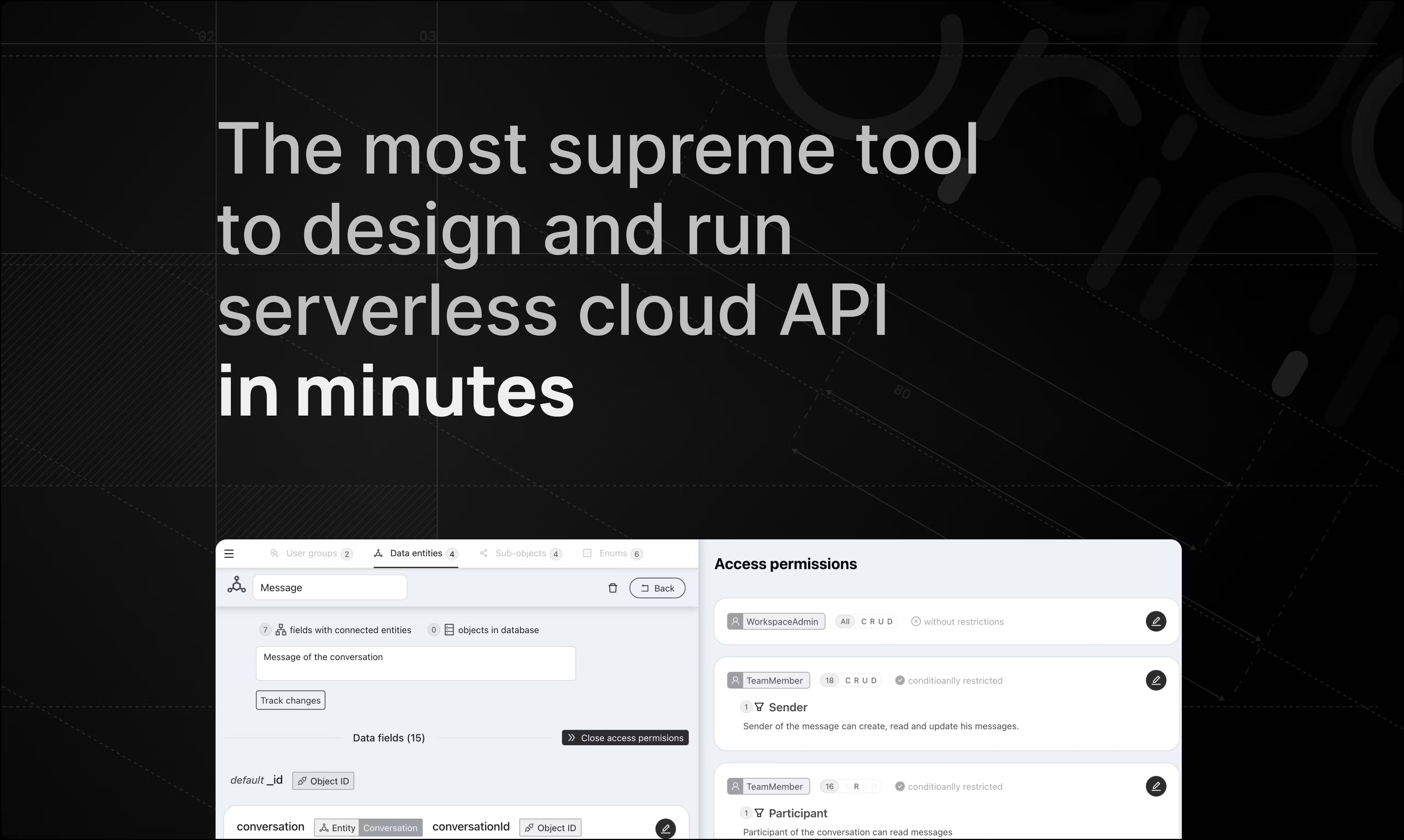
Quorini's editor lets you build entities, sub-objects and enums through a visual interface instead of writing schema files by hand. You define the shape of your business objects and their attributes, and the platform turns that into a structured data model behind a live API. This is the core of the product: it removes the schema and migration work that usually comes before any code runs.
Role-based access control
Permissions are set per user group and can be scoped to a whole object or down to a single field. That field-level control is what separates Quorini from a plain database, because you can hide a salary column or an internal note from the roles that should not see it. You build the privacy rules into the model as you go, not as an afterthought.
Instant API deployment
Once your models and permissions are in place, deploying to production is a click, and Quorini creates both development and production environments for you. The backend is fully managed, so there is no server configuration, patching or capacity planning to handle. For teams without a backend engineer, that single step is often the reason they pick the platform.
GraphQL API with generated types
Quorini exposes your backend as a GraphQL API and generates the client-side types, queries and mutations alongside it. You copy those into your codebase, which cuts down on the hand-written glue code that usually sits between a front end and a custom backend. The Tech Docs tab keeps endpoints and inputs in one place.
JavaScript and React SDKs
The official @quorini/core package configures your app against a published backend, and @quorini/ui-react adds React hooks and components on top. Front-end developers connect a React app with a few lines of setup rather than building an API client from scratch. Teams on other frameworks still reach the same backend through the GraphQL endpoint.
Serverless scaling on AWS
Quorini runs on AWS and scales with demand automatically, so a spike in traffic does not need manual intervention. The serverless model means you are not paying for idle servers during quiet periods. The trade-off is that you keep less control over the infrastructure underneath.
Pros and cons
Pros
- Turns backend setup into a visual task, so a front-end developer can ship a working API without backend code.
- Field-level role-based access control is built into the platform, not bolted on later.
- Instant deployment creates development and production environments in one step.
- Free during beta, which removes the cost barrier for testing it on a real project.
Cons
- Still in beta, so features, stability and terms may change and you should not treat it as a settled product.
- Native SDKs only cover JavaScript and React, so other stacks have to work through the GraphQL API.
- Hosted service with no self-hosting option, which matters if your data has to stay in your own infrastructure.
- Little public information on the paid plans, so long-term cost is hard to predict once beta ends.
Frequently asked questions
Quorini is used to design and run serverless cloud APIs for web and mobile apps. You model your data and permissions in a visual editor, then deploy a live GraphQL backend without writing server code.
Related content
Explore related tools, skills, and articles for Quorini.
Quorini Alternatives

Base Code
Base44 (Wix) · Coding · ProductivityBase Code is a shared cloud development environment from Base44. Teammates describe changes to an existing GitHub codebase in chat, preview them live and send them back as pull requests.

Google EmbeddingGemma 2
Google DeepMind · Writing · Image · CodingGoogle EmbeddingGemma 2 is a 740M-parameter open model that turns text, code, images, audio, and video frames into vectors in one 768-dimension space, running on phones and laptops.

GitGlow
GitGlow · Coding · ProductivityGitGlow is a local-first desktop Git client that lets independent developers review their own code and their AI agents' changes in one place before shipping.