

SaaS Boilerplates
SaaS Gems · Coding
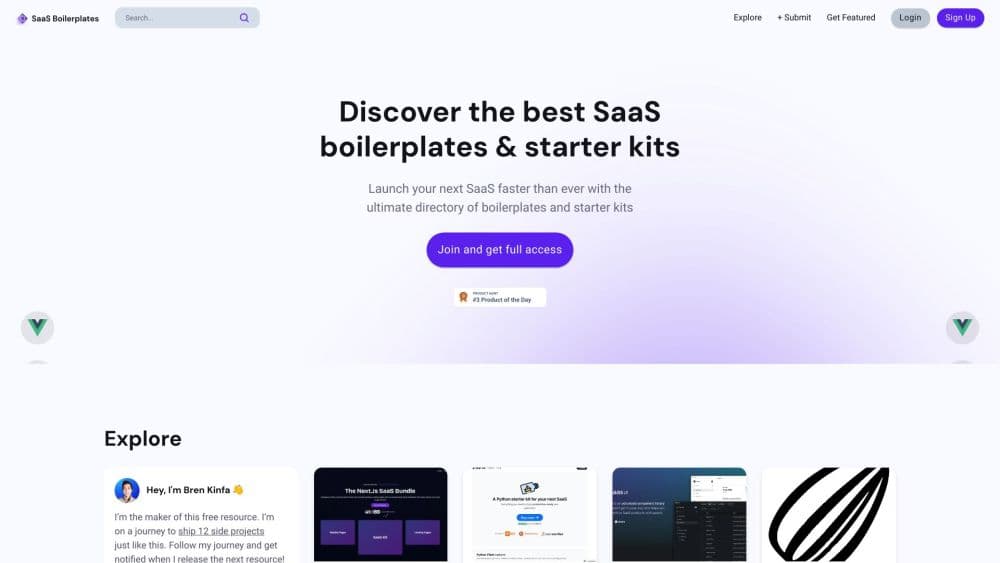
SaaS Boilerplates is a free curated directory of 120+ SaaS boilerplates and starter kits, grouped by framework and stack so founders can compare options before they build.
About SaaS Boilerplates
What Is SaaS Boilerplates
SaaS Boilerplates is a SaaS boilerplate directory, not a template you can download. It collects SaaS starter kits and boilerplates built by other people, gives each one a short listing page with a description and a link to the vendor, and sorts the whole set into categories. The site sits inside the SaaS Gems network and is maintained by Bren Kinfa.
The value is in the shortlist. Instead of opening thirty vendor sites to work out which kits target Next.js, Laravel, or plain React, you open one page, scan the stack categories, and jump straight to the projects that match what you already know. Listings currently run past 120 projects, spread across five index pages.
What you will not find is depth. There is no pricing table, no feature matrix, and no hands on testing of the code inside each kit. Each listing carries the vendor's own pitch, so treat the descriptions as a starting point for your own check. The site also displays a notice that the domain is for sale, which is worth knowing if you plan to rely on it as a long term reference.
Getting Started
- Open saasboilerplates.com and browse the category list, which splits kits by framework such as Next.js, React, Laravel, Django, Vue, Svelte, Node.js, Python, Ruby on Rails, React Native, TypeScript, and Express.
- Pick the categories that match your stack, then read the short listing blurbs to build a shortlist of three to five candidates.
- Open the vendor link on each listing to check the actual feature list, license terms, and price on the seller's own site.
- Create a free account if you want to submit a listing or keep track of new additions, since the directory adds projects over time.
Product Information
A quick look at SaaS Boilerplates's pricing, supported platforms, and performance.
Best for
The users, tasks, and scenarios where this tool fits best.
Users
- Solo founders and indie developers
- Developers moving into SaaS work
- Freelancers and small studios
Tasks
- Building a shortlist of starter kits
- Choosing a framework for a new product
- Researching what a modern SaaS kit ships with
Scenarios
- Starting an MVP under time pressure
- Switching stacks on a side project
- Evaluating build versus buy
Key features
Curated Listings of 120+ Kits
Every entry is a real project with a working site, not a placeholder. The set covers commercial kits, open source repos, and smaller indie releases, which gives you a wide price range to work with. New projects get added over time, so the list stays useful beyond a single visit.
Stack-Based Categories
The directory splits into dedicated categories for Next.js, React, Laravel, Django, Vue, Svelte, Node.js, Python, Ruby on Rails, React Native, TypeScript, and Express. Hunting for a Laravel boilerplate, a Django boilerplate, or a React boilerplate each takes one click, because every stack has its own page. That structure is the main reason to use the site, since stack mismatch is the first thing that rules a kit out.
Short Listing Pages
SaaS template listings stay short on purpose: a tagline length description plus an outbound link to the vendor. You get enough to decide whether a project is worth a click, and nothing more. Expect to do the real evaluation on the seller's site.
Free Membership and Submissions
Browsing needs no account. A free sign up unlocks the ability to submit a listing and puts you on the SaaS Gems newsletter, which sends new resources for founders. There is no subscription fee for readers.
Editorial Guides
The blog covers practical questions such as how to choose a boilerplate, what these kits are for, and which technologies sit behind them. The articles read as general guidance rather than reviews, so use them to frame your search, not to settle it.
Sponsorship Slots
Vendors can pay for featured placement and sponsorship. This is how the site funds itself, and it means position on the page is not a quality ranking. Read the labels and treat promoted entries as advertising.
Pros and cons
Pros
- Free to browse with no account, which makes it a low cost first stop before you start comparing vendors.
- Category structure follows real stacks, so a Next.js boilerplate search takes seconds rather than a dozen search engine queries.
- More than 120 projects in one index, including smaller indie kits that rarely appear in roundup articles.
- Submission stays open to makers, so coverage keeps expanding beyond the big names.
Cons
- Descriptions are short and vendor written, so a listing tells you the pitch but not the code quality, update history, or support record.
- There is no side by side pricing or feature filter, which means a boilerplate comparison still happens across separate vendor tabs.
- The domain carries a for sale notice, so long term maintenance is uncertain and you should save any shortlist you build.
Frequently asked questions
Yes. Browsing the directory and reading the blog cost nothing, and you do not need an account to open listings. A free sign up is only needed for submitting a project or joining the newsletter.
Related content
Explore related tools, skills, and articles for SaaS Boilerplates.
SaaS Boilerplates Alternatives

Base Code
Base44 (Wix) · Coding · ProductivityBase Code is a shared cloud development environment from Base44. Teammates describe changes to an existing GitHub codebase in chat, preview them live and send them back as pull requests.

Google EmbeddingGemma 2
Google DeepMind · Writing · Image · CodingGoogle EmbeddingGemma 2 is a 740M-parameter open model that turns text, code, images, audio, and video frames into vectors in one 768-dimension space, running on phones and laptops.

GitGlow
GitGlow · Coding · ProductivityGitGlow is a local-first desktop Git client that lets independent developers review their own code and their AI agents' changes in one place before shipping.