
Scal-e
Scal-e · Marketing
Scal-e is a French customer data platform that pulls offline, online and on-chain customer data into one profile, then runs acquisition and loyalty campaigns from the same workspace.
About Scal-e
What Is Scal-e
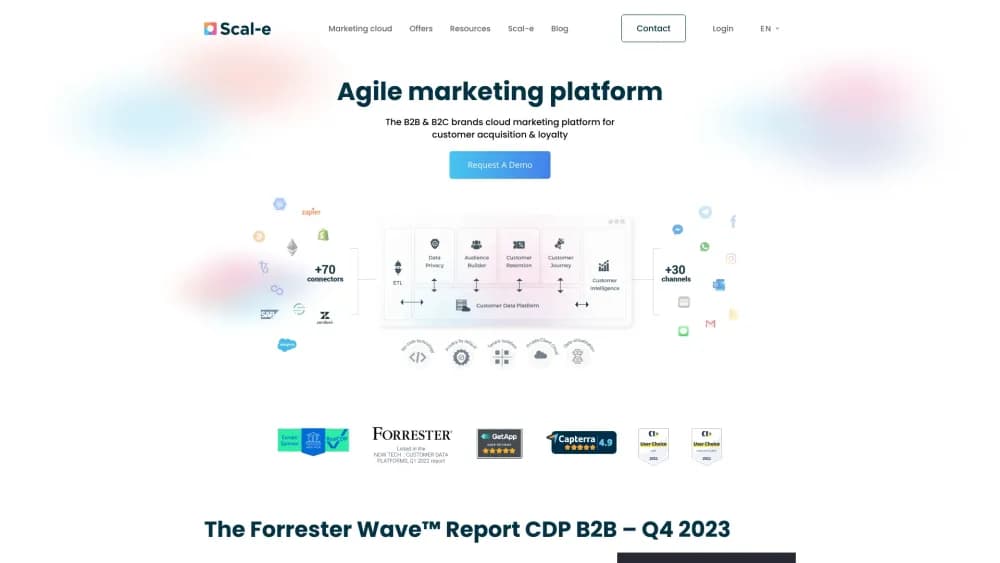
Scal-e is a marketing platform built around a customer data platform, sold mainly to B2B and B2C brands in Europe. It does three jobs in one account: collect and clean customer records, decide who should hear what, and send the message through email, SMS, push, a mobile wallet or a loyalty card. The company behind it is French, and this customer data platform software turns up in Forrester's B2B customer data platform research. That listing matters if you need a European vendor to answer a procurement questionnaire.
The problem it goes after is fragmentation. A retail chain might hold order history in one system, newsletter opt-ins in another, and loyalty balances in a third. Scal-e connects to those sources through more than a hundred standard connectors, merges the records into a single customer view, and lets a marketing team build audiences from the result.
Two limits shape the fit. There's no public price list; you request a quote and go through a sales process, which is a poor match for a small team that wants to sign up and start sending campaigns the same afternoon. And the platform is built for organizations with real data volume and a compliance burden, so its strengths only pay off once you have both.
Getting Started
- Book a demo through the Scal-e site. Expect a scoping call that covers your data sources, channels and the loyalty setup you have in mind.
- Connect the sources. Data arrives through API calls, predefined connectors, a query or flat files, either in real time or in batches.
- Clean and merge records. Identify duplicates, normalize fields and set the rules that decide when two records belong to the same person.
- Build audiences and journeys. Segment on behavior and scores, write the customer journey, and pick the channel for each step.
- Launch and measure. Send the campaign, then review engagement and revenue inside the customer intelligence dashboards.
Product Information
A quick look at Scal-e's pricing, supported platforms, and performance.
Best for
The users, tasks, and scenarios where this tool fits best.
Users
- Retail and ecommerce marketing teams
- Insurance, banking and telecom CRM teams
- Agencies running loyalty programs for clients
Tasks
- Merging customer records from several systems
- Designing a points-based loyalty program
- Segmenting a base with RFM scoring
- Adding a consent layer to existing campaigns
Scenarios
- A retailer moving from a legacy loyalty system
- A brand expanding across countries with different privacy rules
- A B2B company testing account-based marketing
Key features
Customer Data Unification
Scal-e collects offline, online and on-chain records and folds them into a custom data mart or single customer view. Imports run in real time or in batches, through an API, connectors, queries or flat files. Deduplication and normalization happen before the merge, and identity resolution uses several matching keys so one person doesn't end up as four profiles. This is the foundation the rest of the platform sits on.
Privacy and Consent Management
A dedicated privacy module stores consent and preferences as a searchable object, then checks them before any message goes out. The platform covers GDPR, CCPA, PIPL, CASL and CAN-SPAM requirements, so data privacy compliance stops being a spreadsheet exercise, and it supports anonymization, deletion and access requests. Teams can also limit who sees personal data by market or department, which matters for companies operating in several jurisdictions.
Segmentation and RFM Scoring
Audiences build as data arrives, not on a weekly export. The platform scores customers on RFM and other models, calculates things like average cart value and customer lifetime value, and enriches profiles with those numbers. A marketing manager can then pull lapsed high spenders into one segment and first-time buyers into another, and give each group a different offer.
Personalized Recommendations
Calculated values, dynamic content and personalization scripts sit inside the message itself, so the same email reads differently for each recipient. Recommendations draw on declared, behavioral and transactional data, and A/B or multivariate tests let you compare versions before rolling them out. For a loyalty program, that's the difference between a generic points reminder and an offer for the product someone actually buys.
Omnichannel Campaign Orchestration
Campaigns run across conversational, relational and transactional channels: email, SMS, push notifications, a mobile wallet loyalty card and a preference center. The journey builder scripts multi-step sequences, and updates to a preference take effect on the next send. With more than thirty channel connectors, a team can keep one journey definition instead of rebuilding it per channel.
Loyalty and Referral Programs
Points, tokens, promo codes, coupons and vouchers can all be issued from the platform, and members can refer their own network, which turns customers into a small acquisition channel. The program can be run in-house, through an agency or as a white-label offer. A preference center and wallet card give members somewhere to manage the relationship, which helps retention.
Pros and cons
Pros
- Data unification, loyalty, segmentation and campaign tools share one platform, so you aren't paying for a separate CDP, loyalty engine and marketing automation suite.
- The privacy module is built into the data layer, which saves the awkward work of bolting consent checks onto campaigns later.
- A European vendor with a Forrester listing helps in procurement processes that screen for EU-based providers.
- Import supports real time and batch, plus flat files, so older systems can join without a full rebuild.
- Identity resolution uses multiple matching keys, which cuts down on duplicate profiles in messy customer bases.
Cons
- No published pricing. Getting a number means a sales conversation, and budget planning starts with an unknown.
- Implementation is a project, not a sign-up. Mapping sources and cleaning records takes weeks, and smaller teams often underestimate it.
- The interface serves marketing operators and data teams at once, so neither gets a purely simple view. Expect training time.
- Documentation and support material are lighter than what US vendors provide, and some pages still lean on French.
Frequently asked questions
Scal-e is a customer data platform with marketing tools attached. You connect the systems that hold customer records, merge them into one profile, then use that profile to build audiences, run loyalty programs and send campaigns. It's aimed at companies that already have a lot of customer data and nowhere good to put it.
Related content
Explore related tools, skills, and articles for Scal-e.
Scal-e Alternatives

ngram 2.0
ngram · Video · Marketingngram 2.0 is an AI video generator for teams. It turns a prompt, a screen recording, or a product URL into a narrated explainer, product demo, or AI avatar video, and every scene stays editable.

shippedit.me
Krawlup · Marketing · Businessshippedit.me now redirects to Krawlup, a web platform that audits SEO, AEO and page speed every week, then hands the fixes to AI coding agents over MCP.

MePersona
MePersona, Inc. · Writing · Productivity · MarketingMePersona is an AI unified inbox for creators. It learns your voice, drafts replies to fan messages from 12 platforms, and sends only what you approve.