

Scam AI
Reality Inc. · AI Detection
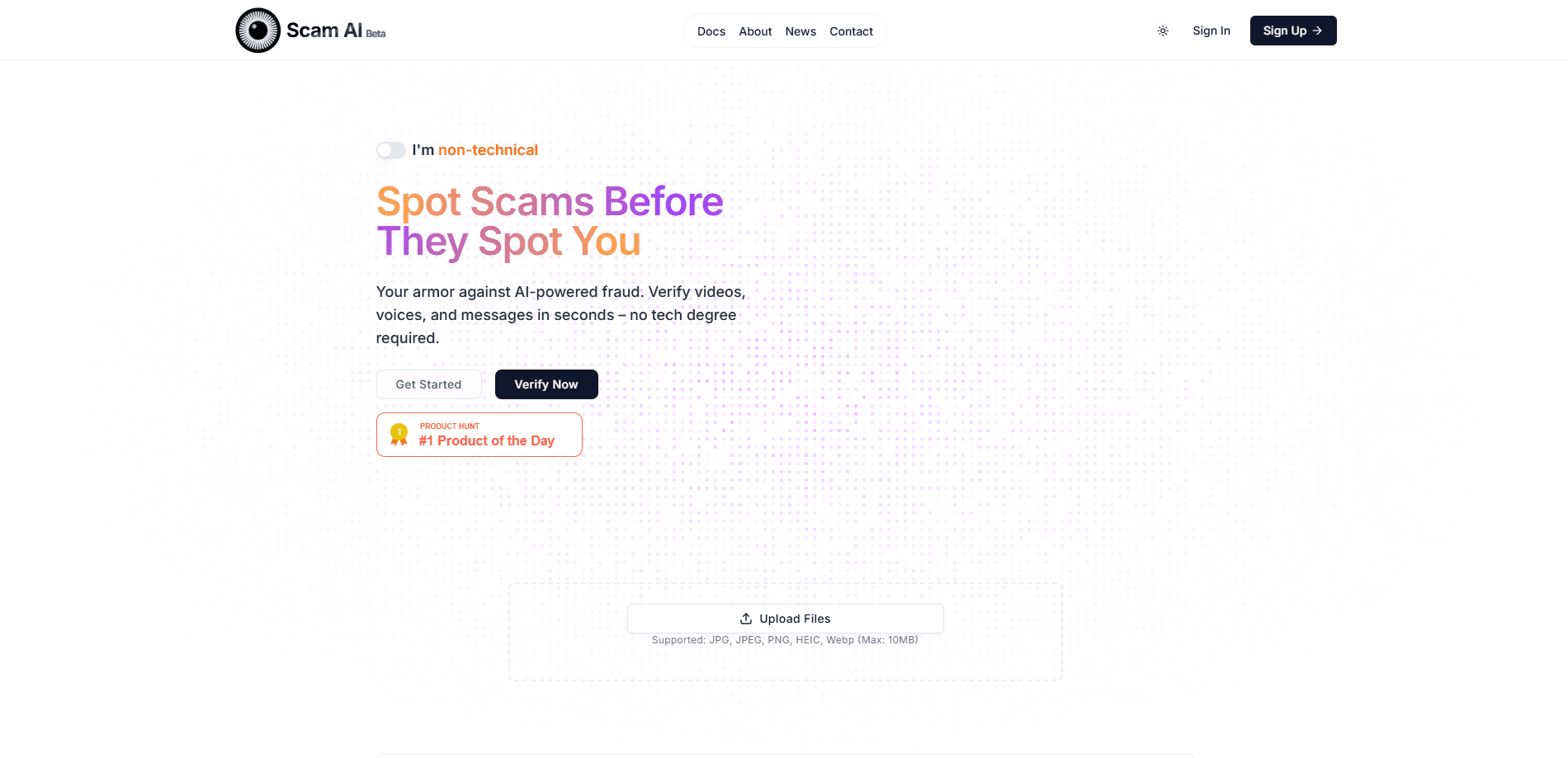
Scam AI is a deepfake detection and scam prevention platform that scores faces, voices, images and documents for AI manipulation and returns a plain verdict with the evidence attached.
About Scam AI
What Is Scam AI
Scam AI is a detection platform built by Reality Inc., a team out of Duke University and UC Berkeley. It checks whether a face, voice, image or document is real or AI-generated, then hands back a verdict you can act on. The company raised $2.6M to fight AI-powered fraud.
The product runs on one engine, the Eva V1.6 Detection Model, which covers onboarding selfies, identity documents, claims media, live video meetings and user-generated content. A laptop app called Halo watches video calls on-device, and a separate product called PII Zero blurs names, faces and account numbers out of claim files before they move.
The main limit is scope. Scam AI is built for teams that process media at volume, like banks, insurers and marketplaces. Detection is probabilistic, not a simple yes or no, so someone has to set thresholds and decide what to do when a check comes back uncertain. Individual buyers looking for a casual phone app will find more than they need here.
Getting Started
- Sign up on the website and add credits. Every account gets the same models and the same API, so there is no tier to pick.
- Send a photo, video or audio file through the dashboard, the REST API, the CLI or an MCP server. The system infers the media type on its own.
- Read the response: a verdict (likely real, alert or likely AI), a score from 0 to 1, and a one-sentence summary of what was found.
- Route on the result in your own workflow, from auto-decline to step-up to human review. Set the thresholds per flow.
Product Information
A quick look at Scam AI's pricing, supported platforms, and performance.
Best for
The users, tasks, and scenarios where this tool fits best.
Users
- Fraud and risk teams at banks and lenders
- Insurance claims reviewers
- Engineers wiring detection into an app
Tasks
- Screening a selfie during identity verification
- Watching a live video call
- Cleaning identity out of claim files
Scenarios
- A supplier sends an invoice with an altered amount
- A recruiter gets a job interview over video
- A support team wants to strip customer data before archiving
Key features
One Engine Across Every Media Type
Eva V1.6 handles faces, so fake voice detection, an AI image detector and document checks all run on the same model rather than splitting across separate tools. You send a file and the server picks the right detector from the content, so you never choose a technique. That single endpoint means one integration covers photos, video clips and recordings.
Verdicts With the Evidence Behind Them
Each check returns a verdict, a probability score and a plain-English summary of what triggered it. Video is scored frame by frame and audio window by window, so you can point at where in a clip the manipulation appears. The point is a result a human reviewer or auditor can defend later, not just a label.
Real-Time Detection on Live Calls
Halo runs deepfake detection on your own machine during a video meeting and flags a manipulated feed while the call is still going. Because the analysis stays on-device, meeting video never leaves your endpoint. It works in Zoom, Teams and Meet without any integration work.
Document Forgery Detection
The platform catches forged and tampered identity documents, pay stubs, bank statements and invoices, including template-generated and synthetic IDs. As a document forgery detection tool, it localizes the doctored region and attaches the evidence to the verdict. Document checks are a separate plan arranged with the team.
Offline Redaction with PII Zero
PII Zero blurs names, addresses, account and policy numbers, faces and license plates out of documents, photos and video before a file moves. It tracks each item frame to frame, then re-scans its own output and counts any leftover identity data. It runs on-prem or fully air-gapped.
A Detection API for Developers
One REST endpoint at api.scam.ai takes an image, video or recording and returns a scored JSON result. This deepfake detection API ships with Node and Python SDKs, a CLI and an MCP server, all published, and there is no model to host. The MCP server lets an agent verify media mid-task.
Pros and cons
Pros
- Covers images, video, voice and documents through one engine and one API, so you add a capability without adding a vendor.
- Ships with Node and Python SDKs, a CLI and an MCP server, and the first integration typically takes a day.
- Pay-as-you-go pricing at $0.02 per credit, with credits that never expire and no seats or tiers to manage.
- Runs on-prem, in private cloud or fully air-gapped for teams that cannot send media out.
- SOC 2 Type II audited and GDPR compliant, with detection research and datasets published under named authors.
Cons
- No free plan, so you pay from the first check and have to buy credits in $10 steps.
- Detection is probabilistic and needs threshold tuning, which means an uncertain result still lands on someone to review.
- Document forgery detection sits behind a separate plan and a sales conversation rather than self-serve pricing.
- There is no consumer mobile app for casual one-off checks, which leaves out individuals who just want a quick answer.
Frequently asked questions
It detects deepfaked faces, face swaps, fully AI-generated images and video, forged or tampered identity documents and device-level attacks like virtual cameras. One engine, Eva V1.6, covers onboarding selfies, identity documents, claims media, live meetings and user-generated content.
Related content
Explore related tools, skills, and articles for Scam AI.
Scam AI Alternatives
Isgen AI
Isgen · AI DetectionIsgen AI is a web-based AI detector that scores text for machine authorship and shows you which sentences and phrases push the number up. It's built for teachers, editors, students, and writers. Their question is simple: did this draft come from ChatGPT, GPT-5, Claude, Gemini, DeepSeek, or another model? You paste or upload content, run a scan, and get a Human, AI, and Mixed breakdown in seconds. There's also a companion editor that scores text while you write it.
Humanizeai Tools
Humanizeai Tools · Writing · AI DetectionHumanizeai Tools is a web-based AI humanizer that rewrites machine-generated text so it sounds like a person wrote it, which is the whole point of the category it belongs to. Paste a draft from ChatGPT, Claude, or Gemini, run it through the tool, and it swaps out the phrases and sentence patterns that AI detectors flag. If your goal is to make AI text sound human before you publish it, this is the kind of tool built for exactly that. It suits students, bloggers, and marketers who need copy that reads naturally and clears tools like GPTZero, Copyleaks, and Winston AI after a single pass.

Hidemyai
Hidemyai · Writing · AI DetectionHidemyai is an AI content humanizer. It rewrites text from ChatGPT, Jasper, and similar tools so the result reads like a person wrote it. You paste your draft, pick a document type and tone, and the service returns a version meant to bypass AI detectors such as Originality.ai, Turnitin, and ZeroGPT. It targets writers, marketers, and students who lean on AI drafts but can't ship copy that sounds robotic. The promise is simple: make AI content undetectable.