

SEATEXT. AI for your website.
SEATEXT · Coding · AI Detection
SEATEXT is an AI tool that adds a layer of autonomous agents to any website with a single script tag. It handles website translation into 125 languages, rewrites pages to match visitor intent, tests copy variations, and runs conversion rate optimization without a site rebuild. The pitch is simple. Instead of hiring a marketing team, you let a set of specialized agents watch traffic and adjust content on the fly. No rebuild. No dev sprint.
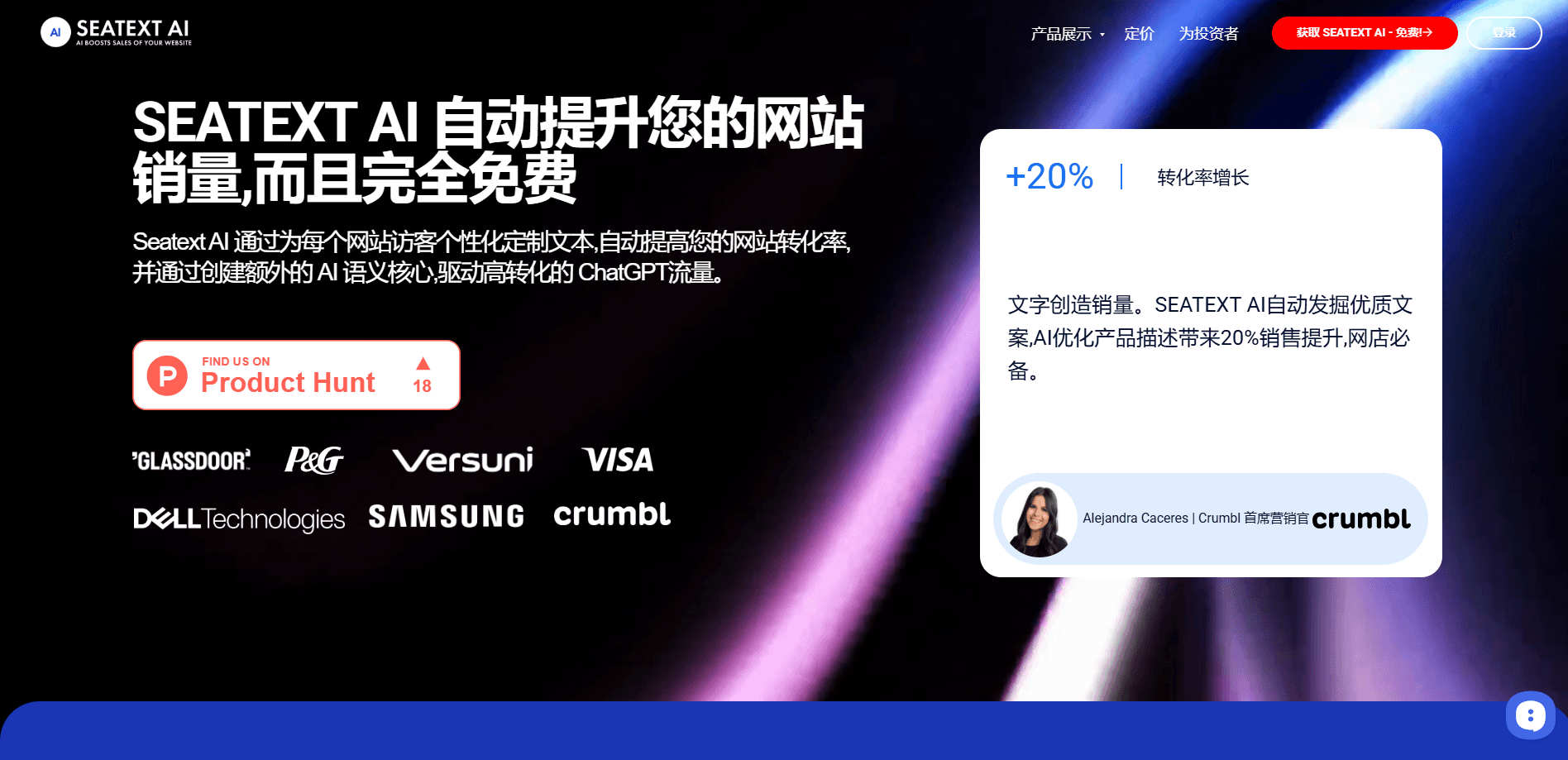
About SEATEXT. AI for your website.
What Is SEATEXT
SEATEXT is a web-based platform that plugs into an existing site through one line of code. From there, a group of autonomous AI agents takes over tasks that would normally need a developer, a translator, and a growth marketer working in parallel. The SEATEXT AI agents cover landing page rewrites, Google Ads keyword matching, product copy testing, bot click refunds, and multilingual publishing.
The main problem it solves is the cost and delay of manual localization and A/B testing. Running a translated site used to mean a localization project and a monthly bill, while testing new headlines meant waiting weeks before traffic could decide which version worked. SEATEXT compresses both into a background process that runs at the edge. Visitors see adjusted copy in a few milliseconds. Updates go live without a deploy.
The key limitation is scope. SEATEXT works on top of an existing website, so it can't fix a broken structure or replace a full content strategy, and it won't help if the underlying pages simply don't match what buyers search for. It also asks for a fair amount of trust. The agents change live copy. You need to review what they do. Larger growth teams will likely outgrow the self-serve setup and move toward the enterprise plan.
Getting Started
- Sign up on the SEATEXT site with an email address; no credit card is required for the free tier.
- Copy the single script tag from your account and paste it into the head section of your website.
- Pick which agents to activate, starting with website translation or a landing page agent.
- Connect your traffic context, such as Google Ads keywords or referring campaigns, so the agents know what to match.
- Review the changes in your dashboard and let the winning copy variants stay live.
Product Information
A quick look at SEATEXT. AI for your website.'s pricing, supported platforms, and performance.
Best for
The users, tasks, and scenarios where this tool fits best.
Users
- Small business owners
- Ecommerce teams
- Growth marketers running paid ads
- Agencies managing several client sites
Tasks
- Translating a website into 125 languages
- Matching landing pages to ad keywords
- Running A/B tests on copy
- Recovering wasted ad spend
Scenarios
- A store expanding into new markets
- A paid campaign with weak landing pages
- A lean team with no localization budget
- A site getting scraped by competitors
Key features
Free website translation into 125 languages
SEATEXT translates a site into 125 languages without a manual localization project. It detects the visitor's language and renders the translated page in about three milliseconds. No translate button. No page-by-page workflow. The company compares this to vendors that charge hundreds a month and lists its own translation tier at $0.
Autonomous AI marketing agents
The platform ships more than a dozen specialized agents, each pointed at one job. A Google Ads agent rewrites landing pages per keyword, a conversion agent tests headlines and CTAs, and an ecommerce agent adjusts product copy. You activate them one at a time. The site never changes all at once.
Conversion rate optimization and A/B testing
SEATEXT generates copy variants and runs split tests on live traffic. It also includes a split URL testing mode that runs without the flicker you usually see when a page redirects. Winners are promoted automatically, which cuts the wait that comes with manual testing. Not bad.
Google Ads and campaign matching
For paid traffic, the SEATEXT Google Ads landing page agent rewrites the headline, offer, product blocks, and CTA before the page appears, so every paid click lands on copy that matches the exact keyword. The company reports this as up to a 35% lift in conversions.
Bot click refunds and ad firewall
One agent hunts fraudulent clicks from paid campaigns, records the evidence, and prepares refund claims for Google and Meta. A related feature blocks competitor scrapers and browser extensions from reaching buyer data. Both target wasted spend rather than acquisition. That adds up.
Multilingual SEO support
Translation is paired with multilingual SEO, so translated pages are built to be indexed by search engines rather than hidden behind a client-side widget that crawlers tend to skip. New sections, products, or blog posts are picked up and translated as they're added, which keeps a growing site consistent across languages.
Pros and cons
Pros
- Free website translation into 125 languages, with no credit card required to start.
- One-line script setup that works on an existing site without a rebuild.
- Specialized agents, so you can activate only the tasks you need.
- Edge execution keeps the added latency near zero.
- Combines translation, testing, and ad matching in one dashboard.
Cons
- The agents edit live copy, so you need to monitor what gets published.
- There's no published itemized price list for the higher tiers, which makes budgeting harder.
- Enterprise pricing starts around $10k in ad spend, so small teams may hit a ceiling.
- It works on top of your site and can't fix deeper structural or content problems.
Frequently asked questions
SEATEXT is used to translate websites and adjust content automatically to lift conversions. It runs autonomous agents for localization, A/B testing, Google Ads matching, and bot click refunds, all from a single script added to your site.
Related content
Explore related tools, skills, and articles for SEATEXT. AI for your website..
SEATEXT. AI for your website. Alternatives
Forefront
Forefront · CodingForefront is a web platform for building with open-source AI. It lets you fine-tune leading open-source language models on your own data, evaluate how they perform, and run them through an API or export them to host yourself. Developers who want the convenience of a closed-source platform but insist on owning their models and data are the target audience here.

Startkit
StartKit.AI · CodingStartkit is a boilerplate for building AI SaaS and AI wrapper products. Think of it as an AI startup boilerplate with the boring parts already wired up: authentication, Stripe and Lemon Squeezy payments, usage limits, transactional email, and an AI API starter that talks to OpenAI, Anthropic, Groq, or Llama. You clone the repo, set your price, and start on the part of your product that people actually pay for. It's Next.js under React and Tailwind, so most of the boilerplate code already feels familiar.
Testim
Tricentis · CodingTestim is an AI-powered test automation platform for building and running end-to-end tests across web, mobile, and Salesforce applications. It leans on machine learning to keep tests stable when an interface changes, so teams spend less time fixing broken selectors. Not bad for an automated testing tool you can start using today. You create tests by recording actions in a browser, then optionally add JavaScript when you need more control. It's a solid pick for busy QA teams.