

SEO Title Generator
SEO Roast · Writing · Marketing
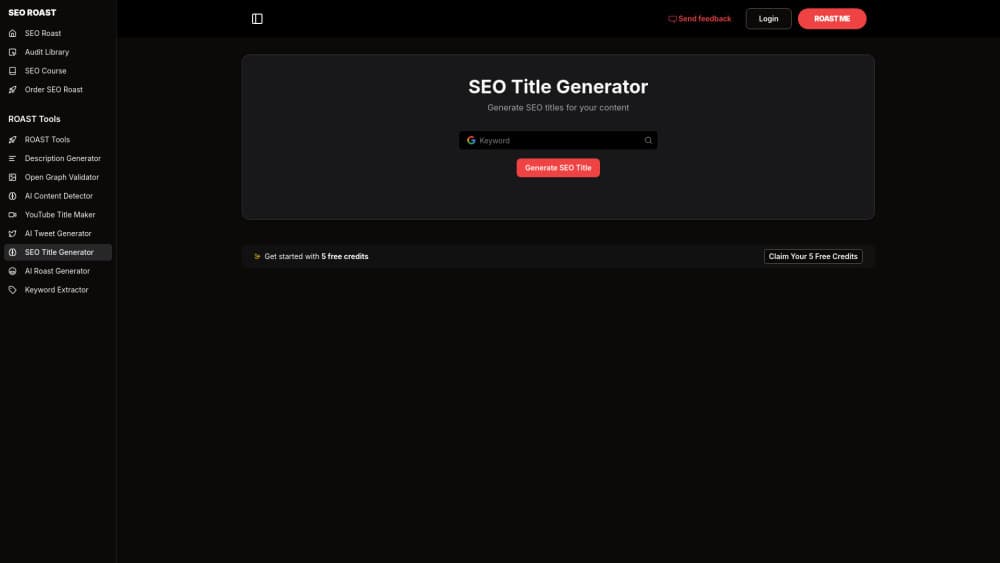
SEO Title Generator is a free AI tool from SEO Roast that turns a keyword or topic into ready-to-publish title tags, drawing on live search data and three AI models.
About SEO Title Generator
What Is SEO Title Generator
SEO Title Generator is a free tool from SEO Roast, the platform founder Ilias Ism built for SaaS and software founders. You give it a topic or keyword, and it returns several optimized title tags you can drop into a page. The pitch sits in one design choice: it builds titles from what's already ranking in search results rather than from a blank prompt.
That matters because a title tag is the single most visible line of on-page copy you control. It shows up in the search result, in browser tabs, and in social shares. A generator that only rewrites your keyword tends to produce the same flat headline everyone else has. One that reads the current top results first can copy the shape of what wins and push your angle past it.
Two things are worth knowing before you lean on it. It's a browser tool tied to the SEO Roast workspace, so it fits founders running their SEO there and less so people who want a standalone app. And the free tier runs on a credit system, so heavy daily use runs into a limit. It also competes in a crowded field, so the reason to pick it over a plain title generator is the data-driven approach, not the AI itself.
Getting Started
- Open the SEO Title Generator page on the SEO Roast site and sign in or claim the free credits.
- Enter the keyword or topic you're targeting, and add any words the title has to include.
- Let the tool scrape the current top results, then generate your title options.
- Review the SERP preview and the readability score, and pick the option that fits your page.
- Copy the title tag into your CMS, or keep it in the SEO Roast workspace and track it.
Product Information
A quick look at SEO Title Generator's pricing, supported platforms, and performance.
Best for
The users, tasks, and scenarios where this tool fits best.
Users
- SaaS founders
- Solo bloggers and content marketers
- SEO beginners
- Freelance writers juggling clients
Tasks
- Writing title tags for a batch of pages
- Rewriting an underperforming headline
- Testing title angles before publishing
- Building a content outline from the same research
- Checking length and readability
Scenarios
- Launching a new product or landing page
- Auditing a backlog of thin pages
- Drafting on a deadline
- Learning what ranks in your niche
Key features
AI titles built from live search data
As a title tag generator, the tool reads the current top results for your keyword before it writes a title. Then it models the format and angle that already rank and pushes past them instead of starting from a blank prompt. That's the split from a plain SEO title maker, since the output reflects the SERP, not only the words you typed.
Multi-model generation
SEO Roast routes the request through a mix of AI models from Anthropic, OpenAI, and Gemini. The point is to avoid leaning on any single model's habits, and the company treats the blend of outputs as part of what separates this tool from a generic generator. You get several angles to choose from rather than one take.
SERP preview
Each title is shown the way it would appear in a search result, so you see how it drops into the snippet before you publish. It turns length rules into a visual, which is where most title tags go wrong. Seeing a truncation in the preview beats discovering it after the page is live.
Headline analyzer
A separate analyzer scores the title you picked, so you can run two or three options against each other instead of trusting a first draft. It's the step that turns a batch of suggestions into a decision. Use it whenever two titles feel close and you need a tiebreaker.
SERP content scraper
The scraper pulls the text behind the ranking pages, so you can see what the top results actually cover. That feeds both the titles and the outline step. It's a plain way to spot the angle your competitors missed before you write.
Content outline generator
The same research drives a content outline generator for the page under the title. You don't have to run a second tool to plan the article. Keeping the title and outline on one set of SERP data stops the headline and the body from drifting apart.
Competitive angle research
Because the titles come from what ranks, the tool doubles as a quick read on the competition. You see the shape a keyword's winners share and where there's room to differ. That context is the reason it's more than a synonym rewriter.
Pros and cons
Pros
- Titles come from live search data, so they reflect what actually ranks rather than a guess at it.
- The blend of Anthropic, OpenAI, and Gemini models gives several angles, not one rewrite.
- The SERP preview and headline analyzer catch length and readability problems before you publish.
- The scalar set of tools (scraper, outline generator) reuses one round of research across title and content.
- There's a free tier with credits, so a founder can test the workflow before paying.
Cons
- The free credits are capped, so a busy content calendar needs a paid plan.
- It lives inside the SEO Roast platform, so anyone who wants a standalone title tool has to take the whole workspace.
- Generated titles still need a human pass, since a suggestion can be accurate and still bland for your brand.
- No public API is documented, which rules out wiring it into an existing publishing pipeline.
Frequently asked questions
It writes title tags for a page from a keyword or topic you enter. Instead of only rewriting your words, it scrapes the current top search results, models the formats that rank, and proposes several titles. You review them with a SERP preview and headline analyzer, then copy the one you want.
Related content
Explore related tools, skills, and articles for SEO Title Generator.
SEO Title Generator Alternatives

Google EmbeddingGemma 2
Google DeepMind · Writing · Image · CodingGoogle EmbeddingGemma 2 is a 740M-parameter open model that turns text, code, images, audio, and video frames into vectors in one 768-dimension space, running on phones and laptops.

MePersona
MePersona, Inc. · Writing · Productivity · MarketingMePersona is an AI unified inbox for creators. It learns your voice, drafts replies to fan messages from 12 platforms, and sends only what you approve.

Fluence
Yay Software (Yannick Huchard) · Writing · Voice & Language · ProductivityFluence is an Android app that reads PDFs, EPUBs, Word files and web articles aloud, follows each sentence as it speaks, and answers questions about the text on the phone itself.