

Snackz.ai
BRAIN SNACKZ GmbH · Writing
Snackz.ai builds AI tools for publishers and booksellers. Its main product, SnackzLAB, turns a manuscript or rough notes into book metadata, marketing copy and press material on EU servers.
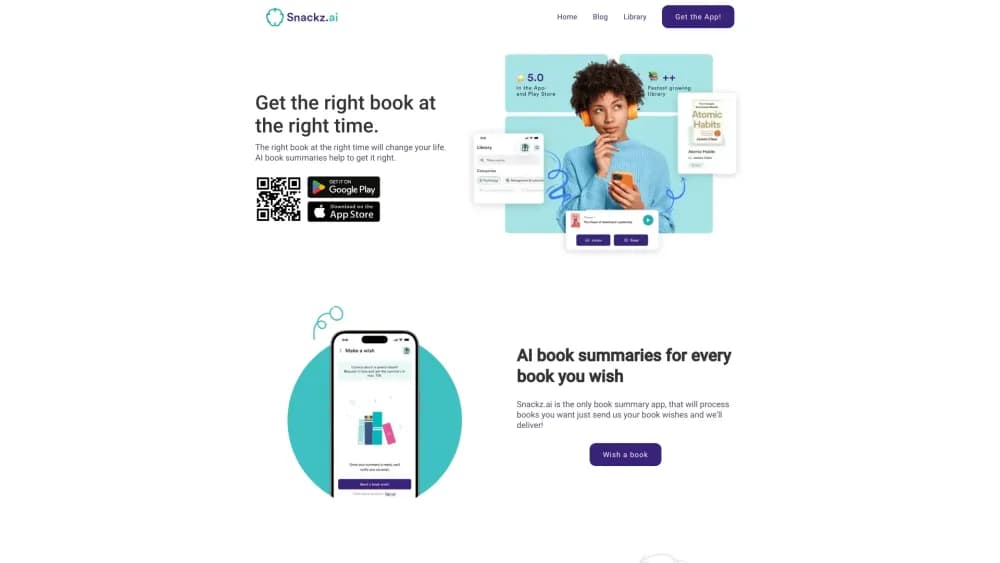
About Snackz.ai
What Is Snackz.ai
Snackz.ai is a small software company in Berlin that sells AI tools to the book trade. The company behind it is BRAIN SNACKZ GmbH, founded by Julia Claren (former CEO of Dussmann KulturKaufhaus and Ullstein Verlage), Johannes Niermann (machine learning engineer with stints at Bertelsmann and Echometer) and Laura Werle (edtech founder). Their pitch is narrow on purpose: not a general writing assistant, but a set of tools shaped around how a publishing house or a bookshop actually works.
The range currently has three products. SnackzLAB handles metadata, marketing and press copy for publishers. SnackzAGENT is a chat assistant that booksellers embed in their webshop so visitors can ask for recommendations in plain language. SnackzTERMINAL, described as a Bloomberg Terminal for the book market, is still in a pilot phase. The first two are live, the third is not.
The limits matter as much as the features. Everything is built around the German-language book market, so the metadata fields (Warengruppe, Thema, BISAC) and the VLB record assume that trade. There is no public price list, and you have to book a demo before you can buy. SnackzLAB also works from the text you give it, which means a vague synopsis produces vague output.
Getting Started
- Book a demo through the site. The team sends test access and free credits, so you can try SnackzLAB on one of your own titles before talking about a contract.
- Log in to lab.snackz.ai and create a project for a book. You can upload a PDF, paste a manuscript, or start from a few notes about a planned title.
- Pick the material you need: metadata, marketing copy or press material. Each tool runs its own analysis of the book and returns a draft you can edit in the browser.
- Adjust the result. Set a custom text style so the wording matches your imprint, correct classifications, and shorten or expand sections before export.
- Export in markdown, ONIX, XML or through the API, then load it into your own systems or hand it to a retailer.
Product Information
A quick look at Snackz.ai's pricing, supported platforms, and performance.
Best for
The users, tasks, and scenarios where this tool fits best.
Users
- Small and mid-size publishers
- Backlist managers
- Online booksellers
Tasks
- Writing VLB metadata
- Drafting retailer and customer copy
- Preparing a press package
Scenarios
- Clearing a metadata backlog
- Selling a book before the manuscript exists
- Adding advice to a webshop
Key features
Metadata Built for the VLB Record
SnackzLAB generates the fields a German title needs to be found: Warengruppe, Thema codes, BISAC headings and qualifiers. It also suggests keywords and shows search volume on Amazon and Google, so you can see whether a term is worth using. The output is formatted for the VLB record, which cuts the copy-and-paste work between systems.
Keyword Research With Volume Data
Instead of guessing which phrases readers type, the tool proposes keyword sets and attaches demand figures from two of the biggest search surfaces in book retail. That turns a subjective argument about wording into a comparison of numbers. You still decide which terms fit the book.
Marketing Copy From a Book Analysis
The marketing tool reads the text first, then drafts a book profile for people who will not read the whole thing, social media concepts and blog articles for publisher or author channels. Because the drafts come from the actual content, they tend to include specifics rather than generic praise. Editors can rewrite in place.
Press Releases and Media Pitching
A separate press tool produces a short release, topic pitches with suggested outlets, and an interview concept with questions drawn from the book. For small houses without a press officer, this covers the first draft of a campaign. Journalists still need a human contact and a reason to care.
Style Generator for Imprint Voice
You can define unlimited custom text styles, so output sounds like your imprint instead of a neutral assistant. A literary fiction house and a guidebook publisher can run the same tool and get noticeably different prose. This is the feature that decides whether the copy is usable without a rewrite.
Batch Work and Early Metadata
Initial metadata can be generated from a few notes before the manuscript is finished and updated later, which fits a publishing schedule where catalogues are planned months ahead. Backlist optimisation runs in batches, so a long list does not mean a long queue of single jobs.
Conversational Book Discovery With SnackzAGENT
SnackzAGENT is a book discovery chatbot that lives in a bookseller's webshop, talks to visitors about books and recommends titles from the shop's own catalogue. It captures email addresses, keeps people on the page longer and reports anonymised interest data. Setup needs catalogue access and an iframe, plus styling to match the shop.
Export in ONIX, XML, Markdown or via API
Finished material leaves the platform in the format your systems already read, including ONIX for the book trade and XML for internal pipelines. Markdown covers the blog and social drafts. An API route exists for teams that want to push records automatically instead of downloading files.
Pros and cons
Pros
- Output is grounded in the actual book text, so descriptions mention plot, tone and audience rather than filling space with adjectives.
- GDPR compliance is built in: closed cloud environments, European servers and no training on customer content, which answers the first question most publishers ask.
- The three tools share one analysis, so metadata, marketing copy and press material stay consistent with each other.
- Batch processing makes backlist work practical, and early metadata lets catalogues move before a manuscript is done.
Cons
- No public pricing. You have to book a demo and negotiate, which slows down anyone comparing tools on a budget.
- The workflow assumes the German book market. Publishers selling mainly in English or through other retail metadata systems will find parts of the output less useful.
- SnackzTERMINAL is not available yet, so the promise of spotting trends and matching them to titles is still a pilot, not a feature you can use today.
Frequently asked questions
It sells AI tools to the book industry. SnackzLAB writes metadata, marketing copy and press material for publishers, SnackzAGENT answers book questions in a bookseller's webshop, and SnackzTERMINAL, still in pilot, aims to connect reader trends with titles.
Related content
Explore related tools, skills, and articles for Snackz.ai.
Snackz.ai Alternatives

Google EmbeddingGemma 2
Google DeepMind · Writing · Image · CodingGoogle EmbeddingGemma 2 is a 740M-parameter open model that turns text, code, images, audio, and video frames into vectors in one 768-dimension space, running on phones and laptops.

MePersona
MePersona, Inc. · Writing · Productivity · MarketingMePersona is an AI unified inbox for creators. It learns your voice, drafts replies to fan messages from 12 platforms, and sends only what you approve.

Fluence
Yay Software (Yannick Huchard) · Writing · Voice & Language · ProductivityFluence is an Android app that reads PDFs, EPUBs, Word files and web articles aloud, follows each sentence as it speaks, and answers questions about the text on the phone itself.