

Solid
Solid · Coding · Productivity · Business
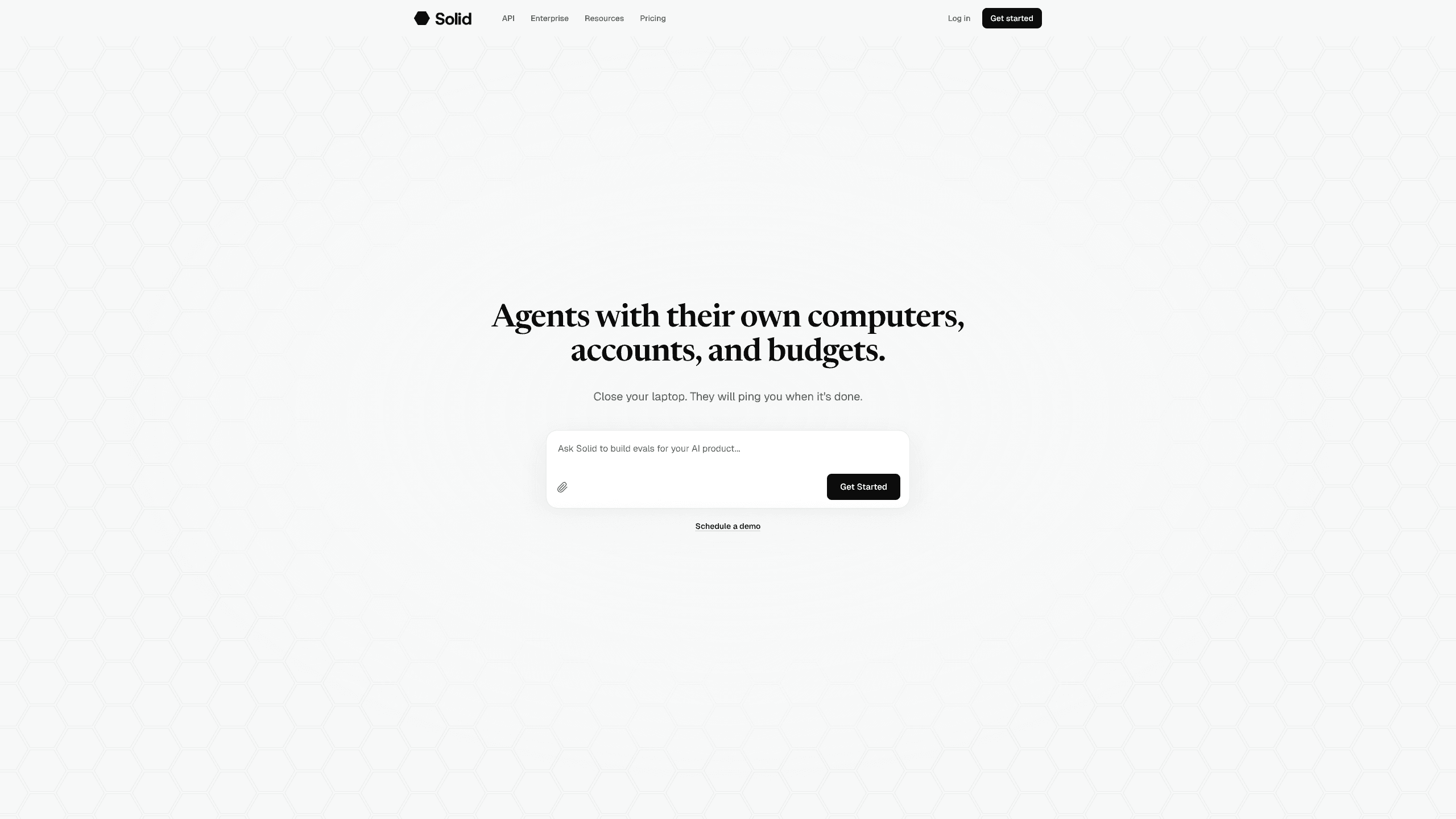
Solid gives AI agents their own computers, accounts and budgets, so they can set up their own tools, finish business tasks and report back while you're offline.
About Solid
What Is Solid
The short version: Solid runs AI agents with their own computers, accounts and budgets. Each agent gets Linux servers, Windows and macOS machines, and phones it can control, plus Google and Apple accounts to sign into services with.
Most agent tools expect you to wire up connectors before anything happens. Solid's agents choose their own tools, build an integration when one is missing, and use a website or desktop program the way a person would. That makes Solid closer to a computer use AI agent than to a chat assistant, and it covers software nobody has written a connector for.
Autonomy has a price, and it needs guardrails. Solid pricing runs on monthly credits that cover AI usage, machine time and any purchases an agent makes, so anything sensitive should sit behind an approval rule. It's also a young product, with fewer ready-made templates than the established automation suites.
Getting Started
- Create an account at solid.tech and pick a plan or start the trial.
- Describe the job you want done and attach any files or instructions that help.
- Approve the access the agent asks for, then set the AI agent budget and approval rules.
- Review the result when the agent messages you, and correct anything it got wrong so it keeps the lesson.
Product Information
A quick look at Solid's pricing, supported platforms, and performance.
Best for
The users, tasks, and scenarios where this tool fits best.
Users
- Small teams without an ops engineer
- Founders who need work finished rather than drafted
- Operations leads running autonomous AI agents
Tasks
- Building and hosting a small internal app
- Weekly reporting
- Lead research
- Tool integration work
Scenarios
- Work that runs past the end of your day
- Teams that keep correcting the same mistakes
- Projects that outgrow one agent
Key features
Agents with their own machines and accounts
Each agent can use Linux servers, Windows and macOS computers, iPhones and Android phones, and sign into services through Google or Apple accounts. You don't hand over your own laptop or personal logins.
Tool use without prebuilt connectors
Solid's agents connect through an API, build a missing integration, or operate a website, desktop program or phone app directly. If a person can use the software, the agent can attempt it with the access you approve.
Budgets, approval rules and cost breakdowns
AI usage, machine time and agent purchases all come out of one balance. You set the limits and decide which actions need sign-off. The agent can also explain what a job cost and why each part was needed.
Recovery when a setup breaks
A failed tool or broken environment doesn't end the job. The agent can investigate, repair the setup and rerun the work. If it stays blocked, it tells you what it needs instead of failing silently.
Memory that carries across jobs
Corrections stick. When your team fixes how something is done, the agent keeps that lesson and applies it to later work, using the shared context you've approved for that task.
Agent teams and outside help
One agent can create additional Solid agents or call in coding agents such as Codex and Claude Code. It divides the work, coordinates the group and returns a single checked result.
API and private deployment
The Solid API is an AI agent API for running always-on agents inside your own product, with context and long-running jobs under your controls. Enterprise workspaces add access, budget and policy settings, and can run on Solid Cloud, in your VPC or on-premises.
Pros and cons
Pros
- Agents handle installation, sign-ups and integration work that usually eats the first day of an automation project.
- One balance covers AI usage, machines and purchases, so you don't reconcile three bills at the end of the month.
- Approval rules let you keep research and drafting open while gating purchases, messages and deployments.
- Work continues after you log off, which suits tasks that need hours rather than minutes.
- Team corrections persist, so the same mistake doesn't come back on the next job.
Cons
- Credit-based billing makes costs harder to predict than a flat seat price, especially with several agents running at once.
- There's no free tier. The trial is the only way to test before paying $20 a month.
- Autonomous setup means an agent can spend real money on a wrong approach before you notice.
- As a young platform, it has fewer integrations, templates and public case studies than established automation tools.
Frequently asked questions
Solid is an AI agent platform that gives each agent its own computers, accounts and budget to complete business tasks. You describe the outcome, grant access and set approval rules, and the agent handles the setup and the work.
Related content
Explore related tools, skills, and articles for Solid.
Solid Alternatives

Base Code
Base44 (Wix) · Coding · ProductivityBase Code is a shared cloud development environment from Base44. Teammates describe changes to an existing GitHub codebase in chat, preview them live and send them back as pull requests.

Google EmbeddingGemma 2
Google DeepMind · Writing · Image · CodingGoogle EmbeddingGemma 2 is a 740M-parameter open model that turns text, code, images, audio, and video frames into vectors in one 768-dimension space, running on phones and laptops.

GitGlow
GitGlow · Coding · ProductivityGitGlow is a local-first desktop Git client that lets independent developers review their own code and their AI agents' changes in one place before shipping.