

Soloop
Soloop · Marketing
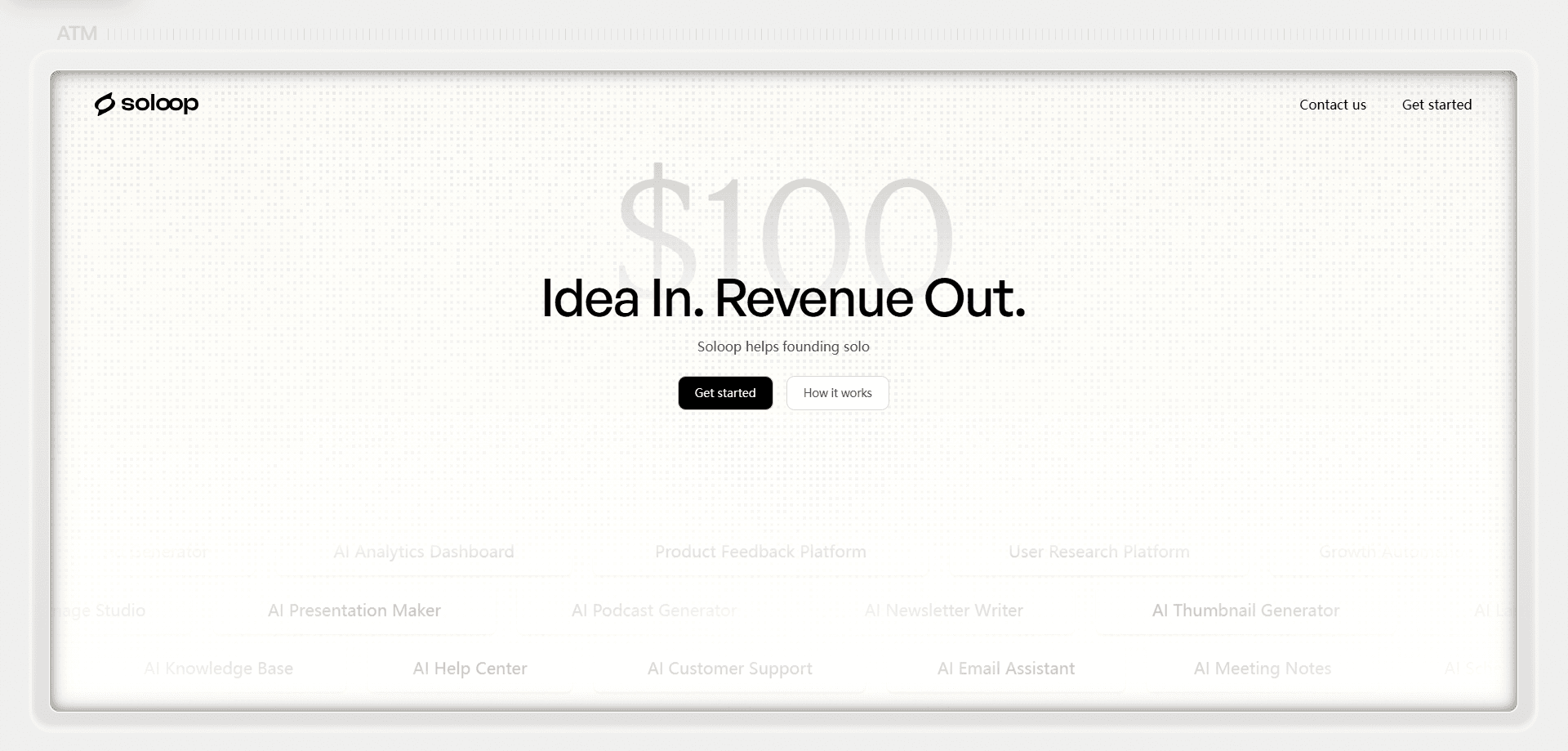
Soloop is an AI company-building system for solo founders who already have something on the table, whether that's a repo, a landing page, a demo, or a rough idea. You set a goal, Soloop writes one action card at a time, and it waits for your approval before any post, research run, code change, or deploy goes out. Think of it as an AI CEO with an analyst, a builder, and a growth lead underneath. It splits the work across planning, research, coding, and growth so one person can run the loop of building, selling, and checking the evidence.
About Soloop
What Is Soloop
Soloop is a web workspace built around a simple bet: a solo founder doesn't need a bigger team, they need a system that decides the next move and then does it. It works like a set of AI agents for startups sharing one memory. You bring what you already have, tell it the outcome you want, and Soloop reads the project, checks active work, and either answers, asks a question, or routes the job to the right capability.
The core roles are planning plus four execution surfaces: Research, Build, Growth, and Finance. It's less a single tool than an agentic business platform, where the planning layer acts like an AI CEO and each surface owns a slice of the work. Research pulls competitor and market signals, Build changes code inside a sandbox, Growth plans go-to-market automation across X, Reddit, cold email, and ads, and Finance works through pricing questions. Only approved work runs. A coding card shows acceptance criteria before it starts, and anything that posts or spends credits sits in a queue until you say go.
The main limit is that Soloop is approval-first by design, so it won't fire off a campaign or ship code on its own. Want a tool that runs unsupervised while you sleep? That's not this. It also assumes you're already past the blank-page stage. Bring nothing and there's little for it to work with.
Getting Started
- Create a workspace. Tell Soloop who's behind the project, what you're building, and what edge you have.
- Add product context. Paste a URL or idea, connect a GitHub repo, or upload a ZIP, deck, or PDF.
- Describe the outcome you need. Soloop reads the project and decides whether to answer, ask, or route the job.
- Review the action card. It lists the objective, exact action, target, and credit cost, so approve, request changes, or cancel.
- Read the result in Tasks. Uploaded context stays under Documents, and monitored replies land in Inbox.
Product Information
A quick look at Soloop's pricing, supported platforms, and performance.
Best for
The users, tasks, and scenarios where this tool fits best.
Users
- Solo founders with a live product or demo
- Non-technical operators who still need code shipped
- Early-stage teams testing go-to-market
Tasks
- Weekly planning
- Competitor and market research
- Code changes and deploys
Scenarios
- You have one afternoon a week to push the business forward
- You keep collecting customer signals but can't act on them
- You're spending money on ads with no clear read
Key features
Approval-First Action Cards
Every job arrives as a card that spells out the objective, the exact action, the target, and the credit cost before anything runs. Coding cards add acceptance criteria so you know what a finished job looks like. You approve, request changes, or cancel, and nothing posts, spends, or deploys without that call.
Four Execution Surfaces
Soloop splits work across Research, Build, Growth, and Finance. Research handles competitor and market checks, Build owns code and product work in a sandbox, Growth plans acquisition channels, and Finance works through pricing and cost questions. The planning layer explains its reasoning and routes work instead of doing it itself. That split matters, because a single agent trying to do everything tends to do none of it well.
Web Research with Sources
Approved research runs cover competitors, public complaints, and places where you can join a conversation. Reports stay attached to the task and include source links when the run pulled them, so you can check the evidence behind a recommendation rather than trusting a summary.
Sandboxed Code and Deploys
Build jobs run in an isolated sandbox, so a change gets checked before it reaches your product. When the work passes, it can come back as a reviewed change or a Vercel deployment. That gives a non-technical founder a way to ship without handing raw commit access to a live site.
Multi-Channel Growth Planning
Growth maps acquisition across X, Reddit, cold email, and ads. X can publish approved posts and replies, Reddit stays manual, cold email needs a connected Gmail account and approved send tasks, and ads stay plan-only until you approve specific controls. Each channel keeps its own guardrails.
Product Doc as a Living Brief
The Product Doc holds the brief for your product, target user, problem, advantage, and current focus, and you can edit it as things change. Uploaded files stay with the project, supported documents get indexed, and the file status shows whether indexing succeeded.
Credit-Based Capacity
Chat is free, while each paid task costs one credit and channel activity costs one credit per company, channel, and day when a post or reply goes out. Ads run on a separate wallet. You pick a monthly credit level and scale it up when the work demands more.
Pros and cons
Pros
- Nothing runs without your approval, so you stay in control of posts, spends, and deploys.
- One workspace covers planning, research, coding, and growth instead of four separate subscriptions.
- Free plan needs no credit card and includes core planning and chat plus the review step.
- Build jobs run in a sandbox and can return a checked change or a Vercel deployment.
- Research reports keep their source links, so recommendations are checkable.
Cons
- The approval-first model means it won't run unsupervised campaigns or ship code on its own.
- It assumes you already have a product, repo, or demo, so it's weak for someone starting from nothing.
- Growth channels have uneven automation: Reddit stays manual and ads are plan-only until you approve controls.
- API availability isn't documented, which limits anyone hoping to wire Soloop into their own stack.
Frequently asked questions
Soloop is an AI company-building system for solo founders. It plans the next move, runs approved research, coding, and growth work, and keeps the results in one workspace so you can decide what to do next.
Related content
Explore related tools, skills, and articles for Soloop.
Soloop Alternatives

Emailwritr
Emailwritr · Writing · MarketingEmailwritr is an AI email copywriting tool built for affiliates, course creators, and online businesses that want more revenue from the list they already own. Instead of blank pages or generic chatbot prompts, this AI email writer generates welcome sequences, launch campaigns, cart recovery emails, and promo series from frameworks modeled on well-known direct-response copywriters. You connect your autoresponder, answer a few questions about your offer, and it writes the copy for you.

Prosp
Prosp · Writing · Voice & Language · MarketingProsp is an AI LinkedIn outreach tool built for agencies and sales teams, and it writes the message and the voice note in your own voice for each prospect so they actually reply. You connect your accounts, find leads, and let the AI draft and send personalized messages at scale, all from one inbox. It's built for people running outbound at volume. That's the whole pitch. Every touchpoint still has to feel human.

On Model
On Model · Image · MarketingOn Model is an AI fashion model tool that places your clothing on virtual models so online stores can get on-model product photos without booking a photoshoot. It runs as a Shopify app, letting you swap the model in an existing image, change backgrounds, and generate faces for cropped or headless shots. The goal is simple: match your product photos to your customers and stand out from competitors using the same supplier images.