

Spydr
Spydr · Coding
Spydr is a context engine and MCP server that gathers your scattered bookmarks, videos, files and web pages into one memory any AI client can read. It keeps that context portable across tools.
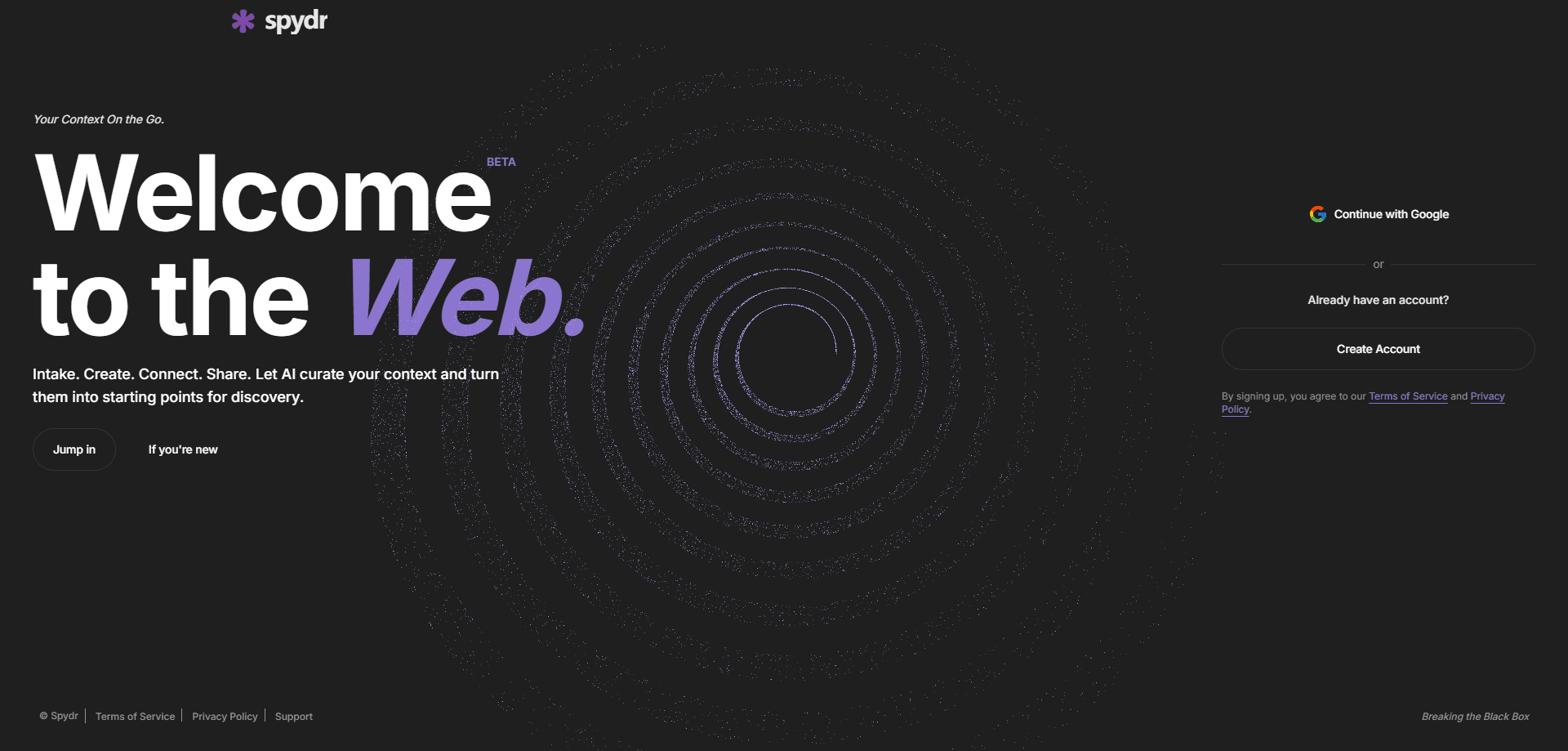
About Spydr
What Is Spydr
Spydr is a memory layer for AI, and its makers call it the GitHub for LLM context. The pitch is simple enough. Your useful information sits in a dozen siloed apps, so every new chat makes you paste the same links and background again. Spydr pulls that material into one place and serves it to whichever AI client you happen to be using.
You organize what you save into projects, which Spydr names webs. A web works a lot like a folder in a code repository: you drop in a YouTube video, a file, or a page you bookmarked, and it becomes part of a searchable collection. The Spydr Memory MCP server then exposes those collections to any tool that speaks the Model Context Protocol, so Claude, ChatGPT, Cursor or a custom agent can search your saved context on demand.
The limit worth knowing up front is that Spydr is young. Video support and open-sourced memory graphs are still on the roadmap rather than shipped, and pricing past the free tier isn't published yet. If you need a mature, fully documented system today, keep that in mind.
Getting Started
- Create an account at spydr.dev and open your first web, which is the project that holds a set of memories.
- Save material into it, either from the browser while you read or by importing links, files and videos you already have.
- Connect the Spydr Memory MCP server to your AI client and approve the scoped access it requests for that one agent.
- Ask the client a question and let it call the memory tools to pull relevant pieces from your webs.
- Share a web or a single memory with a teammate once you want the context to travel beyond your own account.
Product Information
A quick look at Spydr's pricing, supported platforms, and performance.
Best for
The users, tasks, and scenarios where this tool fits best.
Users
- People who live in several AI apps
- Researchers and students
- Content creators and curators
- Small teams sharing a knowledge base
Tasks
- Feeding an AI your own sources
- Keeping context across tools
- Organizing research as projects
- Reusing past work
- Sharing structured knowledge
Scenarios
- Planning a project while you research
- Studying a subject across formats
- Picking up where you left off
- Drafting with your own reference material
- Building a personal knowledge base
Key features
Project-based memory webs
Spydr groups everything you save into webs, and a web behaves like a project rather than a loose bookmark list. You add videos, files and links to the relevant collection, and each one stays searchable inside its own context. That structure is what makes the GitHub comparison land, because you curate memory the way you'd curate a repo instead of dumping it into one undifferentiated pile.
Multimodal context storage
The engine is built to hold more than text. It takes in web pages, YouTube videos and files, so a single web can mix formats the way real research does. Support for the richer media is still filling out, which means video handling is best treated as a work in progress rather than a finished feature.
Interoperable memory across AI clients
The point of the Spydr Memory MCP server is portability. It speaks the Model Context Protocol, so any compliant client can reach the same memory instead of trapping your context inside one app. You connect a client once and it can query your webs, which is the difference between a notes app and a memory layer.
Secure, per-agent scoped access
Spydr hands each connected AI agent its own scoped credentials rather than one shared secret. It relies on the identity provider Stytch for dynamic OAuth client registration, so access is bounded to a single user's context and one agent can't read another's memory. For anyone worried about memory bleeding between sessions, that isolation is the feature that matters.
Semantic search with FindWebs and FindMemories
The MCP server exposes tools that let an agent search your content by meaning. FindWebs surfaces the collections that fit a query, and FindMemories digs into individual items inside them. Your client calls these on its own, so a plain question like "what did I save about pricing pages" turns into a memory lookup without you naming a file. That search is the core of the AI context it delivers.
Social sharing and remixing
Spydr builds in a social layer, so you can share a web or swap curated context with other people. The roadmap points toward open-sourcing memory graphs, which would let communities reuse and remix what others gathered. It's a part of the product that's still expanding, and the social side is more promise than finished tool today.
Pros and cons
Pros
- Breaks down data silos by putting bookmarks, videos and files into one memory
- Context travels between AI clients through an MCP server instead of staying locked in one app
- Project-style webs keep saved material organized and searchable rather than dumped in a list
- Per-agent, scoped access with no shared secrets reduces the risk of memory bleeding across sessions
- A free option lets you test the memory layer before committing
Cons
- Pricing beyond the free tier isn't published, so you can't budget for it in advance
- Video and some richer formats are still in development, which limits the multimodal promise
- Organizing context as webs takes some getting used to if you expected a plain notes app
- The product and its docs are young, so you should expect gaps and rough edges
Frequently asked questions
Spydr collects your scattered bookmarks, videos, files and web pages into one memory that AI clients can read. Instead of pasting the same background into every chat, you save it once and let a connected agent search it when you ask.
Related content
Explore related tools, skills, and articles for Spydr.
Spydr Alternatives

Base Code
Base44 (Wix) · Coding · ProductivityBase Code is a shared cloud development environment from Base44. Teammates describe changes to an existing GitHub codebase in chat, preview them live and send them back as pull requests.

Google EmbeddingGemma 2
Google DeepMind · Writing · Image · CodingGoogle EmbeddingGemma 2 is a 740M-parameter open model that turns text, code, images, audio, and video frames into vectors in one 768-dimension space, running on phones and laptops.

GitGlow
GitGlow · Coding · ProductivityGitGlow is a local-first desktop Git client that lets independent developers review their own code and their AI agents' changes in one place before shipping.