

StockStory
Stock Story, Inc · Business
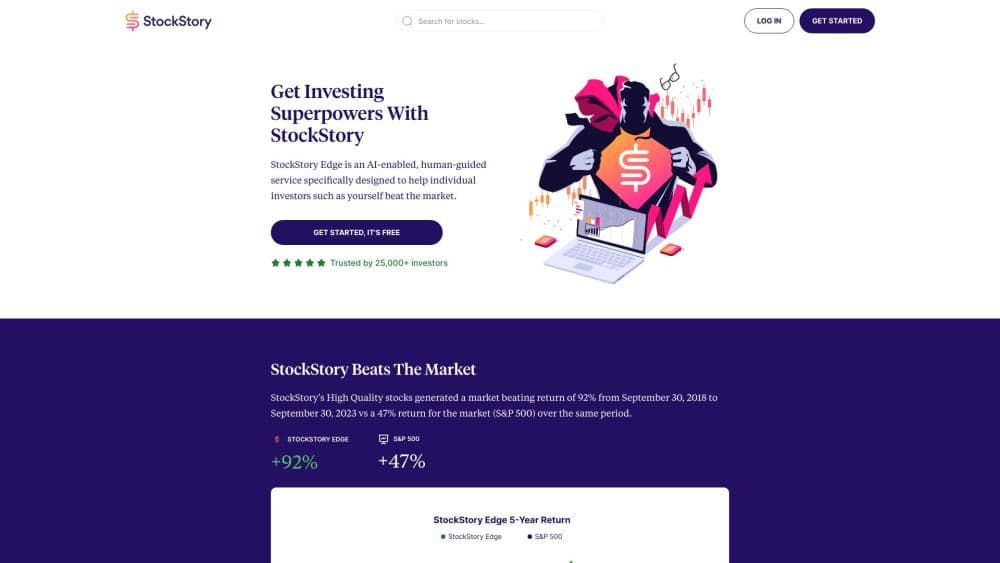
StockStory is an AI stock research platform from Stock Story, Inc. It explains why a stock moved, screens quality names and tracks a portfolio. It runs in a web browser.
About StockStory
What Is StockStory
StockStory is a financial technology product built to hand individual investors the kind of data-driven research that large funds usually keep in-house. The idea is simple: instead of reading five news sites to find out why stocks move, you open one page and get a plain explanation of the catalyst behind the move, backed by the numbers that matter.
The company behind it is Stock Story, Inc, a small US team led by CEO Adam Hejl and CTO Radek Strnad, with equity analysts pulled from Wall Street backgrounds. The pitch is that their quantitative framework scores thousands of companies on quality and growth, then surfaces the ones worth a closer look. It sits somewhere between a stock screener and a research desk, which is why people treat it as a stock market analysis tool rather than a trading app.
The limits are worth knowing before you sign up. StockStory is a research and information tool, not a broker, so you can't buy or sell through it, and it doesn't give personalized advice. Its coverage leans on US markets, most of the deeper analytics sit behind the paid plan, and the quality of any single story still depends on the underlying data feeds the team pulls in.
Getting Started
- Go to stockstory.org and create a free account. You don't need to connect a brokerage to browse the daily stories.
- Search any US ticker in the search box, or open the Latest Stories feed to see today's earnings and price moves as they publish.
- Read the plain-language breakdown of what moved the stock, then save names you care about to a watchlist so the updates come to you.
- Open the stock pages for quality scores, baskets and the quantitative signals behind each pick, and use the framework notes to see how a name was rated.
- Upgrade to a paid plan when you want the full set of picks and deeper analytics, which is where most of the premium research lives.
Product Information
A quick look at StockStory's pricing, supported platforms, and performance.
Best for
The users, tasks, and scenarios where this tool fits best.
Users
- Everyday investors
- Long-term stock pickers
- People who already hold a portfolio
Tasks
- Finding out why a stock moved
- Screening for quality companies
- Tracking earnings season
- Building a research habit
Scenarios
- A holding drops 8% overnight
- Researching a new sector
- Catching up after time away
Key features
Why a Stock Moved
Every story opens with the catalyst, so you learn what pushed a ticker up or down in the first sentence. It reads like a short analyst note rather than a raw headline, which is what makes it usable for a quick pre-market check. This is the feature that turns a price chart into something you can act on.
Quantitative Quality Scores
StockStory rates companies on profitability and growth using its own framework, then groups them into baskets by theme. You use the scores to sort thousands of US names down to a manageable shortlist, much like a stock screener tuned for quality. The scores are the backbone of the platform, and most of the deeper ranking sits behind the paid plan.
Watchlists and Daily Coverage
You save the tickers you follow, and StockStory keeps a running feed of stories and earnings recaps tied to them. That turns scattered headlines into one place to check, so a portfolio of twenty names stays trackable. It is the feature that makes the tool worth opening daily.
Earnings Recaps
When a company reports, the platform publishes a same-day summary covering revenue, profit and how the numbers landed against expectations. You get the headline result plus the year-on-year move in a couple of sentences. It saves reading the full release to know whether a quarter beat or missed.
Investment Framework Notes
The team publishes the reasoning behind its scoring, so you can see the traits it rewards rather than treating the output as a black box. Framework notes explain how quality, growth and valuation feed into a rating, and together they read like an open investment research platform. For readers who want to learn the method, this is where the logic lives.
Screened Stock Baskets
Beyond single names, StockStory groups stocks into themed baskets built from its scores, such as quality or growth sets. You can browse a basket to compare several companies at once instead of researching them one by one. It works as a starting point when you want ideas in a sector you don't know well.
Pros and cons
Pros
- Explains the catalyst behind each price move in plain language, which saves the morning news sweep.
- Scores thousands of US stocks on quality and growth, so you can build a shortlist from data rather than tips.
- Watchlists and same-day earnings recaps keep a whole portfolio trackable in one feed.
- A free account lets you follow stories and a handful of tickers before you pay anything.
- The published investment framework shows the reasoning behind ratings instead of hiding it.
Cons
- It's a research tool only, so you can't place trades or sync a brokerage account through it.
- Most of the deeper analytics and picks sit behind the paid plan, so the free tier feels like a preview.
- Coverage leans on US markets, which leaves investors in other regions with little to use.
- Stories depend on third-party financial data feeds, so a lag or bad input can show up in a recap.
Frequently asked questions
StockStory is used to research US stocks without doing the reading yourself. It explains why a ticker moved, recaps earnings the day they land, and scores companies on quality and growth so you can build a shortlist. It is a research and information tool, not a place to buy or sell shares.
Related content
Explore related tools, skills, and articles for StockStory.
StockStory Alternatives

Knocket
Knocket (Tencent RTC team) · Productivity · Business · ChatbotKnocket is a free live chat and contact page tool that lets visitors message you from your website, app, or a shareable link, with every reply handled from Telegram or one inbox.

shippedit.me
Krawlup · Marketing · Businessshippedit.me now redirects to Krawlup, a web platform that audits SEO, AEO and page speed every week, then hands the fixes to AI coding agents over MCP.

Ayven
Alknoma · Productivity · BusinessAyven is an AI control centre by Alknoma that turns a plain-language goal into a dated plan, hands the work to your people and AI agents, and asks for your approval only when the call is yours.