

Strama
Strama · Business · Other
Strama is an AI sales outreach platform that handles the full SDR motion, from finding and scoring leads to personalized email, LinkedIn and phone outreach, all written in your team's voice.
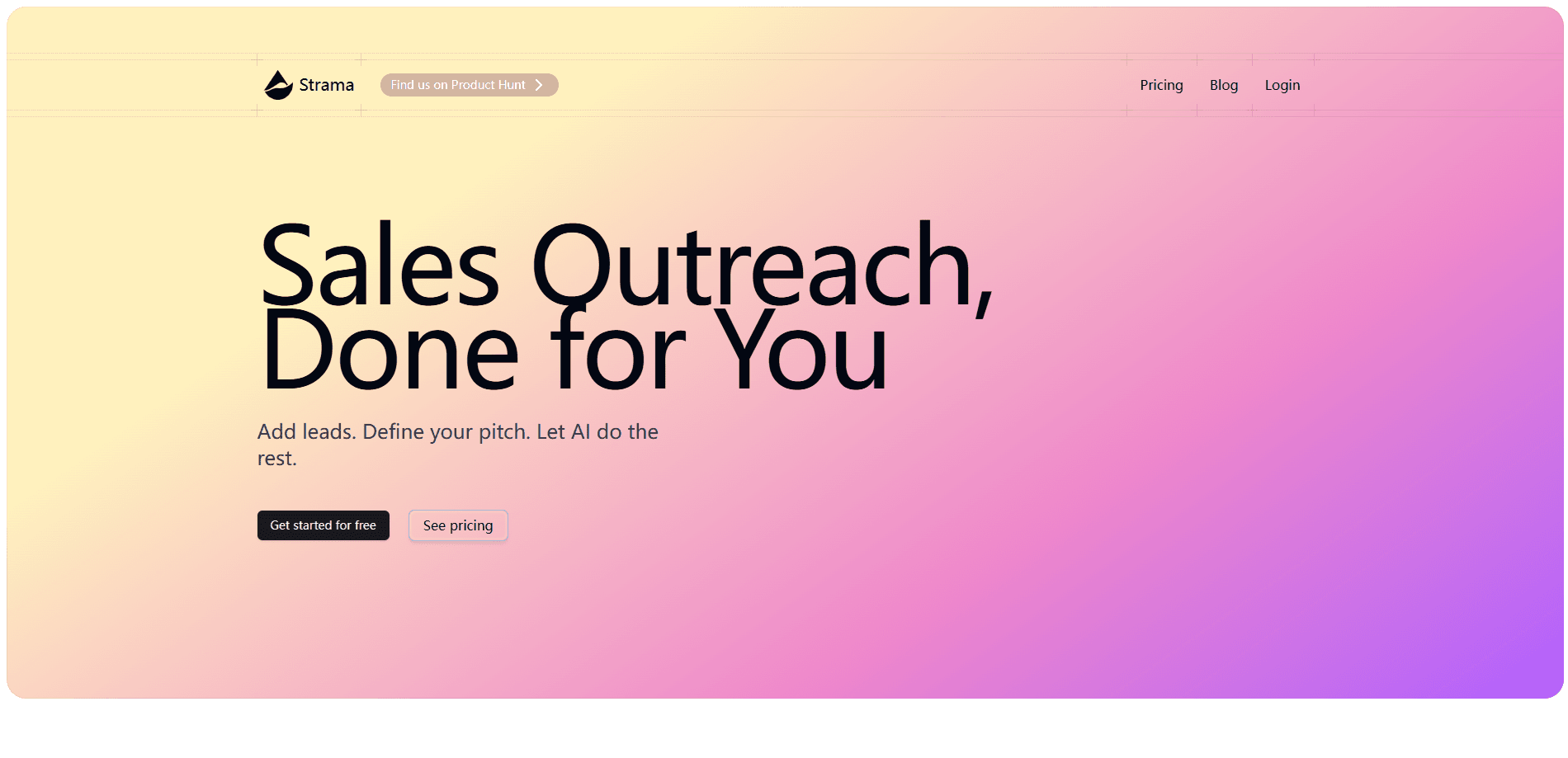
About Strama
What Is Strama
Strama is a sales engagement platform and SDR software tool built around one idea: AI should write outreach that sounds like a human wrote it. It covers the four stages of a typical SDR workflow, which are finding leads, qualifying accounts, engaging prospects and following up, inside a single system instead of four separate tools.
The pitch targets teams tired of stitching together an AI prospecting tool, a spreadsheet and a sequencing app. As a sales automation platform, Strama keeps context between stages, so a lead found in one place moves into qualification and outreach without exports or copy-paste.
The main limit is scope. It fits outbound SDR work and B2B lead generation at small and mid-market companies, not inbound service teams or large enterprises with existing enterprise platforms in place. Everything runs on the web, so there is no mobile app for reps working from a phone.
Getting Started
- Sign up at strama.ai and start for free, with no credit card required.
- Connect your inboxes, or let Strama provision and warm dedicated sending domains for you.
- Build a lead list in Lead Scout or upload an account list, then grade it with Scorecards.
- Let the Style Guide learn your team's voice from real emails and case studies, then draft outreach across email, LinkedIn and phone.
- Track replies in the shared Inbox and let Strama suggest follow-ups when a thread goes quiet.
Product Information
A quick look at Strama's pricing, supported platforms, and performance.
Best for
The users, tasks, and scenarios where this tool fits best.
Users
- SDRs handling their own outreach
- Sales leaders running small teams
- Founders doing early outbound
Tasks
- Building a prospect list
- Qualifying accounts at volume
- Personalized cold email and cold email personalization
Scenarios
- Replacing four disconnected tools
- Catching buying signals
- Keeping replies from going cold
Key features
Lead Scout sourcing
Lead Scout searches for a persona or company inside Strama and drops matches straight into qualification. There is no export step and no CSV cleanup, so reps start working leads the moment they find them. The company reports 40% more qualified accounts in customers' first week, measured against their previous list-building approach.
Watchtowers buying signals
Watchtowers monitors signals such as website visits, LinkedIn engagement, role changes and funding rounds. New leads appear directly in Strama as the signals fire, so a rep can act while the moment is still fresh rather than working from a stale list.
Scorecards account grading
You set the criteria that define a good fit, then upload or pull an account list and let Strama run the research. It returns a pass or fail per criterion plus an overall grade, and shows the reasoning behind each call. Customers report trimming a 1,000-account list to the 80 worth working in under an hour.
Style Guide voice matching
The Style Guide studies how your team actually writes, from real emails and best-performing content, and drafts new outreach in that voice. Messages are tailored using research on each prospect's role, recent activity and company priorities, which is how Strama aims to avoid the generic tone of most AI outreach.
Multi-channel delivery
Strama writes the message and helps deliver it across email, LinkedIn and phone from one platform. You can connect your own inboxes or use Strama-managed ones, automate LinkedIn follow-ups and make calls with a built-in dialer that records and transcribes conversations.
Sending infrastructure
Strama provisions dedicated sending domains and inboxes, warms them automatically and monitors reputation over time. Sender identities let multiple reps send from a shared leadership address, which suits teams where SDRs reach out under a manager's name.
Unified Inbox and follow-up
Email threads and LinkedIn messages flow into a single Inbox where AI-suggested replies appear beside each thread. Flag any conversation for follow-up, and Strama surfaces it again when it is time to re-engage. The company says customers cut dropped follow-ups by 62% in their first 60 days.
Pros and cons
Pros
- Runs the whole SDR motion in one platform, so context carries from sourcing to follow-up instead of being lost between tools.
- The Style Guide drafts outreach from your team's real writing, which addresses the main complaint about AI-generated sales messages.
- Lead Scout and Scorecards move from raw lead list to a short list of worthwhile accounts without exports or spreadsheets.
- Popular with small and mid-market teams, with named customers including TCS Basys, MonetizeNow and Speck Design.
Cons
- Built for outbound SDR work, so teams focused on inbound support or enterprise account management will not get much use from it.
- Web only. There is no mobile app, which matters for reps who work mostly from a phone.
- Pricing sits behind a demo, so you cannot see plan costs or limits before talking to sales.
- No public API, which limits how tightly it can plug into a custom internal stack.
Frequently asked questions
Strama runs outbound sales development in one place. It finds leads, grades accounts against your fit criteria, writes personalized outreach in your team's voice and manages replies and follow-ups across email, LinkedIn and phone.
Related content
Explore related tools, skills, and articles for Strama.
Strama Alternatives

Knocket
Knocket (Tencent RTC team) · Productivity · Business · ChatbotKnocket is a free live chat and contact page tool that lets visitors message you from your website, app, or a shareable link, with every reply handled from Telegram or one inbox.

shippedit.me
Krawlup · Marketing · Businessshippedit.me now redirects to Krawlup, a web platform that audits SEO, AEO and page speed every week, then hands the fixes to AI coding agents over MCP.

Ayven
Alknoma · Productivity · BusinessAyven is an AI control centre by Alknoma that turns a plain-language goal into a dated plan, hands the work to your people and AI agents, and asks for your approval only when the call is yours.