
Structurely
Structurely (21X) · Marketing · Business
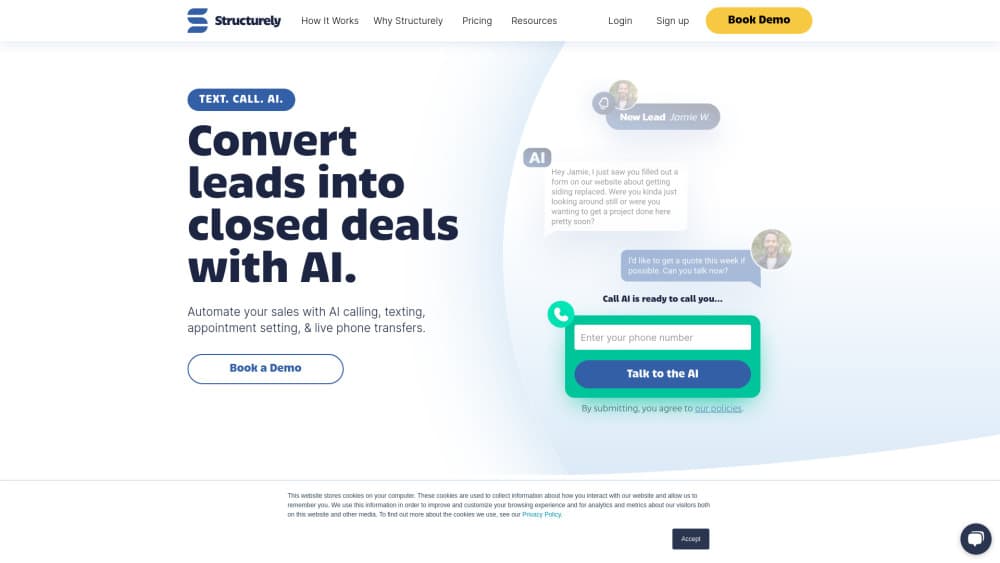
Structurely, now 21X, is a conversational AI platform that handles voice, SMS, RCS, and email conversations for sales and support teams. It qualifies leads and follows up around the clock.
About Structurely
What Is Structurely
Structurely has spent more than a decade building AI that talks to customers. The company now sells that work under the name 21X, a conversational AI platform for voice, SMS, RCS, email, and chat.
The product targets the gap between a lead arriving and a human picking up the phone. An AI sales agent answers inbound calls, texts back within seconds, qualifies the person, books a callback, and hands warm conversations to staff. Mortgage and real estate teams were the original market, and both still show up in the use case list.
One thing to know before signing up: this isn't a self-serve $20 app. Pricing combines a platform fee with token-metered usage, and the phone numbers, A2P registration, and agent tuning come through an onboarding project with the vendor's team.
Getting Started
- Book a demo and describe your call volume, channels, and CRM.
- Work with the onboarding team to configure agents, permissions, campaigns, and reporting.
- Connect your phone numbers and complete A2P registration so SMS and calls clear carrier checks.
- Point the platform at your CRM or Salesforce org, then test scripts and objection handling.
- Launch one campaign, review transcripts, and adjust routing before you scale.
Product Information
A quick look at Structurely's pricing, supported platforms, and performance.
Best for
The users, tasks, and scenarios where this tool fits best.
Users
- Real estate teams
- Mortgage loan officers
- Sales and support managers
Tasks
- Speed to lead
- Inbound call triage
- Follow-up sequences
Scenarios
- A listing portal dumps 60 leads on a Saturday
- A lender needs Spanish-language coverage after 6 pm
- A support line gets the same five questions all day
Key features
AI voice agents for inbound and outbound calls
The AI voice agent picks up, greets the caller, asks qualifying questions, and books a time on a calendar. Outbound campaigns run the same scripts at volume, which is how an AI call center handles a few hundred dials a day. Live transfer rules decide when a human takes over, so your team spends time on conversations that need judgment.
Two-way messaging across SMS, RCS, and email
Conversations move between channels without losing context. A lead who texts at 9 pm and calls at noon the next day arrives with the earlier thread attached. RCS support matters for Android users who expect rich cards and read receipts instead of plain text.
AI Power Dialer inside Salesforce
The dialer runs inside Salesforce, so reps work a list without switching tools. You can toggle AI on or off per campaign, screen voicemail and call outcomes, and write dispositions back to the record. That keeps reporting honest without a second data entry step.
Usage pricing built on a single token system
Voice minutes, SMS messages, and AI emails all convert into tokens, which means one bill instead of three. The vendor lists voice from $0.07 per minute and SMS from $0.02 per message. There are no per-seat licenses, so adding a manager costs nothing extra.
APIs, webhooks, and MCP for builders
Teams that want their own interface can go headless and call the REST API. Webhooks push conversation events into your stack, and MCP support lets AI assistants query the platform. White label and multi-tenant options exist for platforms reselling the service.
Onboarding that includes telephony
Setup covers account configuration, industry-specific agent templates, number provisioning, A2P registration, and spam filtering. Launch support continues through testing and early tuning. Skipping this step is a common reason AI calling pilots stall at week three.
Pros and cons
Pros
- One platform covers voice, SMS, RCS, and email, so you don't stitch three vendors together.
- Usage-based billing removes per-seat fees, which keeps costs tied to actual conversation volume.
- Salesforce-native dialer means reps keep their existing workflow and reporting.
- Public API, webhooks, and MCP support make custom builds realistic.
- Onboarding includes the unglamorous parts: numbers, A2P registration, and spam filtering.
Cons
- No free plan and no public starting price, so you can't test the economics without a sales call.
- Token metering across three channels is hard to forecast, and a busy month can surprise you.
- Telephony and A2P registration are built around US carriers, which limits teams elsewhere.
- Setup takes real configuration work, and a small team may not have the hours to spare.
Frequently asked questions
Structurely, now sold as 21X, runs AI conversations for sales and support teams. It answers calls, texts, and emails, qualifies the person on the other end, and routes the outcome to your CRM.
Related content
Explore related tools, skills, and articles for Structurely.
Structurely Alternatives

ngram 2.0
ngram · Video · Marketingngram 2.0 is an AI video generator for teams. It turns a prompt, a screen recording, or a product URL into a narrated explainer, product demo, or AI avatar video, and every scene stays editable.

shippedit.me
Krawlup · Marketing · Businessshippedit.me now redirects to Krawlup, a web platform that audits SEO, AEO and page speed every week, then hands the fixes to AI coding agents over MCP.

MePersona
MePersona, Inc. · Writing · Productivity · MarketingMePersona is an AI unified inbox for creators. It learns your voice, drafts replies to fan messages from 12 platforms, and sends only what you approve.