

Stytch
Stytch (owned by Twilio) · Coding
Stytch is an authentication platform that lets developers add passwordless login, SSO, SCIM, MFA and AI agent identity to an app through one set of APIs and SDKs, with a free tier for small projects.
About Stytch
What Is Stytch
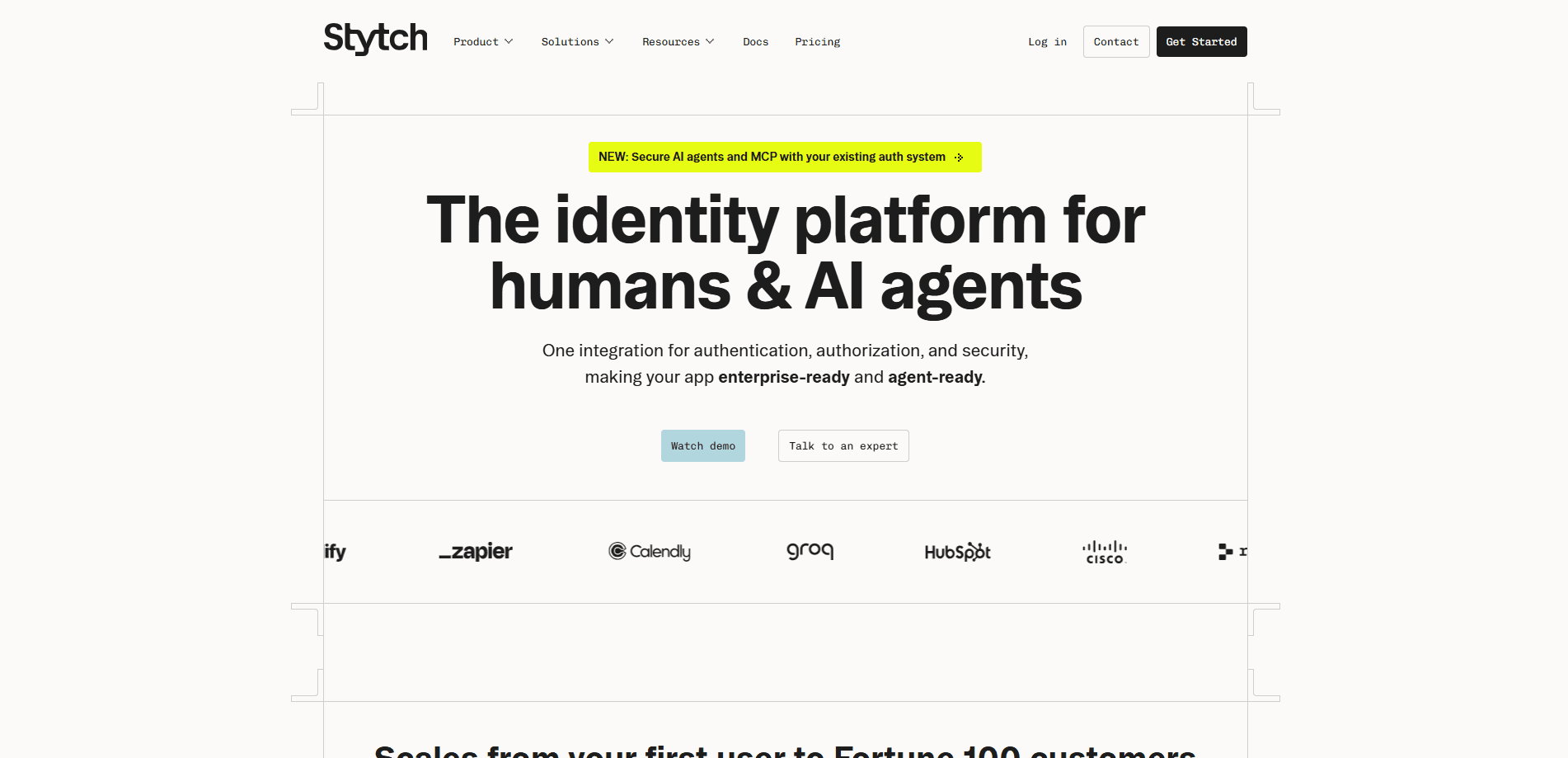
Stytch is a developer-first identity platform. Instead of building login, session management and access control from scratch, teams connect Stytch's APIs and drop-in UI components and get working authentication in a few days rather than a few quarters. It covers both consumer apps, where a single person logs in, and business apps, where users belong to organizations that need shared settings.
The product centers on two ideas. First, one login system should handle every auth method a user expects, from magic links and passkeys to SAML single sign-on. Second, the same platform should secure the AI agents and machine accounts that now act on a company's behalf, an area most older auth vendors ignore.
The main limits are scope and cost. Stytch is aimed at engineering teams comfortable working with code, so a non-technical founder will find it heavy. Pricing scales with active users and enterprise features, so costs climb as an app grows, and any team locked into another identity provider faces a migration to switch.
Getting Started
- Create a Stytch account and set up a project in the dashboard for either consumer or multi-tenant (B2B) authentication.
- Pick the login methods you want, such as magic links, OTP, passkeys or OAuth, and copy the API keys into your environment.
- Add the SDK or the pre-built UI component to your frontend, then call the backend API to create users and manage sessions.
- Layer on organization features like SSO, SCIM and RBAC when you start selling to businesses, then test in the sandbox before going live.
Product Information
A quick look at Stytch's pricing, supported platforms, and performance.
Best for
The users, tasks, and scenarios where this tool fits best.
Users
- Startup engineering teams
- B2B SaaS developers
- Platform teams building AI agents
Tasks
- Adding passwordless sign-in
- Rolling out enterprise SSO
- Managing user permissions
- Protecting against account takeover
Scenarios
- Launching a new app
- Selling to larger companies
- Running an AI product
Key features
Passwordless authentication
Stytch supports magic links, email and SMS one-time codes, passkeys and OAuth logins, so users sign in without typing a password. You can mix methods in one flow and let users pick what they prefer. This cuts both signup friction and the support load that comes from forgotten passwords.
Consumer and B2B data models
The platform separates consumer authentication, for single-user apps, from multi-tenant authentication, where every user belongs to an organization. The B2B model ships with org-level settings, multiple identity providers and member roles built in. That means less custom code to bend a generic auth vendor to a business app.
Enterprise SSO and SCIM
Developers can connect SAML and OIDC identity providers and automate user provisioning with SCIM. Because SCIM works out of the box with role-based access control, admins can add and remove people without manual work. It's the piece that makes an app acceptable to IT buyers at larger companies.
Machine-to-machine and AI agent identity
Stytch issues scoped, short-lived tokens for services and AI agents, and acts as an OAuth-compliant provider for agents that need delegated access. Companies can grant an agent specific permissions and revoke them later. This addresses a gap that older auth platforms leave open.
Fraud and device intelligence
Built-in device fingerprinting and bot detection flag suspicious traffic before it reaches your sign-in flow. Security verdicts, invisible CAPTCHA and rate limiting, plus device-level traffic shaping, keep real users moving while blocking credential stuffing and free-trial abuse.
Embeddable admin portal
An SDK lets you embed auth and user management into your own dashboard, so customers self-serve SSO setup, SCIM and access roles. Your team stops fielding config requests by hand. It fits B2B products where admins want control without calling support.
Pros and cons
Pros
- One API covers consumer login, enterprise SSO, SCIM and machine identity, cutting the number of vendors a team has to manage.
- Passwordless methods like magic links and passkeys reduce signup friction and password support tickets.
- The multi-tenant data model handles per-organization settings natively, so less custom auth logic is needed.
- AI agent authentication with scoped, revocable tokens is rare among identity platforms.
- SDKs and pre-built UI components shorten the path from first line of code to working login.
Cons
- It's built for developers, so non-technical teams need an engineer to integrate and maintain it.
- Costs grow with active users and enterprise features, which can surprise teams that start on the free tier.
- Switching from an existing identity provider takes real migration work, and the deeper you go, the harder it gets.
- Twilio's 2025 acquisition of Stytch means the roadmap now depends on the parent company, so buyers should track product direction.
Frequently asked questions
Stytch handles authentication and authorization for apps. It gives developers APIs, SDKs and UI components for passwordless login, session management, SSO, SCIM and machine identity, so they don't build those systems themselves.
Related content
Explore related tools, skills, and articles for Stytch.
Stytch Alternatives

Base Code
Base44 (Wix) · Coding · ProductivityBase Code is a shared cloud development environment from Base44. Teammates describe changes to an existing GitHub codebase in chat, preview them live and send them back as pull requests.

Google EmbeddingGemma 2
Google DeepMind · Writing · Image · CodingGoogle EmbeddingGemma 2 is a 740M-parameter open model that turns text, code, images, audio, and video frames into vectors in one 768-dimension space, running on phones and laptops.

GitGlow
GitGlow · Coding · ProductivityGitGlow is a local-first desktop Git client that lets independent developers review their own code and their AI agents' changes in one place before shipping.