

Supio
Supio · Writing · Productivity · Business
Supio is a legal AI platform built for plaintiff and personal injury law firms. It reads medical records in bulk, produces medical chronologies and demand letters, and helps attorneys draft litigation documents. Firms use it to cut the hours spent buried in paperwork so they can focus on strategy and clients.
About Supio
What Is Supio
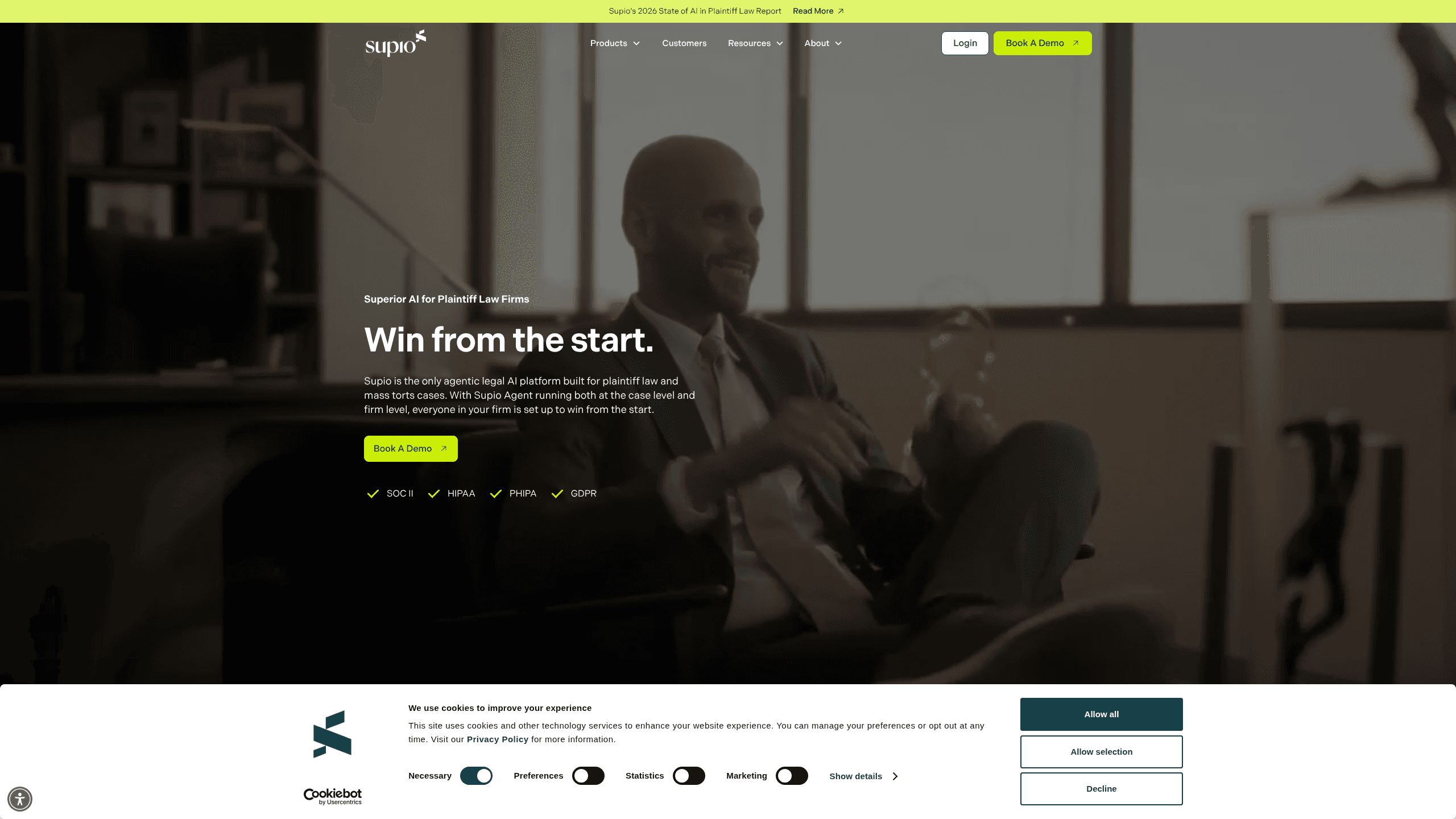
Supio is a legal AI platform made for plaintiff-side law firms, especially personal injury and mass torts practices. It's one of the few plaintiff law firm software options built from the ground up for that work rather than adapted from a general legal tool. Founded in 2021, the company runs from Seattle and San Francisco and builds its product around the work that eats up a firm's week: sorting medical records, building treatment timelines, and writing demands.
The platform splits into stages. Case Engine handles pre-litigation work such as medical chronologies, demands, and case economics that reconcile bills and liens. Case Bench covers litigation with AI chat, drafting, and interrogatory responses. Both feed into CaseAware, the shared layer that keeps case context in one place as a matter moves forward. What does that mean in practice? Less switching between systems, and fewer details dropped along the way.
The big limitation is access. Supio doesn't publish prices, doesn't offer a free tier, and requires a sales conversation before you can use it. It's also built specifically for plaintiff work, so defense firms and general practices won't find much here. That narrow focus is deliberate, and it's the whole point.
Getting Started
- Book a demo through the Supio site to walk your firm's workflow and pricing options.
- Choose a buying model, either a case subscription or unlimited firm access.
- Connect your case management system so documents sync in and insights sync back.
- Upload case files and let the platform generate chronologies, demands, or draft documents.
- Set firm-wide templates and standards so output matches how your attorneys work.
Product Information
A quick look at Supio's pricing, supported platforms, and performance.
Best for
The users, tasks, and scenarios where this tool fits best.
Users
- Personal injury attorneys
- Paralegals and case managers
- Mass torts teams
- Firm owners
Tasks
- Building medical chronologies
- Drafting demand letters
- Responding to interrogatories
- Reconciling bills and liens
Scenarios
- Clearing a backlog of records before a settlement negotiation
- Onboarding new hires
- Running a pilot on a handful of cases
Key features
Medical Chronologies at Scale
Supio reads medical records in bulk and builds a treatment timeline, flagging possible undiagnosed injuries and gaps in care. For a PI firm, that means fewer missed details before a demand goes out, and it's the kind of thing that used to require a paralegal to comb through thousands of pages over several days. The tradeoff is that AI output still needs attorney review, especially on complex or disputed injuries.
AI Demand Drafting
Case Engine produces demand letters tuned for higher settlements, pulling from the case record rather than a blank page. Attorneys keep control of strategy and refinement. It fits firms that already have a demand template and want the first draft done for them. No blank page. Just a draft to sharpen.
Litigation Drafting and Interrogatories
Case Bench adds legal drafting AI, chat, and interrogatory response tools aimed at litigation. Responses cite relevant authority in your firm's style, which cuts the grunt work between filing deadlines and spares attorneys the routine of building every answer from scratch when a case has dozens of similar questions. Expect to edit before submission, since legal accuracy is on you. That editing step isn't optional.
Case Economics
Beyond chronologies, Supio reconciles bills and liens so the numbers in a demand hold up. It links treatment costs to the case record, which matters when a lien list runs long and a single mistyped figure can quietly undercut a settlement. Long lien lists are a trap. Supio keeps the math tied to the record.
Case Management Integrations
Connectors and APIs move data in from your CMS and send AI insights back, so nothing gets entered twice and the record stays current without an admin copying fields between two systems by hand. That keeps your existing system as the record of truth. Setup is part of onboarding rather than a self-serve click.
Firm-Wide Templates and Standards
Output follows your firm's templates and cites the authority your best attorneys would pick. Those standards become institutional memory the whole team can draw on. New attorneys reach a firm's usual quality bar faster.
Security and Compliance
Supio is SOC 2 Type II certified and HIPAA, PHIPA, and GDPR compliant, with permission-based access and encryption in transit and at rest. Client data isn't pooled into shared training models. For firms handling sensitive medical and legal records, that's the baseline. That matters more than any feature list.
Pros and cons
Pros
- Purpose-built for plaintiff and personal injury work, not a generic legal AI adapted after the fact.
- Turns record-heavy tasks like medical chronologies and demands from weeks into days.
- Connects to existing case management systems, so you keep your system of record.
- Strong compliance posture with SOC 2 Type II and HIPAA, PHIPA, and GDPR coverage.
- Case-level invoices let firms pass the cost through to clients.
Cons
- No published pricing and no free plan, so you can't evaluate cost without talking to sales.
- Built for plaintiff firms only, which rules out defense and general practice.
- No self-serve signup. Setup depends on an onboarding process that isn't instant.
- Output still requires attorney review, so it speeds up drafting rather than removing the review step.
- Firm-level pricing may put it out of reach for small solo practices working a low case volume.
Frequently asked questions
It's a legal AI platform for plaintiff firms that turns medical records into case materials. You upload records and it builds medical chronologies, drafts demands, and helps with litigation documents like interrogatory responses.
Related content
Explore related tools, skills, and articles for Supio.
Supio Alternatives

Emailwritr
Emailwritr · Writing · MarketingEmailwritr is an AI email copywriting tool built for affiliates, course creators, and online businesses that want more revenue from the list they already own. Instead of blank pages or generic chatbot prompts, this AI email writer generates welcome sequences, launch campaigns, cart recovery emails, and promo series from frameworks modeled on well-known direct-response copywriters. You connect your autoresponder, answer a few questions about your offer, and it writes the copy for you.

Swms
Swms AI · Writing · Productivity · BusinessSwms is an AI safety compliance tool that turns a plain description of a job into ready-to-use safety documents. Describe your project, trade, and known hazards, and it writes a safe work method statement, job hazard analysis, safe work procedure, RAMS, or safety data sheet in seconds. It also ships with Oscar, a chat assistant that answers workplace safety questions in any language. Teams in construction, mining, transport, and warehousing use it to cut the paperwork that usually eats into a workday.

Prosp
Prosp · Writing · Voice & Language · MarketingProsp is an AI LinkedIn outreach tool built for agencies and sales teams, and it writes the message and the voice note in your own voice for each prospect so they actually reply. You connect your accounts, find leads, and let the AI draft and send personalized messages at scale, all from one inbox. It's built for people running outbound at volume. That's the whole pitch. Every touchpoint still has to feel human.