

Tempo-Pulse
Tempo-Pulse · Voice & Language
Tempo-Pulse is an AI haptic music player for iPhone that turns any song into touchable vibrations, built for hard-of-hearing listeners.
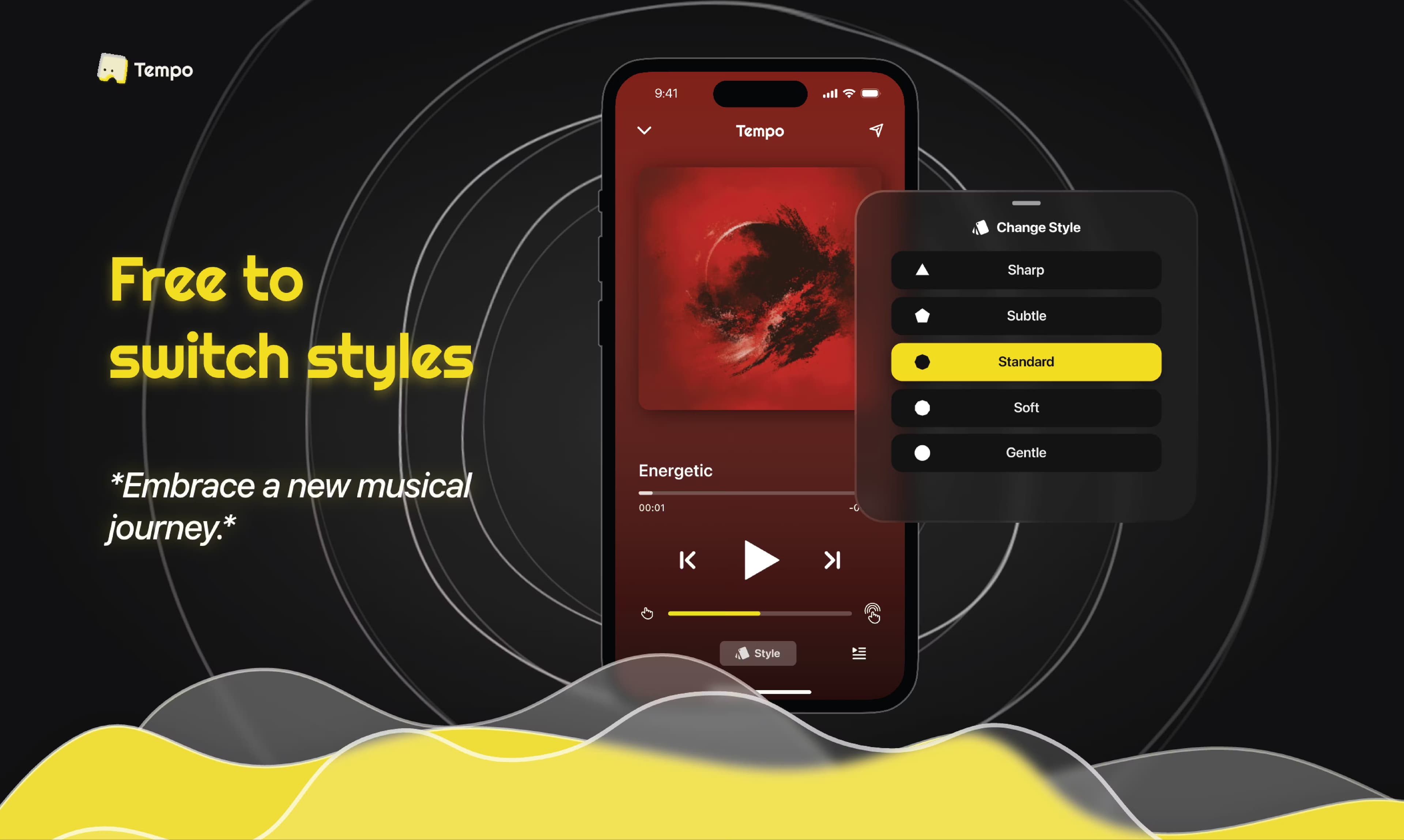
About Tempo-Pulse
What Is Tempo-Pulse
Tempo-Pulse is a mobile app that converts music into haptic feedback, so you can feel a track through your phone rather than only hear it. It reads what's happening in a song and translates the rhythm, bass, and dynamics into vibrations you sense in your hand. Simple idea. Hard to pull off.
For people who are hard of hearing, that's a real shift. Music has always carried meaning beyond melody, and much of it sits in the low end and the beat. Tempo-Pulse gives that part of a song a physical layer, which is why it's filed under accessibility as much as entertainment.
It's not a hearing aid and doesn't claim to restore audio. The vibrations are an added channel, not a replacement for sound, so listeners who still hear partly can layer both together. This AI music app is iOS only. There's no Android version yet.
Getting Started
- Install Tempo-Pulse from the App Store on a compatible iPhone and open it.
- Grant the app the permissions it asks for, then check that your device's haptics are enabled in Settings.
- Import a track or pick one from your library to test the feel.
- Adjust the vibration intensity until the feedback sits comfortably in your hand.
- Play a full song and let the haptic layer run alongside the audio.
Product Information
A quick look at Tempo-Pulse's pricing, supported platforms, and performance.
Best for
The users, tasks, and scenarios where this tool fits best.
Users
- Hard-of-hearing listeners
- Deaf music fans
- Producers and hobbyists
Tasks
- Feeling the beat of a track
- Following bass lines
- Sharing music with a hard-of-hearing friend
Scenarios
- Listening at a concert or club where the sound is too loud or too muffled
- Practicing an instrument at home
- Wind-down sessions before sleep
Key features
AI-Driven Haptic Translation
The core of Tempo-Pulse is a model that listens to a track and decides which parts should become vibration. It reads tempo, transients, and low-frequency energy, then shapes a haptic pattern that follows the song. No random buzzing. That distinction is what separates it from a simple metronome-style shake.
Real-Time Music-to-Touch Feedback
Vibrations track the music as it plays, so the feel stays in sync with what you hear. Timing matters here. Even a small delay breaks the illusion that the song is moving through your hand.
Works With Your Own Music
You're not limited to a built-in catalog. This iPhone music app takes tracks you already own or stream on your phone and runs them through the haptic engine. Your existing library keeps working.
Adjustable Vibration Intensity
Not everyone wants the same amount of force. You can dial the haptic strength up or down. Match it to your phone, your grip, and how sensitive your hands are to feedback.
Accessibility-First Design
The app is built around listeners who miss part of the audible range, so the layout keeps controls reachable and the feedback legible. It pairs with sound rather than replacing it. That suits partial hearing as much as full deafness.
Pros and cons
Pros
- Turns any track in your library into a tactile experience, so you're not stuck with preset songs.
- Solves a real problem for hard-of-hearing listeners by giving rhythm and bass a physical form.
- Intensity control lets you tune the feedback to your own hands and phone.
- The AI layer adapts to each song instead of firing the same generic buzz.
- iOS only means tighter haptic hardware support, which helps timing accuracy.
Cons
- No Android version, so most phone owners can't use it at all.
- Haptics can't carry lyrics or melody, which limits what a deaf listener gets from a song.
- Strong vibration drains battery faster on long sessions.
Frequently asked questions
It converts music into haptic vibrations through an AI model, so you can feel a track's rhythm and low end in your hand rather than only hearing it. Think of it as feeling the music, not just listening.
Related content
Explore related tools, skills, and articles for Tempo-Pulse.
Tempo-Pulse Alternatives

Foley
Hanamori Labs, LLC · Voice & Language · Productivity · AI AssistantFoley is a voice to-do list that turns a spoken sentence into a filed task, complete with project, date and time, then helps you plan the day around what is already there.

HireKey
HireKey · Voice & Language · Productivity · LeaningHireKey is an AI job search copilot built by a former tech recruiter. It checks role fit, tailors resumes, runs interview practice and tracks every application.

Fluence
Yay Software (Yannick Huchard) · Writing · Voice & Language · ProductivityFluence is an Android app that reads PDFs, EPUBs, Word files and web articles aloud, follows each sentence as it speaks, and answers questions about the text on the phone itself.