

SaaS Ranking
Rose · Coding · Marketing
SaaS Ranking is an experimental platform that ranks software products by studying what AI tools like ChatGPT and Perplexity actually recommend. Instead of asking editors to hand-pick winners, it collects AI answers across many software categories, counts how often each product shows up, and turns those counts into rankings. It's aimed at people who want to know which tools AI assistants favor, and at marketers trying to understand how visible their product is inside AI answers. No editors. No vote brigading. Just what the models say.
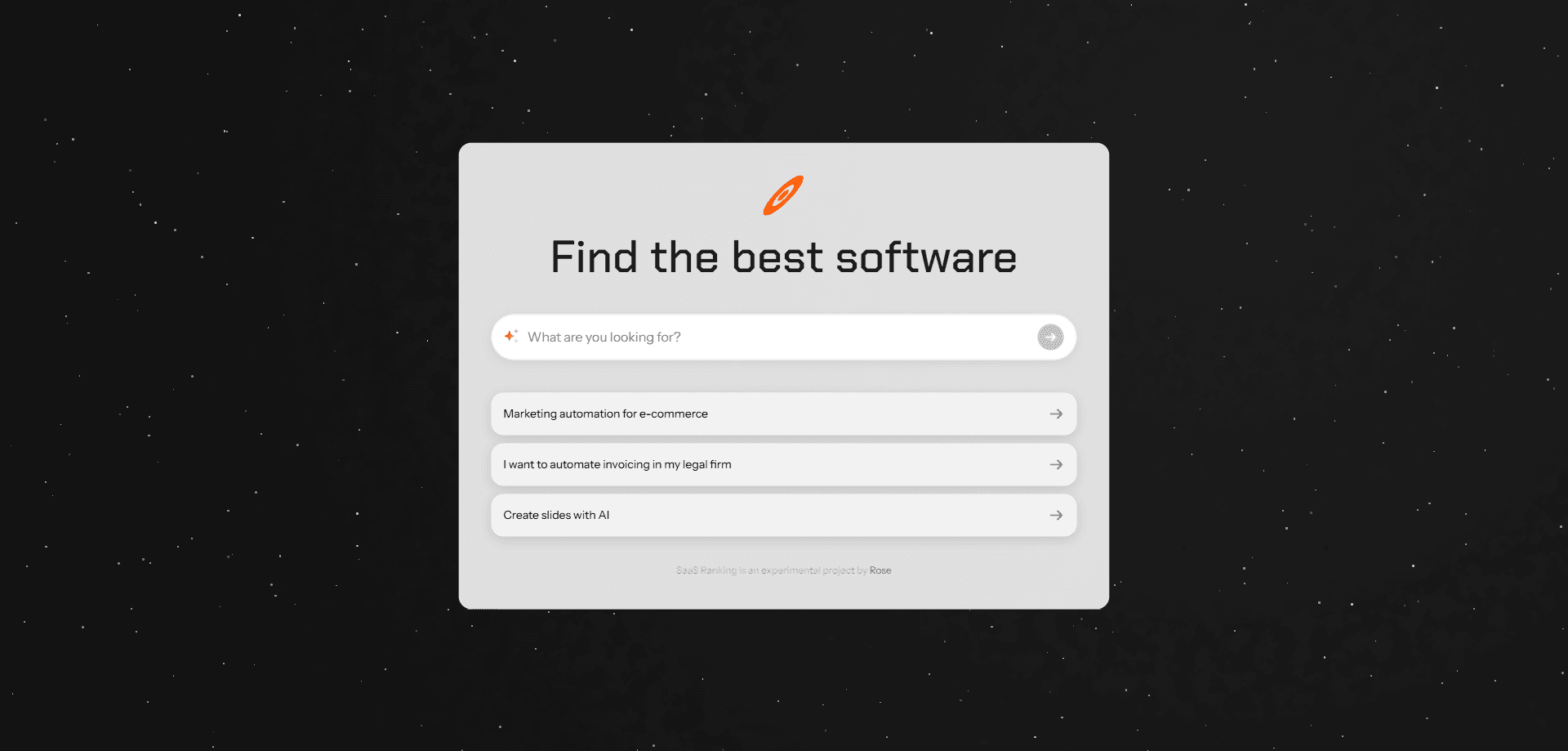
About SaaS Ranking
What Is SaaS Ranking
SaaS Ranking is a research and ranking site built on a simple question: when people ask an AI assistant for the best software in a category, which products come up? The platform runs those kinds of prompts across many categories, gathers the answers, and scores each product by how often and how prominently it appears. The result is a set of rankings driven by AI-generated recommendations rather than human reviews alone.
The company behind the site is Rose, and the product carries the tagline "the G2 killer," a nod to established review platforms like G2. That framing points at the gap it's trying to fill. Traditional review sites depend on user-submitted reviews, which can lag behind reality and skew toward whoever campaigns hardest for votes. AI answers move faster. They also reflect a different mix of sources. So ranking by them is a genuinely different signal.
The catch is that it's labeled experimental. The results depend on which AI models it queries, how many prompts it runs, and how it weighs each mention. Those choices shape everything. And the site isn't fully transparent about all of them. So treat it as a directional read on AI visibility, not a final verdict.
Getting Started
- Open the SaaS Ranking website in your browser.
- Browse the ranking categories to find the software space you care about, or use search to jump to a specific product.
- Open a product entry to see where it ranks and how it compares with rivals in the same category.
- If you run a product, check how often it appears in AI answers and note which competitors show up more often.
- Use the findings to inform your own tool choices or your marketing priorities, and check back since rankings shift as AI models update.
Product Information
A quick look at SaaS Ranking's pricing, supported platforms, and performance.
Best for
The users, tasks, and scenarios where this tool fits best.
Users
- Software buyers comparing tools
- Product marketers tracking AI visibility
- SEO and content teams adapting to AI search
Tasks
- Checking AI-recommended tools in a category
- Benchmarking a product against rivals
- Supporting AI SEO work
Scenarios
- Early software research
- Preparing a go-to-market push
- Keeping tabs on a shifting field
Key features
Rankings Built From AI Answers
The core of the platform is a ranking system fed by AI recommendation research. It runs prompts across software categories and scores each product by how often it's mentioned and how high it lands in the answers. That gives you a picture of AI consensus rather than a single reviewer's opinion. So it works as an AI software ranking tool for anyone curious about what AI "thinks" is the best tool in a niche.
Category-Based Software Comparisons
Products are organized by category, so you can look up a niche and see how the best SaaS tools stack up against each other. This is where the "G2 killer" positioning shows its logic: you get a side-by-side view of who AI favors, without wading through hundreds of user reviews. It shines when you're deciding between two or three similar tools. You want a quick signal. Not a weekend of reading.
AI Visibility Tracking for Brands
For marketers, the rankings double as a visibility check. If your product never appears in AI answers for its category, that's a problem worth knowing about. The fix isn't obvious. Seeing which competitors dominate the mentions tells you where the gap is. It's a rough tool for this job, but AI visibility is hard to measure, and a ready-made ranking is a reasonable place to start.
A Research Angle on Generative Engine Optimization
AI search is changing how people find software, and this platform sits right at that shift. Marketers now talk about generative engine optimization, the practice of getting a brand mentioned inside AI answers rather than ranked in blue links. SaaS Ranking doesn't teach the technique, but it shows you the outcome you're chasing. That makes it a practical reference for GEO work.
A Lightweight Web Tool
There's no app to install and no account required to browse. You open the site, look at the rankings, and that's it. Pricing isn't the point here. The value is the data. That low friction makes it easy to check when a question comes up. It also means you're working with a single external view rather than something you can tune.
Pros and cons
Pros
- Offers a fresh angle by ranking software on AI recommendations instead of user reviews.
- Category pages make it quick to compare tools within a specific niche.
- Useful for marketers who need a rough read on AI search visibility.
- Free to browse and requires no signup, so there's no commitment to try it.
- The transparent "experimental" label sets honest expectations about the data.
Cons
- The scoring approach isn't fully documented, so it's hard to know how mentions are weighted.
- Results shift whenever the underlying AI models change, which limits their reliability.
- Coverage is uneven across categories: popular niches are better served than obscure ones.
- There's no API or data export, which makes it hard to use in a larger workflow.
Frequently asked questions
It collects AI-generated recommendations for software across many categories and turns how often each product is mentioned into a ranking. You browse the site to see which tools AI assistants favor.
Related content
Explore related tools, skills, and articles for SaaS Ranking.
SaaS Ranking Alternatives
Forefront
Forefront · CodingForefront is a web platform for building with open-source AI. It lets you fine-tune leading open-source language models on your own data, evaluate how they perform, and run them through an API or export them to host yourself. Developers who want the convenience of a closed-source platform but insist on owning their models and data are the target audience here.

Startkit
StartKit.AI · CodingStartkit is a boilerplate for building AI SaaS and AI wrapper products. Think of it as an AI startup boilerplate with the boring parts already wired up: authentication, Stripe and Lemon Squeezy payments, usage limits, transactional email, and an AI API starter that talks to OpenAI, Anthropic, Groq, or Llama. You clone the repo, set your price, and start on the part of your product that people actually pay for. It's Next.js under React and Tailwind, so most of the boilerplate code already feels familiar.
Testim
Tricentis · CodingTestim is an AI-powered test automation platform for building and running end-to-end tests across web, mobile, and Salesforce applications. It leans on machine learning to keep tests stable when an interface changes, so teams spend less time fixing broken selectors. Not bad for an automated testing tool you can start using today. You create tests by recording actions in a browser, then optionally add JavaScript when you need more control. It's a solid pick for busy QA teams.