

Theneo
Theneo · Coding
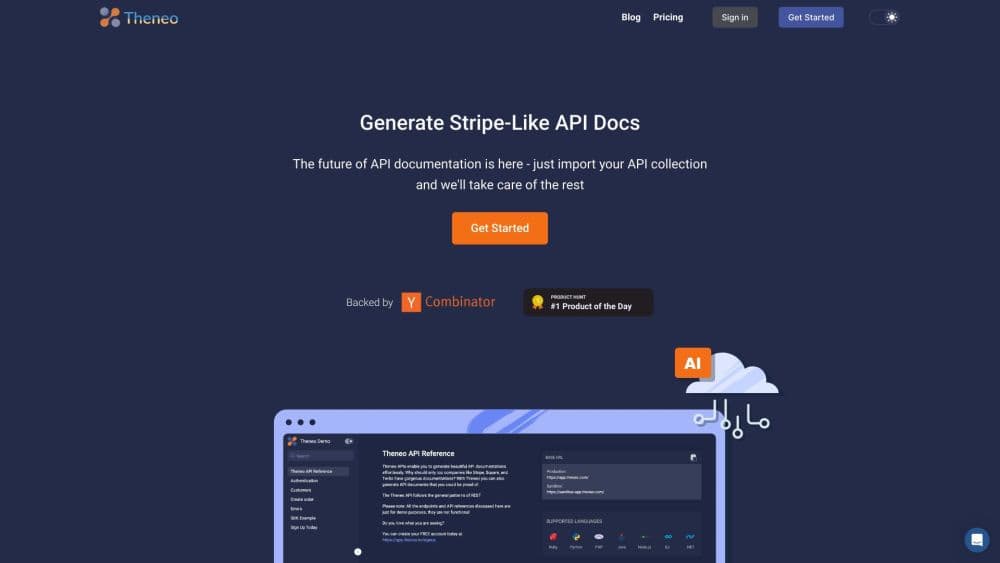
Theneo, an AI API documentation platform, turns a spec into a branded developer portal with references, guides, changelogs and AI search. Teams write once and both people and agents read it.
About Theneo
What Is Theneo
Theneo is a documentation platform built around one job: keeping API docs accurate without a writer retyping every endpoint. You upload an OpenAPI, GraphQL, SOAP, AsyncAPI or gRPC spec, and the platform builds a reference page with method descriptions, request examples and a live playground. Guides and changelogs sit in the same project, so a reader never has to leave the portal to understand a call.
The company says it has worked on AI-generated docs since 2022 and counts more than 18,000 companies among its users. It publishes security claims that matter for enterprise buyers: SOC 2 Type II, ISO 27001 and ISO 9001, plus a GDPR statement and EU data residency options.
The limit is scale and discipline. The free tier caps you at one public project and 2,000 endpoints, so a large API starts on a paid plan. Editing generated text still takes a human review pass, and the AI is only as good as the spec you feed it.
Getting Started
- Sign up at app.theneo.io and create a workspace for your team.
- Import a spec file or connect a repo through GitHub, Bitbucket or Postman sync.
- Generate the reference, then edit descriptions and add guides or articles.
- Set branding, custom domain and access rules, then publish the portal.
Product Information
A quick look at Theneo's pricing, supported platforms, and performance.
Best for
The users, tasks, and scenarios where this tool fits best.
Users
- API platform teams
- Technical writers working with engineers
- B2B SaaS companies with partner APIs
Tasks
- Turning an OpenAPI file into a publishable reference
- Writing release notes that point at breaking changes
- Answering developer questions without a support ticket
Scenarios
- Launching docs alongside a v1 API
- Regulated industries that need audit trails
- Teams shipping an MCP server
Key features
Spec to Reference in Minutes
The builder reads your API description and drafts endpoint pages with parameters, sample requests and response tables. You drop in a spec and get a working reference rather than a blank page. Support covers REST, GraphQL, SOAP, AsyncAPI and gRPC, which matters if your product carries older SOAP integrations next to newer REST routes.
Ask AI in the Docs
Readers type a question instead of scanning a sidebar. Ask AI searches the portal and answers in plain language with a link to the page it used. Theneo claims its assistant beats other docs AI tools on benchmarks, and that claim comes from the vendor, so treat it as a starting point rather than proof.
Smart Changelogs
Each release compares your current spec against the previous one. Added fields, removed endpoints and changed response shapes appear as entries, and breaking changes get flagged. That turns release notes from a chore into a review step. Someone still has to write the plain-English summary readers want.
Developer Portals, Public and Private
A public docs site is only part of the job for B2B platforms. Theneo lets you spin up authenticated portals where each customer signs in and sees the APIs, guides and SDKs that belong to their contract. Access can run on email invites, JWT logins or SSO, and each portal can carry its own branding.
Live API Explorer and Playground
Readers can test calls inside the page with pre-request scripts and stored tokens. This cuts the loop where a developer copies a curl command, switches to a terminal, gets an auth error and gives up. Exports to OpenAPI and Markdown keep the work portable if you ever leave.
MCP Server and llms.txt
Docs published on Theneo can run as an MCP server alongside an llms.txt file. AI coding assistants then read the same reference your human readers do, with structure intact. That is the difference between pasting a docs link into a chat and giving an agent a queryable source.
Pros and cons
Pros
- One spec feeds the reference, the playground, code samples and the changelog, so docs don't drift apart.
- Real-time co-editing suits teams where writers and engineers work on the same page.
- Custom domains, CSS and white-label options make the portal feel like part of the product.
- Per-customer private portals cover partner and enterprise API use cases that a public site can't.
- Free tier fits a small public API, so you can test the workflow before paying.
Cons
- Business starts at $120 per month per workspace, which is a real step up from free for a small team.
- Generated descriptions still need a human pass, and weak or thin specs produce weak docs.
- Endpoint caps (2,000 on free, 5,000 on Business) force an upgrade as an API grows.
- Self-hosting and SAML SSO sit behind Enterprise, so regulated buyers can't get them on list price plans.
Frequently asked questions
Theneo generates API documentation from a spec file and publishes it as a developer portal with guides, changelogs, a test playground and AI search.
Related content
Explore related tools, skills, and articles for Theneo.
Theneo Alternatives

Base Code
Base44 (Wix) · Coding · ProductivityBase Code is a shared cloud development environment from Base44. Teammates describe changes to an existing GitHub codebase in chat, preview them live and send them back as pull requests.

Google EmbeddingGemma 2
Google DeepMind · Writing · Image · CodingGoogle EmbeddingGemma 2 is a 740M-parameter open model that turns text, code, images, audio, and video frames into vectors in one 768-dimension space, running on phones and laptops.

GitGlow
GitGlow · Coding · ProductivityGitGlow is a local-first desktop Git client that lets independent developers review their own code and their AI agents' changes in one place before shipping.