

Typeface
Typeface, Inc. · AI Detection
Typeface is an enterprise marketing AI platform that turns brand guidelines, approved assets and campaign data into agents that plan, produce and check on-brand content at scale.
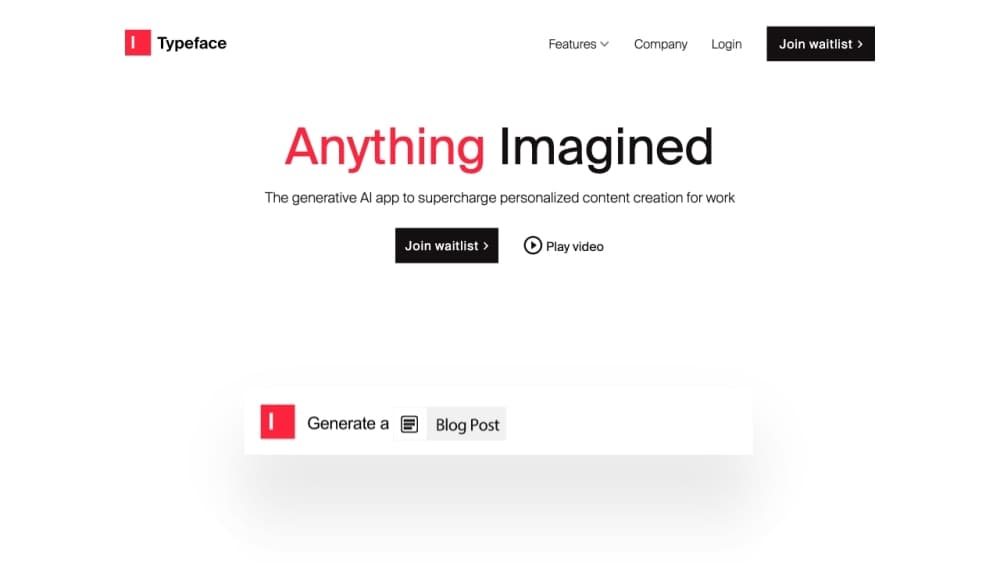
About Typeface
What Is Typeface
Typeface is a marketing platform built for large organizations that publish a lot of content across many brands, markets and channels. You load your brand rules, approved assets and past campaign results, and the platform turns them into structured knowledge that AI agents can follow. The pitch is simple: the same brand standard applies whether a person writes the email or an agent drafts it.
The company was founded in 2022 by Abhay Parasnis, formerly Adobe's chief technology officer, and shipped its first public platform in early 2023. Its current product line, Typeface Arc, connects three pieces: Arc Graph for brand intelligence, Arc Fabric for building and running agents, and Arc Loop for feeding performance data back into the next campaign. The company says its customers include financial services, insurance, retail and consumer goods brands, and it frames the shift from plain AI content generation to agentic marketing as its main selling point.
There are limits worth knowing before you book a demo. Pricing isn't published, there's no self-serve signup, and the platform assumes you already have documented brand guidelines and a marketing operation big enough to justify setup work. Small teams that publish a few posts a week will find the whole thing heavier than their problem.
Getting Started
- Book a demo through the Typeface site. Sales scopes the setup around your brands, markets and the tools your team already uses.
- Connect brand material: guidelines, tone of voice documents, approved imagery, logos, typography, and past campaigns that show the brand in use.
- Connect the surrounding systems, such as your asset library, Salesforce, Google or Microsoft properties, and creative apps like Figma, Photoshop and Illustrator.
- Build the first agents with your team, run a pilot campaign, then review what Arc Loop reports before widening access.
Product Information
A quick look at Typeface's pricing, supported platforms, and performance.
Best for
The users, tasks, and scenarios where this tool fits best.
Users
- Enterprise marketing teams
- Brand and creative teams
- Marketing operations and IT
Tasks
- Producing campaign assets at volume
- Adapting one campaign for many markets
- Turning a brief into finished work
- Reviewing content for brand compliance
Scenarios
- Regulated industries where every claim needs a paper trail
- Multi-market rollouts with a small central team
- Agencies and in-house studios serving several client brands
Key features
Arc Graph
Arc Graph is the context layer that holds what your brand is. It stores guidelines, tone of voice, logos, colors, typography and approved assets as structured rules rather than loose documents, and it learns from each campaign. When an agent writes something, the graph shows which rule applied and why, which is the part most brand teams ask about first.
Arc Fabric and Custom Agents
Arc Fabric is where agents get built and run. You describe an outcome, and the agent plans the work, executes it, checks its own output and iterates until it meets the standard you set. The layer also gives teams a shared workspace, so a workflow one person builds doesn't stay stuck on that person's laptop. This is where agentic marketing stops being a demo and starts running real campaign work.
Arc Loop
Arc Loop closes the loop that most marketing stacks leave open. It watches what agents ship, pulls in performance results from your channels, and feeds those learnings into the next round of work. In practice, a campaign that underperformed in one channel changes what the next brief looks like.
Creative App Integrations
Typeface works inside Figma, Photoshop and Illustrator, which matters for designers who won't move to another canvas. Teams can generate and adapt visual variations across channels and audiences while staying in the tools they already know, and every asset stays tied to the right brand identity.
Brand Rules Inside Other AI Tools
The brand graph isn't limited to Typeface's own interface. It reaches Claude, ChatGPT and Gemini, plus plugins for Word, PowerPoint and Chrome, and connects through MCP and APIs. That means a copywriter working in a general chatbot can still get brand-correct output without switching platforms.
Governance and Brand Safety Controls
Administrators set who can use which model, what data agents can touch, and which rules are enforced. The platform logs which rule shaped an output, keeps brand-safe model settings in place, and gives legal and brand teams an audit trail. For enterprises, this is usually the difference between a pilot and a rollout.
Pros and cons
Pros
- Brand rules are enforceable at the moment of creation, not just documented in a PDF that nobody opens.
- One system covers brand knowledge, agent building, creative production and performance feedback.
- Works inside Figma, Photoshop, Illustrator, Word, PowerPoint, Chrome, Claude, ChatGPT and Gemini, so adoption doesn't demand a new daily tool.
- Arc Loop ties content decisions to channel results, which gives marketing leaders something concrete to report.
- Enterprise controls cover model choice, data access and audit trails, which shortens security review.
Cons
- No published pricing and no free tier, so evaluating cost means going through sales.
- Setup depends on having clean brand guidelines and someone to connect systems, which can take weeks.
- The platform is built for organizations with large content volumes, so smaller teams may pay for capacity they don't use.
- Deep customization of agents needs people who can think in workflows, not just prompts.
Frequently asked questions
It turns your brand rules and approved assets into structured knowledge, then uses AI agents to produce campaign content that follows those rules. Teams use it for emails, ads, social posts, landing pages and localized variations.
Related content
Explore related tools, skills, and articles for Typeface.
Typeface Alternatives
Isgen AI
Isgen · AI DetectionIsgen AI is a web-based AI detector that scores text for machine authorship and shows you which sentences and phrases push the number up. It's built for teachers, editors, students, and writers. Their question is simple: did this draft come from ChatGPT, GPT-5, Claude, Gemini, DeepSeek, or another model? You paste or upload content, run a scan, and get a Human, AI, and Mixed breakdown in seconds. There's also a companion editor that scores text while you write it.
Humanizeai Tools
Humanizeai Tools · Writing · AI DetectionHumanizeai Tools is a web-based AI humanizer that rewrites machine-generated text so it sounds like a person wrote it, which is the whole point of the category it belongs to. Paste a draft from ChatGPT, Claude, or Gemini, run it through the tool, and it swaps out the phrases and sentence patterns that AI detectors flag. If your goal is to make AI text sound human before you publish it, this is the kind of tool built for exactly that. It suits students, bloggers, and marketers who need copy that reads naturally and clears tools like GPTZero, Copyleaks, and Winston AI after a single pass.

Hidemyai
Hidemyai · Writing · AI DetectionHidemyai is an AI content humanizer. It rewrites text from ChatGPT, Jasper, and similar tools so the result reads like a person wrote it. You paste your draft, pick a document type and tone, and the service returns a version meant to bypass AI detectors such as Originality.ai, Turnitin, and ZeroGPT. It targets writers, marketers, and students who lean on AI drafts but can't ship copy that sounds robotic. The promise is simple: make AI content undetectable.