

Unify
Unify · Coding · Other
Unify is an AI sales platform for outbound teams. It combines prospecting, lead enrichment, and multi-channel sequencing in one chat, so sellers research accounts and send personalized outreach fast.
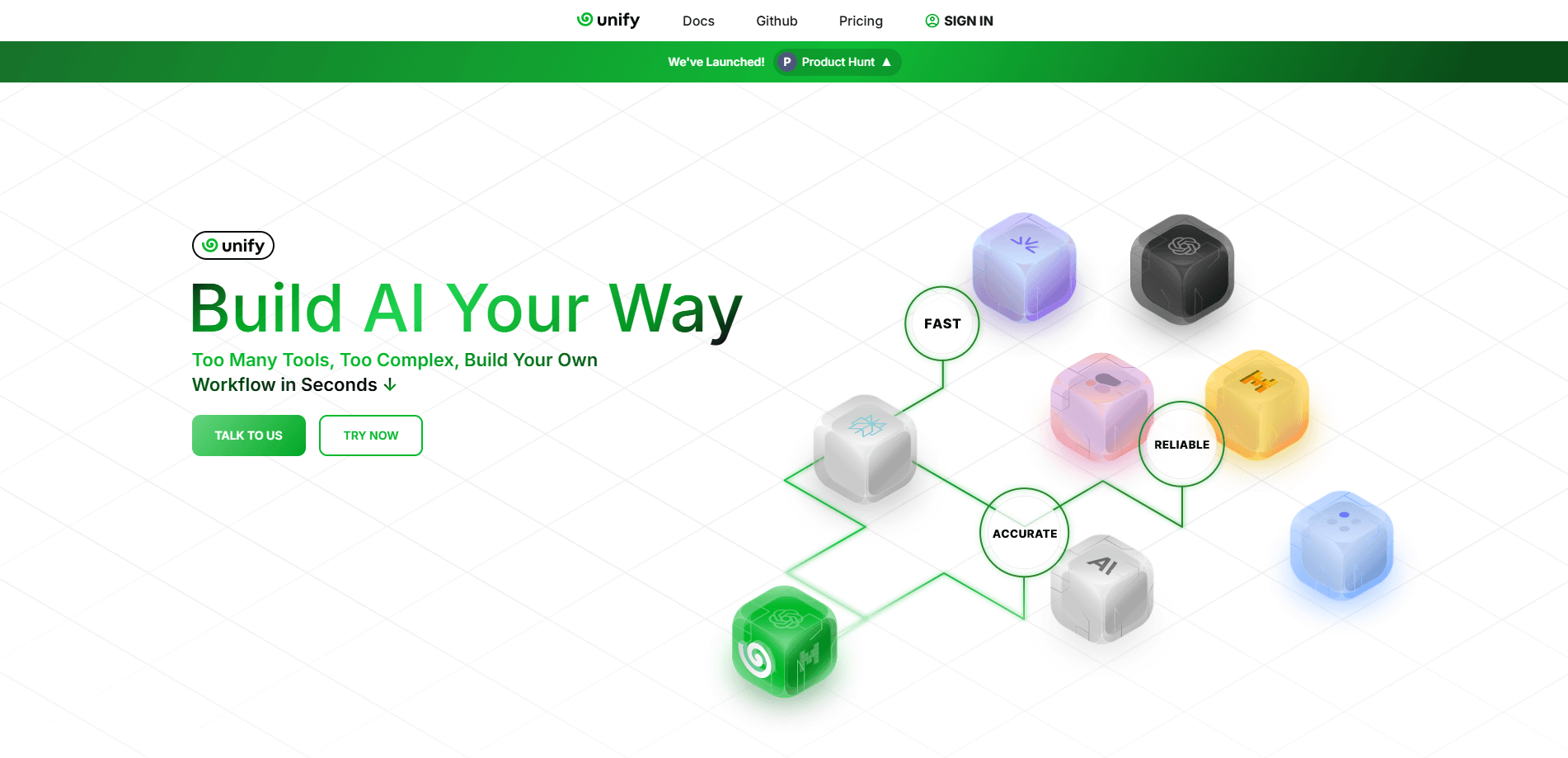
About Unify
What Is Unify
Unify is an AI native platform built for outbound sellers. It works as outbound sales software and a sales prospecting tool in one, pulling account research and sequencing into a single workspace so reps don't have to switch between four or five apps to start a conversation. The company says it has powered more than $786 million in pipeline for hundreds of growth teams.
The pitch is simple. Sales work breaks down because the pieces live apart. Your contact data sits in one tool, your signals in another, and your sequences in a third. Unify brings them together and lets you run the whole motion from a chat window. Teams treat it as a GTM platform rather than a single-purpose tool.
The biggest limit is that Unify is aimed at B2B sales teams, not casual users. It relies on credits for data and actions, so heavy prospecting can burn through a monthly allowance quickly. It also assumes you already have a defined market and a product worth selling.
Getting Started
- Create a free account at app.unifygtm.com and connect the email mailbox you want to send from.
- Tell the agent about your business and ideal customer profile in plain language, then describe the list you want to build.
- Review the accounts and contacts Unify returns, enrich missing emails and phone numbers, and pick the signals that matter.
- Draft a multi-channel sequence, approve the personalized copy, and send it on your schedule.
- Connect HubSpot or Salesforce to keep your CRM in sync and track which plays turn into pipeline.
Product Information
A quick look at Unify's pricing, supported platforms, and performance.
Best for
The users, tasks, and scenarios where this tool fits best.
Users
- Sales development reps
- Account executives
- Revenue operations teams
- Startup founders selling directly
Tasks
- Building targeted prospect lists
- Writing personalized outreach
- Running account-based campaigns
- Retargeting closed-lost deals
Scenarios
- A rep needs 100 contacts at VC-backed B2B SaaS companies hiring SDRs
- A seller wants to reach CEOs based on recent LinkedIn activity
- A team wants to catch buyers the moment intent spikes
- A growing company needs outbound running without a dedicated ops hire
Key features
Agentic Chat Prospecting
You describe what you want in plain language and the agent returns a list of companies and contacts. It combines Unify's own database with dozens of outside data sources, so you can build a hyper-targeted segment without writing filters. The same conversation covers enrichment, sequencing, and CRM sync.
Multi-Channel Sequencing
Every touch in a sequence gets personalized from your research and signals. Email, calls, and social messages sit in one flow, so a prospect hears from you on more than one channel. As sales engagement platforms go, the difference is that the copy comes from live data instead of static templates. You review and approve drafts before anything sends.
Automated Plays
Unify runs your best playbooks on autopilot. A play triggers on a signal, then prospects, qualifies, and sequences in real time. This is where sales automation stops eating a rep's day, and where repeatable prospecting finally scales.
Intent Signals
The platform watches web search, job changes, funding rounds, hiring, website visits, and tech stack changes. Each signal tells you when a buyer might be ready to talk, instead of guessing.
Managed Deliverability
Unify creates mailboxes, warms them up, and rotates sending to protect your sender reputation. You don't manage the plumbing, which matters when cold email is your main channel.
Reporting and Analytics
Sequence analytics, rep activity, and pipeline attribution show what's actually working. Bulk APIs let you pull that data into Claude or Codex for deeper analysis.
CRM Sync
HubSpot and Salesforce connections keep your records current, with read-write sync on the Business plan. Reps stop updating CRM by hand, which is one reason self-sourcing sticks.
Data Marketplace
Rather than a black-box data layer, Unify works like a vetted wholesale marketplace. It sources from specialized providers, negotiates pricing, and shows you which vendor powered each result.
Pros and cons
Pros
- Consolidates prospecting, enrichment, sequencing, and CRM sync into one platform, replacing several separate tools.
- Large built-in database of 1.1 billion people and 65 million companies, with 40+ additional data sources to layer on.
- Chat-driven workflow means reps don't need RevOps to build lists or write filters.
- Generous free plan with up to 3 seats, and paid plans start at $20 per seat each month.
- Works inside Claude, Codex, and Cursor through MCP, so sellers stay in the tools they already use.
Cons
- Credit-based data pulls can run out fast, and phone enrichment averages around 4 credits per record, which adds up on large lists.
- The $60-per-seat Pro plan is needed for signal-triggered automations and website intent tracking, so the real cost for serious outbound is higher than the entry price.
- Managed mailboxes cost extra on top of the Business plan, at $25 per mailbox each month.
- It's built for B2B sales teams, so individual users or non-sales workflows won't get much from it.
Frequently asked questions
Unify is an AI platform for outbound sales. It helps reps find prospects, enrich their contact data, and run personalized multi-channel sequences from a single chat interface.
Related content
Explore related tools, skills, and articles for Unify.
Unify Alternatives

Base Code
Base44 (Wix) · Coding · ProductivityBase Code is a shared cloud development environment from Base44. Teammates describe changes to an existing GitHub codebase in chat, preview them live and send them back as pull requests.

Google EmbeddingGemma 2
Google DeepMind · Writing · Image · CodingGoogle EmbeddingGemma 2 is a 740M-parameter open model that turns text, code, images, audio, and video frames into vectors in one 768-dimension space, running on phones and laptops.

GitGlow
GitGlow · Coding · ProductivityGitGlow is a local-first desktop Git client that lets independent developers review their own code and their AI agents' changes in one place before shipping.